XL1F: Create Histogram using HISTOGRAM in Excel 2013 V0G XL1F: V0G - - PDF document

xl1f create histogram using histogram in excel 2013 v0g
SMART_READER_LITE
LIVE PREVIEW

XL1F: Create Histogram using HISTOGRAM in Excel 2013 V0G XL1F: V0G - - PDF document

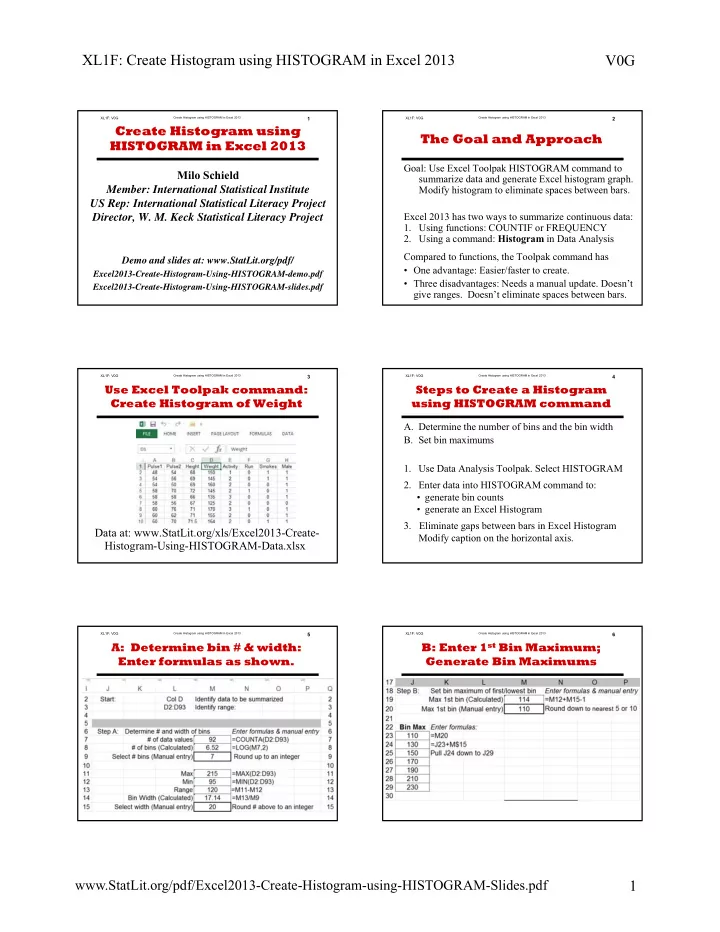
XL1F: Create Histogram using HISTOGRAM in Excel 2013 V0G XL1F: V0G Create Histogram using HISTOGRAM in Excel 2013 1 XL1F: V0G Create Histogram using HISTOGRAM in Excel 2013 2 Create Histogram using The Goal and Approach HISTOGRAM in Excel


slide-1
SLIDE 1

XL1F: Create Histogram using HISTOGRAM in Excel 2013 V0G

www.StatLit.org/pdf/Excel2013-Create-Histogram-using-HISTOGRAM-Slides.pdf

1

Create Histogram using HISTOGRAM in Excel 2013 XL1F: V0G

1

Milo Schield Member: International Statistical Institute US Rep: International Statistical Literacy Project Director, W. M. Keck Statistical Literacy Project

Demo and slides at: www.StatLit.org/pdf/

Excel2013-Create-Histogram-Using-HISTOGRAM-demo.pdf Excel2013-Create-Histogram-Using-HISTOGRAM-slides.pdf

Create Histogram using HISTOGRAM in Excel 2013

Create Histogram using HISTOGRAM in Excel 2013 XL1F: V0G

2

The Goal and Approach

Goal: Use Excel Toolpak HISTOGRAM command to summarize data and generate Excel histogram graph. Modify histogram to eliminate spaces between bars. Excel 2013 has two ways to summarize continuous data:

  • 1. Using functions: COUNTIF or FREQUENCY
  • 2. Using a command: Histogram in Data Analysis

Compared to functions, the Toolpak command has

  • One advantage: Easier/faster to create.
  • Three disadvantages: Needs a manual update. Doesn’t

give ranges. Doesn’t eliminate spaces between bars.

Create Histogram using HISTOGRAM in Excel 2013 XL1F: V0G

3

Use Excel Toolpak command: Create Histogram of Weight Data at: www.StatLit.org/xls/Excel2013-Create- Histogram-Using-HISTOGRAM-Data.xlsx

Create Histogram using HISTOGRAM in Excel 2013 XL1F: V0G

4

Steps to Create a Histogram using HISTOGRAM command

  • A. Determine the number of bins and the bin width
  • B. Set bin maximums
  • 1. Use Data Analysis Toolpak. Select HISTOGRAM
  • 2. Enter data into HISTOGRAM command to:
  • generate bin counts
  • generate an Excel Histogram
  • 3. Eliminate gaps between bars in Excel Histogram

Modify caption on the horizontal axis.

Create Histogram using HISTOGRAM in Excel 2013 XL1F: V0G

5

A: Determine bin # & width: Enter formulas as shown. .

Create Histogram using HISTOGRAM in Excel 2013 XL1F: V0G

6

B: Enter 1st Bin Maximum; Generate Bin Maximums

slide-2
SLIDE 2

XL1F: Create Histogram using HISTOGRAM in Excel 2013 V0G

www.StatLit.org/pdf/Excel2013-Create-Histogram-using-HISTOGRAM-Slides.pdf

2

Create Histogram using HISTOGRAM in Excel 2013 XL1F: V0G

7

1: Data tab: Select “Analysis” Select Histogram

Create Histogram using HISTOGRAM in Excel 2013 XL1F: V0G

8

2a: Enter Data, Bin Maximums Output Range & Chart Output

.

Create Histogram using HISTOGRAM in Excel 2013 XL1F: V0G

9

2b: Generate table and chart. Move chart on top of table

Create Histogram using HISTOGRAM in Excel 2013 XL1F: V0G

10

3a: Right-Mouse a column bar; Select “Format Data Series”

Create Histogram using HISTOGRAM in Excel 2013 XL1F: V0G

11

3b: Change “Gap Width” to zero. Result is a Histogram.

Create Histogram using HISTOGRAM in Excel 2013 XL1F: V0G

12

Conclusion

Histograms display continuous data properly! .

slide-3
SLIDE 3

XL1F: Create Histogram using HISTOGRAM in Excel 2013 V0G

www.StatLit.org/pdf/Excel2013-Create-Histogram-using-HISTOGRAM-Slides.pdf

3

Create Histogram using HISTOGRAM in Excel 2013 XL1F: V0G

13

Histogram versus Bar/Column Chart

A bar or column chart involves bars that are separated because the data is categorical (e.g., male/female) or discrete numeric (e.g., # of kids in family). A histogram involves bars (horizontal or vertical) that can touch because the data is continuous numeric (e.g., heights or weights). Ordinal data (e.g., small, medium, large) can be displayed either way: with separated or touching bars.

slide-4
SLIDE 4

Create Histogram using HISTOGRAM in Excel 2013

XL1F: V0G

1

Milo Schield Member: International Statistical Institute US Rep: International Statistical Literacy Project Director, W. M. Keck Statistical Literacy Project

Demo and slides at: www.StatLit.org/pdf/

Excel2013-Create-Histogram-Using-HISTOGRAM-demo.pdf Excel2013-Create-Histogram-Using-HISTOGRAM-slides.pdf

Create Histogram using HISTOGRAM in Excel 2013

slide-5
SLIDE 5

Create Histogram using HISTOGRAM in Excel 2013

XL1F: V0G

2

The Goal and Approach

Goal: Use Excel Toolpak HISTOGRAM command to summarize data and generate Excel histogram graph. Modify histogram to eliminate spaces between bars. Excel 2013 has two ways to summarize continuous data:

  • 1. Using functions: COUNTIF or FREQUENCY
  • 2. Using a command: Histogram in Data Analysis

Compared to functions, the Toolpak command has

  • One advantage: Easier/faster to create.
  • Three disadvantages: Needs a manual update. Doesn’t

give ranges. Doesn’t eliminate spaces between bars.

slide-6
SLIDE 6

Create Histogram using HISTOGRAM in Excel 2013

XL1F: V0G

3

Use Excel Toolpak command: Create Histogram of Weight Data at: www.StatLit.org/xls/Excel2013-Create- Histogram-Using-HISTOGRAM-Data.xlsx

slide-7
SLIDE 7

Create Histogram using HISTOGRAM in Excel 2013

XL1F: V0G

4

Steps to Create a Histogram using HISTOGRAM command

  • A. Determine the number of bins and the bin width
  • B. Set bin maximums
  • 1. Use Data Analysis Toolpak. Select HISTOGRAM
  • 2. Enter data into HISTOGRAM command to:
  • generate bin counts
  • generate an Excel Histogram
  • 3. Eliminate gaps between bars in Excel Histogram

Modify caption on the horizontal axis.

slide-8
SLIDE 8

Create Histogram using HISTOGRAM in Excel 2013

XL1F: V0G

5

A: Determine bin # & width: Enter formulas as shown. .

slide-9
SLIDE 9

Create Histogram using HISTOGRAM in Excel 2013

XL1F: V0G

6

B: Enter 1st Bin Maximum; Generate Bin Maximums

slide-10
SLIDE 10

Create Histogram using HISTOGRAM in Excel 2013

XL1F: V0G

7

1: Data tab: Select “Analysis” Select Histogram

slide-11
SLIDE 11

Create Histogram using HISTOGRAM in Excel 2013

XL1F: V0G

8

2a: Enter Data, Bin Maximums Output Range & Chart Output

.

slide-12
SLIDE 12

Create Histogram using HISTOGRAM in Excel 2013

XL1F: V0G

9

2b: Generate table and chart. Move chart on top of table

slide-13
SLIDE 13

Create Histogram using HISTOGRAM in Excel 2013

XL1F: V0G

10

3a: Right-Mouse a column bar; Select “Format Data Series”

slide-14
SLIDE 14

Create Histogram using HISTOGRAM in Excel 2013

XL1F: V0G

11

3b: Change “Gap Width” to zero. Result is a Histogram.

slide-15
SLIDE 15

Create Histogram using HISTOGRAM in Excel 2013

XL1F: V0G

12

Conclusion

Histograms display continuous data properly! .

slide-16
SLIDE 16

Create Histogram using HISTOGRAM in Excel 2013

XL1F: V0G

13

Histogram versus Bar/Column Chart

A bar or column chart involves bars that are separated because the data is categorical (e.g., male/female) or discrete numeric (e.g., # of kids in family). A histogram involves bars (horizontal or vertical) that can touch because the data is continuous numeric (e.g., heights or weights). Ordinal data (e.g., small, medium, large) can be displayed either way: with separated or touching bars.