
2/28/2014 1
2/28/2014 1
Burnout in Oncology Nurses: A Call to Action
Subtitle Placeholder
Karen Moody, MD ASBMT Feb 28th, 2014 Grapevine, Texas
Overview
- Define terms compassion fatigue and burnout
- Describe scope of the problem in oncology
- Identify risk factors for burnout
- Self-evaluation
- Prevention of burnout
2/28/2014 2
Compassion fatigue
- Compassion fatigue can lead to burnout and
results from repeated exposure to the suffering of
- thers.
- Individuals who suffer from compassion fatigue
experience symptoms akin to post traumatic stress disorder even though the trauma was not their direct experience.
- In effect these nurses “feel the pain” of their
patients so acutely that they experience side effects of this painful experience.
- It also results in poor quality of patient care.
Wright S. The d differ erence ences b s between s een stress ss, , burnou
- ut and com
and compassion
- n f
fatigu gue. Nurs Stand. 2013 Oct 2-8;28(5):34-5.
Burnout
- Burnout is described by Maslach as “a syndrome of
depersonalization, emotional exhaustion, and a sense of low personal accomplishment that leads to decreased effectiveness at work.
– Emotional exhaustion: pertains to “people-work” where the practitioner is exhausted to the degree that they feel unable to give
- f themselves on a psychological/emotional level.
– Depersonalization: cynicism towards patients; a negative view of patient-families – Diminished feelings of personal accomplishment: feeling devalued, dissatisfied with one’s work and work related outcomes
- Burnout differs from
Maslach C, Schaufeli WB, Leiter MP. Burn-Out. Annual Reviews Psychology 2001;52:397–422
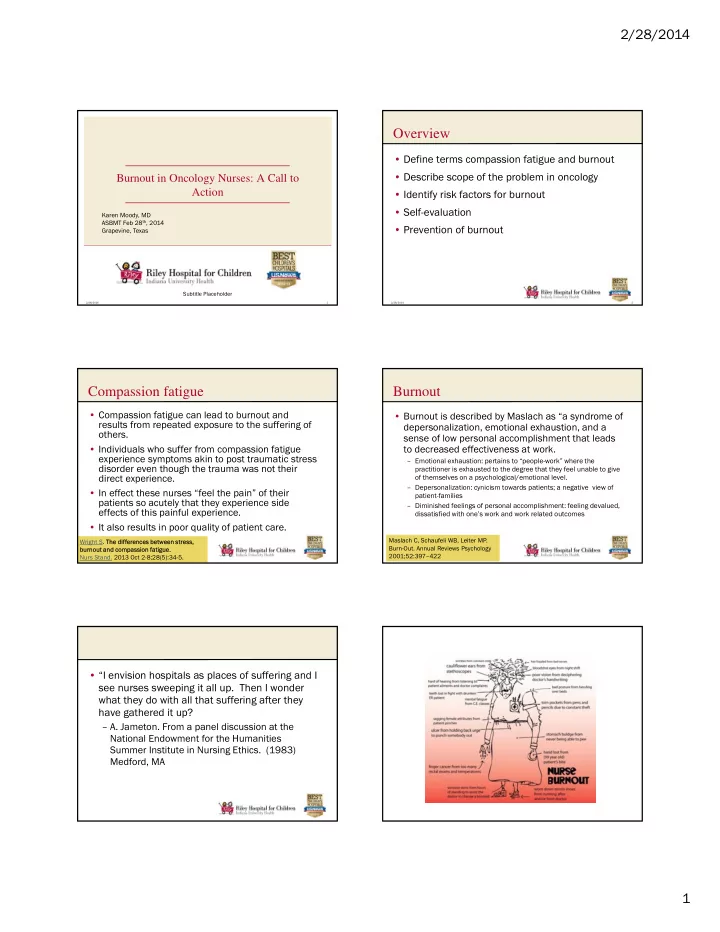
- “I envision hospitals as places of suffering and I
see nurses sweeping it all up. Then I wonder what they do with all that suffering after they have gathered it up?
– A. Jameton. From a panel discussion at the National Endowment for the Humanities Summer Institute in Nursing Ethics. (1983) Medford, MA