
SLIDE 1
Larry Keuhn, U.S. Meat Animal Research Center 6/1/17 2017 BIF Symposium, Athens, Ga 1
BIF sub-committee report on across-breed EPD programs: proposed improvements
Larry Kuehn USDA, ARS, U.S. Meat Animal Research Center
The USDA is an equal opportunity employer
Outline
- Discussion of current state of the ABEPD
system and possible changes
- Update on current sampling and progress
in the USMARC Germplasm Evaluation Program (GPE)
ABEPD program breed differences
- Across-breed EPD program
– Estimate breed differences from GPE using a sire and dam model (F1 progeny records) – Adjust records for bull EPD
- EPDi,YY is the breed average EPD (current)
- EPDi,USMARC weighted average USMARC sire EPD
where weight is the sum of numerator relationships between sires and progeny with phenotypes
- b is a scaling factor to convert USMARC solution to
an industry scale
) ( /
, , USMARC i YY i i i
EPD EPD b USMARC B + =
Across Breed EPD adjustment factors
- Calculated by scaling the ‘current’ breed
difference (Bi) to Angus EPD base
– Current breed difference is 2015 this year – Base difference calculated by subtracting the 2015 Angus average EPD from the 2015 breed average EPD
- For Breed i:
Factori = Bi - BAngus - (EPDi - EPDAngus)
- 50
- 25
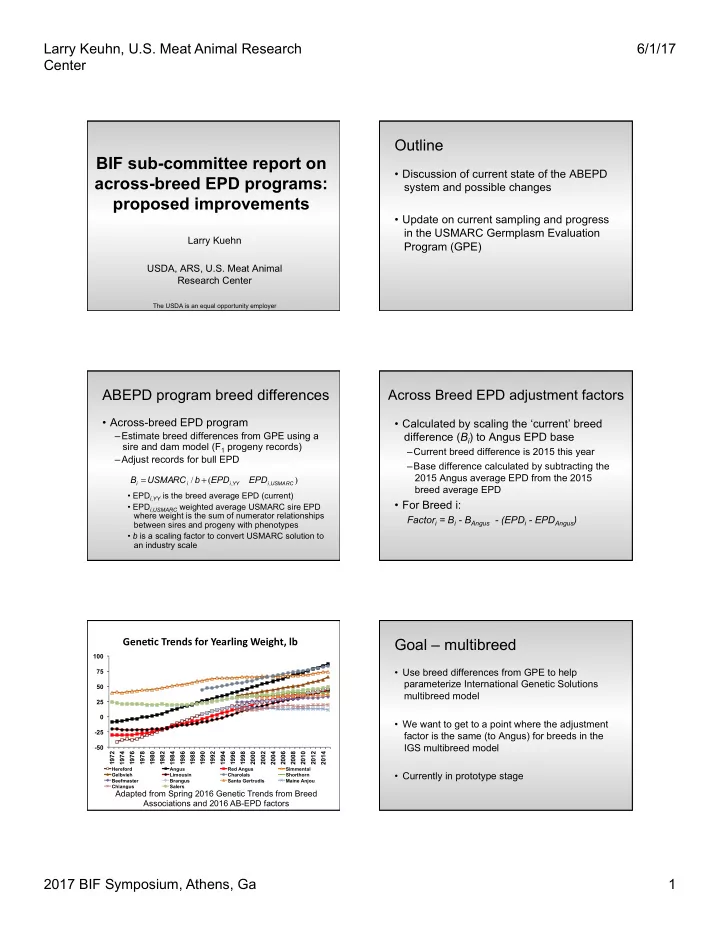
25 50 75 100 1972 1974 1976 1978 1980 1982 1984 1986 1988 1990 1992 1994 1996 1998 2000 2002 2004 2006 2008 2010 2012 2014
Hereford Angus Red Angus Simmental Gelbvieh Limousin Charolais Shorthorn Beefmaster Brangus Santa Gertrudis Maine Anjou Chiangus Salers
Gene$c ¡Trends ¡for ¡Yearling ¡Weight, ¡lb ¡
¡
Adapted from Spring 2016 Genetic Trends from Breed Associations and 2016 AB-EPD factors
Goal – multibreed
- Use breed differences from GPE to help
parameterize International Genetic Solutions multibreed model
- We want to get to a point where the adjustment
factor is the same (to Angus) for breeds in the IGS multibreed model
- Currently in prototype stage