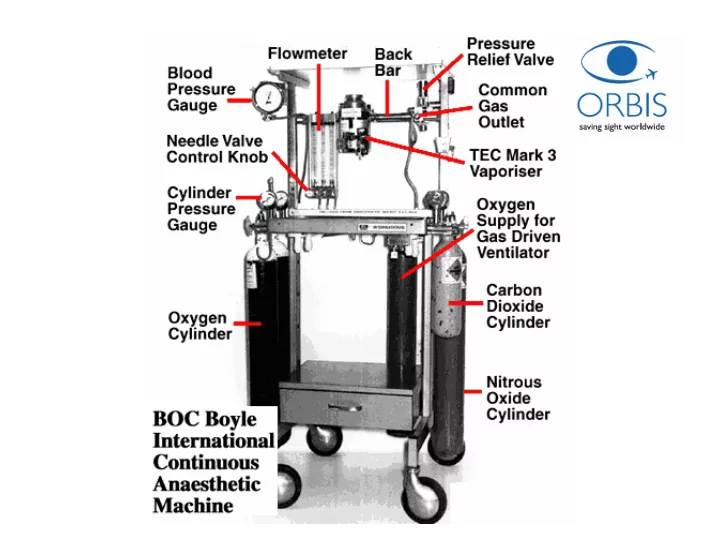
Gas cylinders A small metal and neoprene seal (Bodok Seal) ensures - - PowerPoint PPT Presentation

gas cylinders
SMART_READER_LITE
LIVE PREVIEW

Gas cylinders A small metal and neoprene seal (Bodok Seal) ensures - - PowerPoint PPT Presentation

Gas cylinders A small metal and neoprene seal (Bodok Seal) ensures a gas-tight fit between the cylinder and anaesthetic machine yoke. Under no circumstances may oil or grease be used as a seal; the pressurized gases give off heat as


slide-1
SLIDE 1
slide-2
SLIDE 2
slide-3
SLIDE 3
slide-4
SLIDE 4

Gas cylinders

  • A small metal and neoprene seal (Bodok

Seal) ensures a gas-tight fit between the cylinder and anaesthetic machine yoke.

  • Under no circumstances may oil or grease

be used as a seal; the pressurized gases give off heat as they are released from the cylinder and may cause explosions if oil is used.

slide-5
SLIDE 5

Gas cylinders

  • Before attaching a full cylinder to the

machine briefly open and close the cylinder valve to clear any dirt from the port.

slide-6
SLIDE 6

Checking a Boyles anesthetic machine which uses cylinders as the source of compressed gases

  • This should be performed before each theatre

list.

  • (If the machine is attached to pipelines then do

the following test attaching and detaching pipelines as well as checking the cylinders)

  • If an oxygen analyzer is available, use it. It is the
  • nly way to verify the contents of an oxygen

cylinder.

slide-7
SLIDE 7

Checking a Boyles anesthetic machine which uses cylinders as the source of compressed gases (continued)

  • Check that cylinders are securely attached and turned off.
  • Open all flow meter control valves and check there is no flow.
  • Turn on oxygen cylinder and check its contents on pressure gauge.

Set the rotameter to read 4 liters/minute. If a second oxygen cylinder is present, turn off the first and check the contents of second. Check there is no flow at the nitrous oxide rotameter.

  • Turn on the nitrous oxide cylinder and check the contents on the

pressure gauge. Set the rotameter to 4 liters/minute and check the

  • xygen rotameter setting has not changed. If a second nitrous oxide

cylinder is present turn it on to check its contents then turn it off again.

slide-8
SLIDE 8

Checking a Boyles anesthetic machine which uses cylinders as the source of compressed gases (continued)

  • Turn off the oxygen cylinder and empty system via
  • xygen flush. The oxygen warning device should sound

(if fitted), and should vent all gases from the machine. There should be no flow at the common gas outlet.

  • Turn on the oxygen cylinder again.
  • Check that the vaporizers are properly fitted to the back

bar, with no leaks. They should contain an adequate amount of volatile anesthetic agent and the controls

  • perate throughout their full range without sticking.
slide-9
SLIDE 9

Checking a Boyles anesthetic machine which uses cylinders as the source of compressed gases (continued)

  • If the anesthetic machine is fitted with a pressure relief valve it

should be tested by occluding the common gas outlet with a thumb whilst gas is flowing. The pressure relief valve should open with an audible release of gas. Do not do this test if a PRV is not fitted as it may damage the vaporizers.

  • Check your breathing circuit to ensure that it has been assembled

correctly, close the valve, fill with gas and squeeze the reservoir bag to ensure there are no leaks. Open the valves following this check and ensure circuit empties.

  • [Anesthesiologist] Check the function of other equipment such as

suction apparatus and laryngoscopes and ensure that all the drugs, endotracheal tubes, facemasks and airways you may require are present.

slide-10
SLIDE 10

References

  • http://www.fsm.ac.fj/sms/anaesthesia/WFS

A/html/u06/u06_015.htm