SLIDE 1
Agriculture and Food Systems
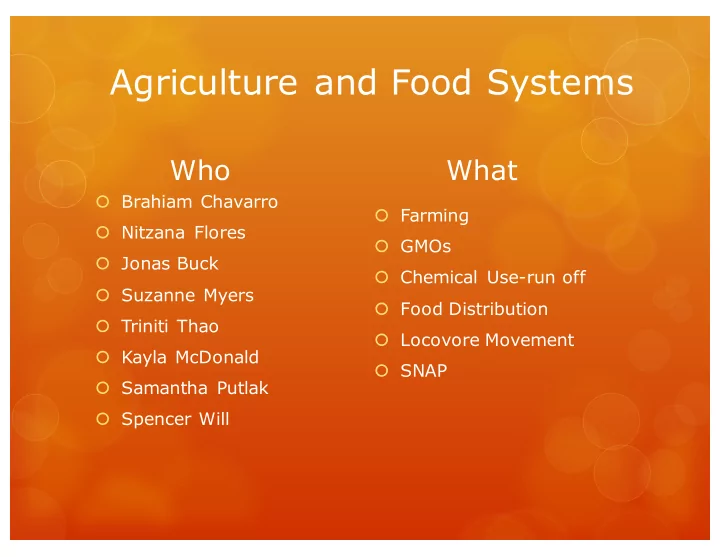
Brahiam Chavarro Nitzana Flores Jonas Buck Suzanne Myers Triniti Thao Kayla McDonald Samantha Putlak Spencer Will Farming GMOs Chemical Use-run off Food Distribution Locovore Movement SNAP
Who What
SLIDE 2 Agriculture
Agriculture: The science or practice of farming, including cultivation
- f the soil for the growing of crops and the rearing of animals to
provide food, wool, and other products
SLIDE 3 Farming: Hydroponics
Definition - A method of growing plants using mineral nutrient solutions, in water , without soil. Researchers discovered that while plants absorb essential nutrients, soil is not essential for plants to
- grow. In the wild, soil acts as a provider for nutrients
but isn’t necessary with when artificial nutrients are introduced in the water .
SLIDE 4
SLIDE 5
Hydroponics: Pros
Increased rate of growth (25%) and production (up to 30%) Reduces waste and production from soil runoff Decreased need for herbicides
SLIDE 6
Hydroponics: Cons
High in cost Long prep time Needs a lot of specific attention Fragile environment A lot of fresh water is needed
SLIDE 7
GMOs
Definition- Genetically modified organisms whose genetic material has been altered using genetic engineering techniques. “HARDER. BETTER. FASTER. STRONGER.”
SLIDE 8
GMOs: Pros
Higher yields Better quality/taste Healthier animals Vitamins and minerals (added) Look better Subsidized Better resistant to weeds
SLIDE 9
GM0s: Cons
Health risk in humans (i.e.: cancer , food allergies, organ damage Environmental risks No long-term testing Higher runoff Higher chemical intensities Expensive May infringe on religious beliefs: An individual practicing a religion forbidding the consumption of pork may unknowingly eat fresh produce contain a gene from a pig.
SLIDE 10 Runoff
- Runoff: “Water pollution: agricultural or industrial waste
products that are carried by rainfall and melting snow into surface waters”
SLIDE 11
SLIDE 12
Runoff: Cons
Erosion Detrimental to fragile ecosystems of nearby waterways Large expenses Compilation of chemical compounds (fertilizers, pesticides, herbicides) Farmers are not under the jurisdiction of the Clean Water Act
SLIDE 13 Food Distribution
Food Desert: Populated area with no access to fresh produce Food Deserts are caused when large corporations hold monopoly over an area and cause local businesses to shut down
The University of Minnesota campus is a large Food Desert, caused by the Monopoly of the Target Corporation
SLIDE 14
Farmers’ Market
Farmers’ Market: a food market at which local farmers sell fruit and vegetables and often meat, cheese, and bakery produce directly to consumers.
SLIDE 15 SNAP
SNAP (Supplemental Nutrition Assistance Program): Provides nutritional assistance to eligible, low-income individuals and families, and provides economics opportunities to the community The Food and Nutrition Service works with State agencies, nutrition educators, and neighborhood and faith-based
- rganizations to ensure that those eligible for nutrition assistance
can make informed decisions.