WINERY PRESENTATION ALY nt IT Piedmo LU di Monf errato O ne of - - PDF document

winery presentation aly nt it piedmo lu di monf errato
SMART_READER_LITE
LIVE PREVIEW

WINERY PRESENTATION ALY nt IT Piedmo LU di Monf errato O ne of - - PDF document

WINERY PRESENTATION ALY nt IT Piedmo LU di Monf errato O ne of the oldest wineries in Monferrato, Casalone started operations officially in 1734 and today is still owned by t he same family on the same land. The first bottles of wine


slide-1
SLIDE 1

VinUS Inc. CASALONE PRESENTATION 1 WINERY PRESENTATION IT Piedmo LU di Monf

O t t v T I c in mid 1700 is amazing and works almost entirely by gravity!

ALY nt errato

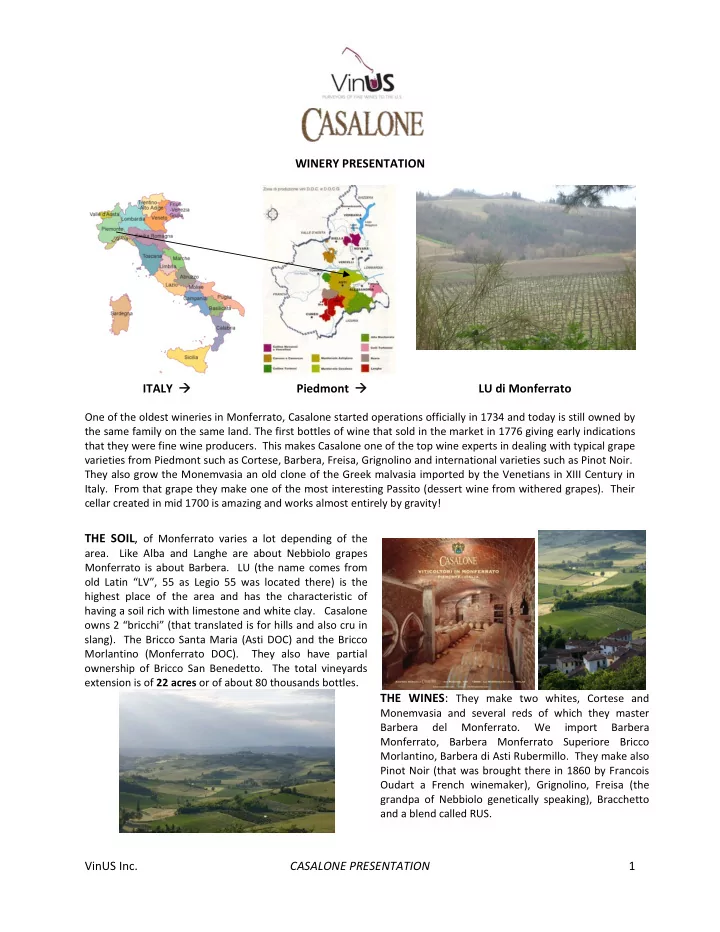
ne of the oldest wineries in Monferrato, Casalone started operations officially in 1734 and today is still owned by he same family on the same land. The first bottles of wine that sold in the market in 1776 giving early indications hat they were fine wine producers. This makes Casalone one of the top wine experts in dealing with typical grape arieties from Piedmont such as Cortese, Barbera, Freisa, Grignolino and international varieties such as Pinot Noir. hey also grow the Monemvasia an old clone of the Greek malvasia imported by the Venetians in XIII Century in

  • taly. From that grape they make one of the most interesting Passito (dessert wine from withered grapes). Their

ellar created

THE SOIL, of Monferrato varies a lot depending of the

  • area. Like Alba and Langhe are about Nebbiolo grapes

Monferrato is about Barbera. LU (the name comes from

  • ld Latin “LV”, 55 as Legio 55 was located there) is the

highest place of the area and has the characteristic of having a soil rich with limestone and white clay. Casalone

  • wns 2 “bricchi” (that translated is for hills and also cru in

slang). The Bricco Santa Maria (Asti DOC) and the Bricco Morlantino (Monferrato DOC). They also have partial

  • wnership of Bricco San Benedetto. The total vineyards

extension is of 22 acres or of about 80 thousands bottles.

THE WINES: They make two whites, Cortese and

Monemvasia and several reds of which they master Barbera del Monferrato. We import Barbera Monferrato, Barbera Monferrato Superiore Bricco Morlantino, Barbera di Asti Rubermillo. They make also Pinot Noir (that was brought there in 1860 by Francois Oudart a French winemaker), Grignolino, Freisa (the grandpa of Nebbiolo genetically speaking), Bracchetto and a blend called RUS.

slide-2
SLIDE 2

VinUS Inc. CASALONE PRESENTATION 2 White Wines Cortese (vivace): Cortese is the same grape variety of

Gavi but with a totally different terroir. In monferrato they make it vivace, slightly fizzy, by a second fermentation in stainless steel tanks.

Tasting profile: Dry and delicate but vibrant this

wine has a distinctive spring flowers scents and light tropical fruits and almond aftertaste.

Monemvasia: In the XVIII century Venetians brought to

Italy an unknown grape from the Greek Island of Monemvasia: it ended up being a clone of Malvasia, know known as Greek Malvasia. In the Bricco San Benedetto Casalone keeps growing these vines which they make into a very interesting wine. As it is not a variety recognized by the Monferrato DOC this is a table wine… (Piedmont does not have an IGT system by the way and is the only region in Italy that does not

Tasting profile: Monemvasia has a full and

persistent aroma of peaches and roses. Perfect with appetizers, fish, pasta.

Red Wines Barbera del Monferrato: This ruby wine exalts the flavor

  • f Barberas; it comes from the Morlantino hill sides and is

fermented in stainless steel and concrete with no oak.

Tasting profile: An intense nose of raspberries

welcomes you. The taste is dry but refreshing of strawberries and raspberries; it is an ideal companion with barbecues, Italian cuisine or for every relaxing moment.

Bricco Morlantino Barbera Superiore del Monferrato:

this barbera (in the past they use to make it by adding some freisa too) comes from the top of the hill of Morlantino, the “Bricco”. It ages in big, untoasted French Casks for one year and then 6 months in the bottle for fining.

Tasting profile: Perfectly balanced being

delicate but deep in flavor with red fruits flavors and spices with a smooth finish.

Fandámat Pinot Nero: Fandamat in Piedmontese slang is a

mischievous, naughty child, a double trouble one ‐ and that is in fact the Pinot Noir grape. Grown in Clayey‐calcareous soils

  • f Bricco Santa Maria vineyard this pinot noir gets special

treatment on the vines as well in the vineyard. The maceration is on skins for about 12 days at low temperature so as to preserve the delicate fragrances and then aged for 15 months in oak.

Tasting profile: The wine has a delicate and

persistent flavor, with traces of black currant, sweet violet, tobacco and liquorices. Perfect match is with red meat particularly if roasted and braised, mushrooms and seasoned cheeses.

RUS: RUS is a blend of Barbera 40%, Merlot 30%, Pinot Noir

30%. The three varieties are oak aged separately for 15 months before being assembled.

Tasting profile: The wine has a fine structure

with black fruits and spices in a long classy finish. It can be enjoyed by itself as well as with dishes such us a truffle risotto, a good steak or d cheeses.

Ruberm illo Barbera di Asti Superiore: Rubermillo’s

barbera comes from the heart of Bricco Santa Maria. The best grapes are selected and hand picked. After 12 days of fermentation with continuous délestages and rémontages and one year in French oak the wine is finally bottled.

Tasting profile: A deep ruby red color, spicy with

hints wild berries. Perfect with main courses particularly with meet, mushrooms, truffles.

slide-3
SLIDE 3

VinUS Inc. CASALONE PRESENTATION 3 La Capletta Grignolino: Grignolino is an old Piedmont

grape variety; the name refers to “grignole”, which in their dialect means a grape with a lot of pips (or seeds). Difficult to cultivate it produces an original, unpredictable wine which is widely appreciated.

Tasting profile: It shows a pale ruby red color,

delicate in the nose with notes of fruit and brushwood often accompanied by characteristic scents of white pepper. It is austere and refined

  • n the palate, dry with a characteristic presence
  • f tannins and a pleasantly bitter aftertaste.

Gambero Rosso 2008 Guide defines this wine: “a masterpiece of balance.

La Bricca Freisa: Freisa is an indigenous variety related to

nebbiolo apparently it can be called the grandpa of nebbiolo

  • grape. Always grown in Monferrato the variety is quite acidic

and tannic. The traditional way to make it is the vivace one: it means there is some fizzy due to a second fermentation in tanks.

Tasting profile: The wine is a ruby red with

purple hues; a distinct violet nose comes from the glass, a taste of red and black currants with round tannins and lively acidity. Goes well with cheeses, charcuteries, minestrone soups or by itself as an aperitif.

Mariposa, Bracchetto: Mariposa is made of Bracchetto

  • grape. This wine is made in the traditional way so is not too

sweet and is not too bubbly. Historically it was the beverage

  • f the farmers out in the field a little bit of sugar a little bit of

alcohol were giving energy and at the same time it was refreshing.

Tasting profile: Its distinctive rose leaf color and

wild roses scent is completed by a delicate but vivid taste of roses and raspberries. Excellent with chocolate desserts or as a refreshing appetizer wine with charcuteries.

Notes: _____________________________________________________________________________________ _____________________________________________________________________________________ _____________________________________________________________________________________ _____________________________________________________________________________________ _____________________________________________________________________________________ _____________________________________________________________________________________ _____________________________________________________________________________________ _____________________________________________________________________________________ _____________________________________________________________________________________ _____________________________________________________________________________________ _____________________________________________________________________________________ _____________________________________________________________________________________ _____________________________________________________________________________________ _____________________________________________________________________________________ _____________________________________________________________________________________ _____________________________________________________________________________________ _____________________________________________________________________________________ _____________________________________________________________________________________