
SLIDE 1
STAIR-SIDE FARM
EDWIN GANO, CHRISTIAN PATTI, & JOSEPH TIDONA
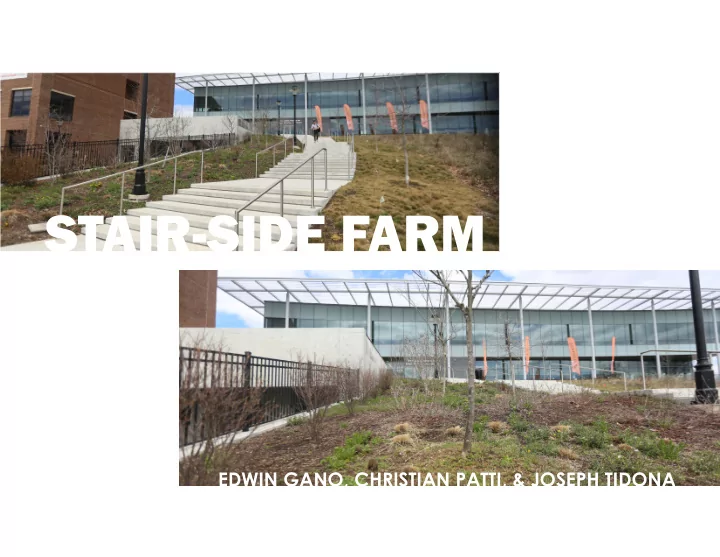
STAIR-SIDE FARM EDWIN GANO, CHRISTIAN PATTI, & JOSEPH TIDONA - - PowerPoint PPT Presentation
STAIR-SIDE FARM EDWIN GANO, CHRISTIAN PATTI, & JOSEPH TIDONA Asimina triloba Sweet Alice PAWPAW Cornus kousa x nutt. Rosy Teacups ROSY TEACUPS DOGWOOD Rhus typhina Tiger Eyes STAGHORN SUMAC Lindera benzoin SPICEBUSH
EDWIN GANO, CHRISTIAN PATTI, & JOSEPH TIDONA
Asimina triloba ‘Sweet Alice’
PAWPAW
Cornus kousa x nutt. Rosy Teacups
ROSY TEACUPS DOGWOOD
Rhus typhina ‘Tiger Eyes’
STAGHORN SUMAC
Lindera benzoin
SPICEBUSH
Sambucus canadensis ‘Adams’
AMERICAN ELDER
Baptisia x ‘Purple Smoke’
FALSE INDIGO
Vaccinium corymbosum ‘Berkeley’
BLUEBERRY
Hypericum x ‘Hidcote’
Yucca Filamentosa ‘Color Guard’
ADAM’S NEEDLE
Asclepias incarnata
SWAMP MILKWEED
Ceratisgma plumbaginoides
PLUMBAGO
Solidago rugosa ‘Fireworks’
ROUGH GOLDENROD
Aster novae-angliae ‘Vibrant Dome’
NEW ENGLAND ASTER
Front Perspective Cross-Section
Splashes of color pop off of the plantings and follow visitors as they go up and down the main
sweet fruits to diverse textures, the planting design offers much diversity to appeal to the people walking by. The openings by the railings allow for student interaction with the different species and act as gateways for educational programs to active the spaces.
Asimina triloba ‘Sweet Alice’ Paw Paw Rhus typhina ‘Tiger Eyes’ Staghorn Sumac Vaccinium corymbosum ‘Berkeley’ Blueberry Cornus kousa x
Rosy Teacups Dogwood Sambucus canadensis ‘Adams’ Elder American Lindera benzoin Spicebush Asclepias incarnata Swamp Milkweed
Plant Palette (Edible)
Local engagement is a prime infmuence in our design. The edible quality of these plants bridged together the community and the site. This half of our plant palette features a selection of native plants with various edible parts such as fruits, leaves, and pods that can be used in different types of recipes.
Programming
The design was infmuenced by the Harvest Café located inside the building. Its founding credo, “Eat Well, Live Well,” pushes the institute to serve fresh, healthy non-processed meals. The edible plants were chosen for their potential use for the Café, metaphorically making an extension of the kitchen outside. The edible parts of the plants allow for a variety of recipes ranging from a common blueberry muffjn to innovative foods such as PawPaw pudding, American Elder Dumplings, or Kousa Dogwood Pie. The menu we created shows real possible eating options from the produce supplied by the garden.
PawPaw Pudding
plus more for baking dish
inch baking dish.
powder, salt, cinnamon, ginger and nutmeg.
pawpaw pulp until smooth. Whisk in milk and vanilla. Whisk in melted butter. Pour into sugar mixture and stir
until just set in the center. Cool to room temperature
whipped cream.
Multi-Disciplinary Collaboration
The following recipe is 1 of 4 recipe examples that were created with a Food Science Graduate Student.
Aster novae- angliae ‘VibrantDome’ New England Aster Baptisiax ‘Purple Smoke’ False Indigo Certostigma plumbadinoides Plumbago Yucca fjlamentosa ‘Color Guard’ Adam’s Needle Hypericum x ‘Hidcote’
Solidago rugosa ‘Fireworks’ Rough Goldenrod
Plant Palette (Inedible)
The other half of our plant palette was chosen not for their edible qualities both more for their seasonal
fmowers and textures all meant for fjlling in the slope and catching people’s attention as they walk by.
Planting Plan
The concept behind our design was to create a soft edge to the meadow along the stairs and road front, but also still give people the ability to connect with the plantings. We created soft edges to the meadow that replaces the front fence, and gives people a reason to engage with the planting. The plants with edible qualities are scattered throughout the length
passerbys to sample something that’s growing right off a plant and even forage.
Diagrams
These diagrams to the left show the different types of colors that the plants would display throughout the different seasons. Some plants offer seasonal color with their fmowers and leaves, while others offer that color with the different fruits produced. Some of the plants even offer a little bit of winter interest during the colder months. Below is a diagram that locates new plants that have edible qualities. The left side seems empty because there is a previous planting design which we were tasked to incorporate into the design. SPRING SUMMER FALL WINTER
INEDIBLE EDIBLE
Learning Models
A model was created to help visualize what the space can be in the future. It now sits in the lobby of the IFNH and next to Harvest Cafe to keep educating the community.