Skin Hygiene Part of the Health and Wellbeing series Hand Washing - - PDF document

skin hygiene
SMART_READER_LITE
LIVE PREVIEW

Skin Hygiene Part of the Health and Wellbeing series Hand Washing - - PDF document

Skin Hygiene Part of the Health and Wellbeing series Hand Washing Hand-washing is an easy way to prevent infection. Understand when to wash your hands, how to properly use hand sanitizer and how to get your children into the habit. Frequent


slide-1
SLIDE 1

For more information call 01827 65999 or visit www.hamptonknight.co.uk

Health and Wellness

Healthy Eating and Exercise Series

Skin Hygiene

Part of the Health and Wellbeing series

Source: NHS Livewell

Hand Washing

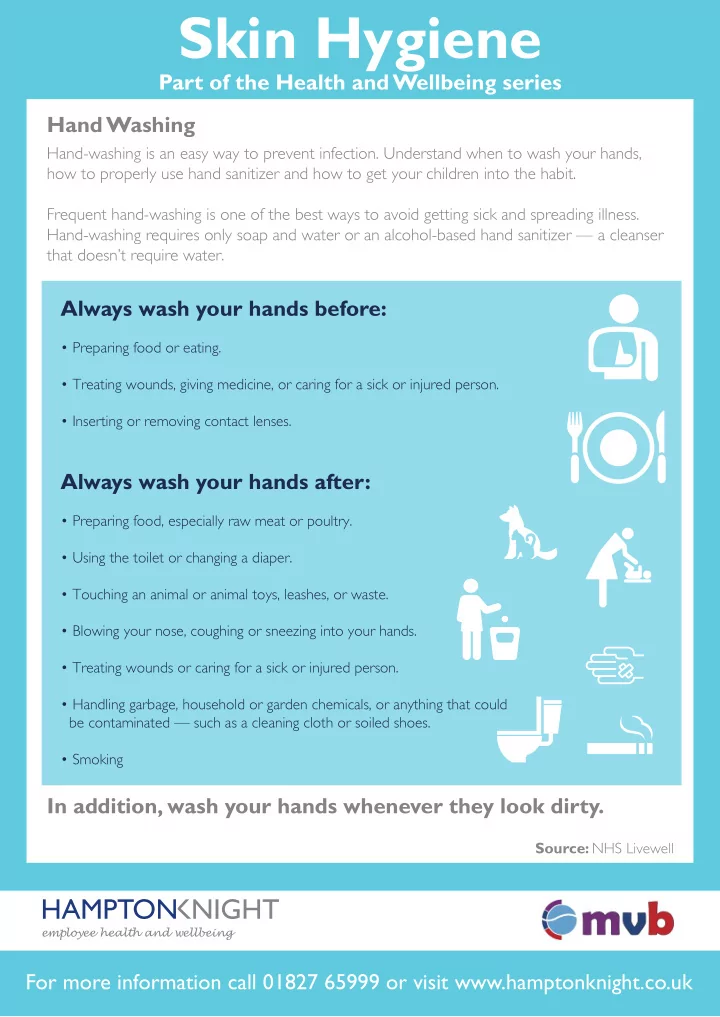
Hand-washing is an easy way to prevent infection. Understand when to wash your hands, how to properly use hand sanitizer and how to get your children into the habit. Frequent hand-washing is one of the best ways to avoid getting sick and spreading illness. Hand-washing requires only soap and water or an alcohol-based hand sanitizer — a cleanser that doesn’t require water.

Always wash your hands before:

  • Preparing food or eating.
  • Treating wounds, giving medicine, or caring for a sick or injured person.
  • Inserting or removing contact lenses.

Always wash your hands after:

  • Preparing food, especially raw meat or poultry.
  • Using the toilet or changing a diaper.
  • Touching an animal or animal toys, leashes, or waste.
  • Blowing your nose, coughing or sneezing into your hands.
  • Treating wounds or caring for a sick or injured person.
  • Handling garbage, household or garden chemicals, or anything that could

be contaminated — such as a cleaning cloth or soiled shoes.

  • Smoking

In addition, wash your hands whenever they look dirty.

slide-2
SLIDE 2

For more information call 01827 65999 or visit www.hamptonknight.co.uk

Dermatitis

Part of the Health and Wellbeing series

Source: HSE

Skin Checks for Dermatitis

Regularly check your skin for signs of Dermatitis

Look for:

Dryness Itching Redness

...which can develop into flaking, scaling, cracks, swelling and blisters.

If you think you may have Dermatitis, you should report it to your employer.

Your employer may then refer you to Occupational Health. For further information please visit the Occupational Health Department

slide-3
SLIDE 3

For more information call 01827 65999 or visit www.hamptonknight.co.uk

Skin

Part of the Health and Wellbeing series

Source: HSE

Save Your Skin Save Working Distance

Chemicals and Wet work

  • Avoid skin contact
  • Do not immerse hands
  • Use a tool
  • Use suitable gloves

Skin Contact Distance your skin from chemicals and wet work

slide-4
SLIDE 4

For more information call 01827 65999 or visit www.hamptonknight.co.uk

No task is undertaken unless it can be done safely. No one will be criticised for stopping what he or she are doing or for stopping any activity if it is believed to be unsafe or environmentally harmful – in fact we will thank you for caring!

Hand Cream Never submerse your bare hands directly into oils or metal working fluids Use the right gloves for the task Use barrier creams and moisturisers to rehydrate the skin Wash your hands regularly but make sure you dry them properly

Preventing Dermatitis

Dermatitis can occur quickly after contact with a strong irritant, or over a longer period from repeated contact with weaker irritants. Irritants can be chemical, biological, mechanical

  • r physical.

There are some roles within the manufacturing environment that will expose you to hazards that could cause Dermatitis. Dermatitis is a skin condition caused by contact with something that irritates the skin or causes an allergic reaction. It usually

  • ccurs where the irritant touches the skin.

Risk Factors

Part of the Health and Wellbeing series

Source: HSE

Irritant contact dermatitis

  • Wet work
  • Soaps, shampoos and detergents
  • Solvents
  • Some food (eg onions)
  • Oils and greases
  • Metal working fluid
  • Dusts
  • Acids and alkalis
slide-5
SLIDE 5

For more information call 01827 65999 or visit www.hamptonknight.co.uk

Hydraytion

Part of the Health and Wellbeing series

Source: National Hydration Council