Natural Shoreline Protection in the Great Lakes Brian Majka, - PowerPoint PPT Presentation
Natural Shoreline Protection in the Great Lakes Brian Majka, Restoration Ecologist May, 2019 Overview What are natural shorelines? Design considerations Project examples from low, moderate, and high energy sites What is a
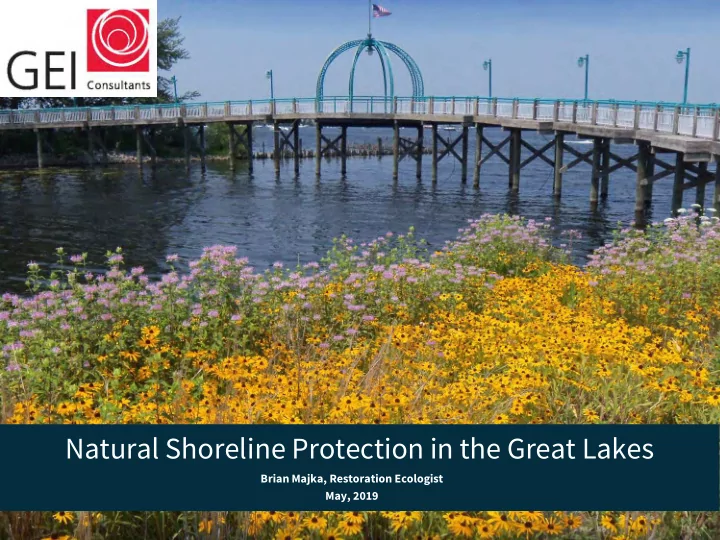
Natural Shoreline Protection in the Great Lakes Brian Majka, Restoration Ecologist May, 2019
Overview • What are natural shorelines? • Design considerations • Project examples from low, moderate, and high energy sites
What is a natural shoreline? • Terminology may change, “natural”, “living”, “nature- based” shorelines • “A living shoreline is a protected, stabilized coastal edge made of natural materials such as plants, sand, or rock. Unlike a concrete seawall or other hard structure, which impede the growth of plants and animals, living shorelines grow over time. “ -NOAA
How does wave energy affect vegetative growth? • Soil erosion • Physical displacement of plants • Turbidity
What do we mean by low/moderate/high energy sites? • Energy is primarily driven by wave height • Wind driven waves • Boats • Wisconsin DNR • Low energy=less than 1 foot • Moderate Energy=1- 2.3’ • High Energy=greater than 2.3’
Bioengineering • Bioengineering is “The use of plants, plant products, and special techniques to create structure within the soil to withstand erosive forces. It involves the reintroduction of deep-rooted native plants, creating a system that mimics naturally stable shorelines.” - MNSP
Stabilization Techniques: A Continuum of Choices Biotechnical Bioengineering Structural Engineering Engineering Rock, gabions, Native plants and Native plants, rock, and natural materials sheetpile, and concrete erosion control materials
Design Considerations • Form MUST follow function • Cost vs. risk Erosive Forces • Aesthetics • Vegetation type • Sunlight • Habitat considerations Regulatory Cultural Issues Ecology (ie, threatened, endangered Concerns or rare species) • Access to site • Soils/moisture Resources • Waves/shear stress/erosive Goals (Time, Money, etc… ) forces
Addison Oaks County Park • Oakland County Park • Conversion of beach into natural shoreline • Low energy
Grand Trunk Public Boat Launch • Owned by MDNR, maintained by City of Muskegon • Low energy • Rock/debris on shoreline Project Location • Project funded by NOAA through the Great Lakes Commission and West Michigan Shoreline Regional Development Commission
Before Restoration
Re-Grading Simple re-grading and debris removal
Heritage Landing County Park • Muskegon County park • Moderate to low energy Project Location • Rock/debris on shoreline • Project funded by NOAA through the Great Lakes Commission and West Michigan Shoreline Regional Development Commission
Project Location
BIO D BLOCK Pre-Restoration
Post-Restoration
BIO D BLOCK Pre-Restoration
BIO D BLOCK Construction
BIO D BLOCK Post-Restoration
Post-Restoration
Center Point Bay Marina • Funded by NOAA through the Great Project Location Lakes Commission and WMSRDC • Private landowner • 2 mile fetch • Up to ~3’ ice sheets • ~3’ waves recorded at site • Ice push from multiple directions
2009
2009
2010 Designed gaps for wildlife passage across the land/water interface
Bulrush climbing onto 2015 lake bed
2015
2016
2016 2009
Need to balance • In summary: functional, aesthetic and ecological goals Plants alone may not • cut it Keep the big picture in • mind Consider historic and • future, not just current conditions Remember that a failed • project benefits no one Don’t let the perfect be • the enemy of the good
Thank you! Brian Majka GEI Consultants, Inc. bmajka@ geiconsultants.com 616-843-3635
Recommend
More recommend
Explore More Topics
Stay informed with curated content and fresh updates.