
4/16/2016 1
Mixed Arterial & Venous Disease:
March 16, 2016 William Tettelbach, MD, FACP, FIDSA System Medical Director of Wound & Hyperbaric Medicine Services
Can Compression Therapy Work? Mixed Venous & Arterial Disease
___________________________________________________________
Venous leg ulcers are due to sustained venous hypertension. Risk factors for venous ulceration:
Chronic venous insufficiency Varicose veins Deep vein thrombosis Poor calf muscle function Arterio-venous fistulae Obesity History of leg fracture
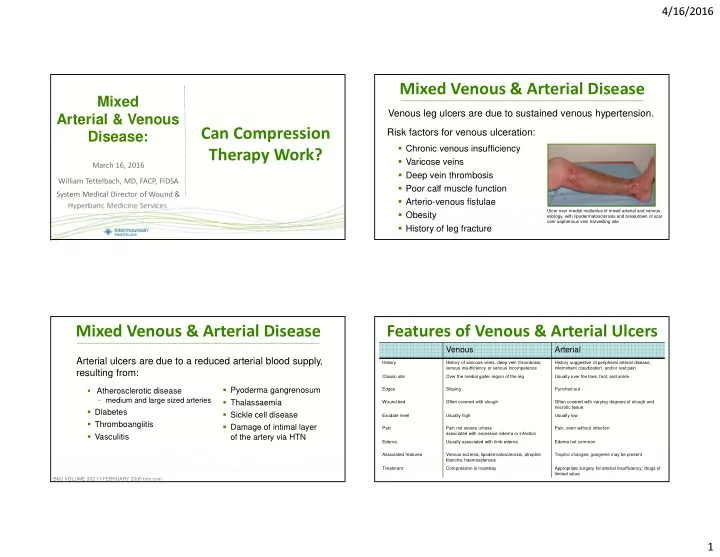
Ulcer over medial malleolus of mixed arterial and venous etiology, with lipodermatosclerosis and breakdown of scar
- ver saphenous vein harvesting site
Mixed Venous & Arterial Disease
___________________________________________________________
Arterial ulcers are due to a reduced arterial blood supply, resulting from:
Atherosclerotic disease
- medium and large sized arteries
Diabetes Thromboangiitis Vasculitis Pyoderma gangrenosum Thalassaemia Sickle cell disease Damage of intimal layer
- f the artery via HTN
BMJ VOLUME 332 11 FEBRUARY 2006 bmj.com
Features of Venous & Arterial Ulcers
Venous Arterial
History History of varicose veins, deep vein thrombosis, venous insufficiency or venous incompetence History suggestive of peripheral arterial disease, intermittent claudication, and/or rest pain Classic site Over the medial gaiter region of the leg Usually over the toes, foot, and ankle Edges Sloping Punched out Wound bed Often covered with slough Often covered with varying degrees of slough and necrotic tissue Exudate level Usually high Usually low Pain Pain not severe unless associated with excessive edema or infection Pain, even without infection Edema Usually associated with limb edema Edema not common Associated features Venous eczema, lipodermatosclerosis, atrophie blanche, haemosiderosis Trophic changes; gangrene may be present Treatment Compression is mainstay Appropriate surgery for arterial insufficiency; drugs of limited value