Electron Spectrometers Scanning Probe Microscopy Sources LEEM/PEEM - - PDF document
SPECS is specialized in the development and production of customized UHV surface analysis systems. Following the customer's vision, SPECS conceives, designs, and produces individual systems to meet the customer's needs. In our customized UHV
SPECS is specialized in the development and production of customized UHV surface analysis systems. Following the customer's vision, SPECS conceives, designs, and produces individual systems to meet the customer's needs.
In our customized UHV surface analysis systems, sample preparation facilities like MBE, sputtering, and thin film deposition are combined with in-situ analysis by our ultra high resolution XPS analyzer PHOIBOS, by LEED diffraction and by imaging techniques like STM, LT- STM, and LEEM/PEEM. A large variety of excitation sources can be mounted on our UHV vacuum
- chambers. All systems are accompanied by a powerful and easy to handle software speeding up
the acquisition and analysis of scientific data. Surface science provides deep insights into the properties of matter which are indispensable when developing new products and applications for tomorrow's world: nanotechnology, information technology, medicine, materials science, environmental protection, production of energy.The research tasks require surface analysis systems of the highest standards. SPECS meets these requirements by pooling and combining the company's expertise with that of Bestec, CreaTec and Surface Concept within the Network of Competence. unavailable. Electron Spectrometers Scanning Probe Microscopy Sources LEEM/PEEM LEED Thin Film Growth
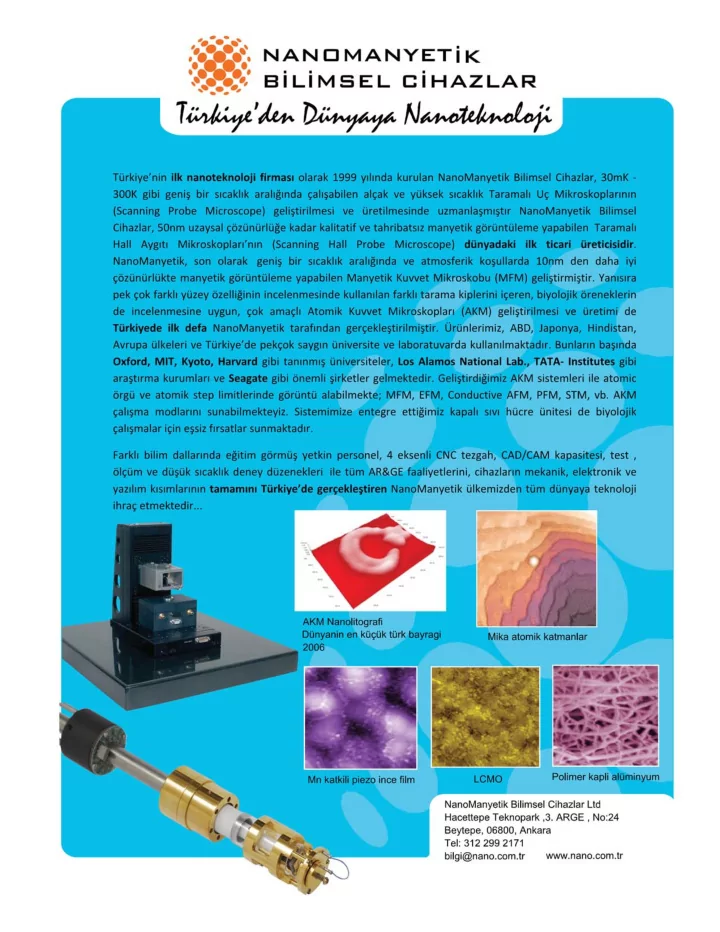
REPRESENTED IN TURKEY BY
Hacettepe Teknokent Kuluçka Merkezi Arge Binası No : 31, 06800 Beytepe, Ankara TEL : +90 312 299 2171 FAKS : +90 312 299 2173 www.nano.com.tr --- bilgi@nano.com.tr
- 6
- 4
- 2
2 4 6
- 1,50E-007
- 1,00E-007
- 5,00E-008
0,00E+000 5,00E-008 1,00E-007 M ( A m ^2 ) H(kOe)
- 1
- 0,
- 1
- 1
- 5
(a)
- 6
- 4
- 2
2 4 6
- 1,50E-007
- 1,00E-007
- 5,00E-008
0,00E+000 5,00E-008 1,00E-007 M ( A m ^2 ) H(kOe)
- 1
- 0,
- 1
- 1
- 5
(a)
- 6
- 4
- 2
2 4 6
- 1,50E-007
- 1,00E-007
- 5,00E-008
0,00E+000 5,00E-008 1,00E-007 M ( A m ^2 ) H(kOe)
- 1
- 0,
- 1
- 1
- 5
(a)
(b)
- 6
- 4
- 2
2 4 6
- 1,50E-007
- 1,00E-007
- 5,00E-008
0,00E+000 5,00E-008 1,00E-007 M ( A m ^2 ) H(kOe)
- 1
- 0,
- 1
- 1
- 5
(a)
- 6
- 4
- 2
2 4 6
- 1,50E-007
- 1,00E-007
- 5,00E-008
0,00E+000 5,00E-008 1,00E-007 M ( A m ^2 ) H(kOe)
- 1
- 0,
- 1
- 1
- 5
(a)
- 6
- 4
- 2
2 4 6
- 1,50E-007
- 1,00E-007
- 5,00E-008
0,00E+000 5,00E-008 1,00E-007 M ( A m ^2 ) H(kOe)
- 1
- 0,
- 1
- 1
- 5
(a)
(b)
Figure 1: (a) AFM of FePt nanoparticles assembled on ABP/Al2O3 surface. (b)VSM of FePt nanoparticles assembled
- n PEI/Al2O3 surface and annealed
at 800oC under H2/N2 environment.
Monolayer-directed Assembly and Magnetic Properties of FePt Nanoparticles on Patterned Aluminum Oxide
Oktay Yildirim, 1,2* Tian Gang, 3 Sachin Kinge,3,4 David N. Reinhoudt,1,4 Dave H.A. Blank,2 Wilfred G. van der Wiel,3 Guus Rijnders 2 and Jurriaan Huskens 1
1Molecular Nanofabrication Group 2Inorganic Materials Science 3SRO NanoElectronics 4Supramolecular Chemistry & Technology
MESA+ Institute for Nanotechnology, University of Twente, P.O. Box 217, 7500 AE, Enschede, The Netherlands Abstract— Modification of Al2O3 surfaces with self-assembled monolayers (SAMs) of phosph(on)ates with terminal functional groups resulted in FePt NPs assembly via ligand exchange. Patterning the substrates by microcontact printing allowed local nanoparticle assembly. Thermal annealing led to phase transformation of the NPs which resulted in ferromagnetic behavior at room temperature. By nanoimprint lithography FePtAu patterns at micron and nanoscale with high contrast between patterned and non-patterned regions were created. Electrical measurements showed that SAM formed an insulating barrier on conducting metal oxide.
Recently, ferromagnetic nanoparticles have attracted great interest due to their high chemical stability, hard magnetic properties and small size which makes them good candidates to be used at spintronic devices, magnetic sensing and ultrahigh density data storage applications [1]. Synthesis, characterization and assembly
- f
monodisperse FePt nanopaticles have been extensively studied. FePt nanoparticles have high magnetocrystalline anisotropy (108 erg/cm3), which indicates, a 3nm particle has much higher magnetic anisotropy energy than the thermal energy[1]. They have higher chemical stability than other hard magnetic materials[1]. Their well defined boundaries and small size are very suitable to have storage densities in order of terabit/inch2 with reduced noise. To be able to use FePt nanoparticles having high magnetocrystalline anisotropy for magnetic data storage applications, it is necessary to have control on the assembly process and cover a sizeable area with high packing density. Although most of the study has been done on FePt NPs on SiO2 substrates, Al2O3 is a better candidate to be used as substrate instead of SiO2 because Al2O3 is an important dielectric material used in electronic device fabrication and the mostly used dielectric in magnetic tunneling junctions (MTJs) and a more electrically resistant material than SiO2. Besides, Al2O3 may be a model system for other FePt/metal
- xide systems.
We demonstrate a method to assemble FePt nanoparticles on Al2O3 surface in a controlled way via assembly and ligand exchange
- f
FePt NPs
- n
polyethyleneimine (PEI), aminobutyl phosphonic acid (ABP)
- r
phosphonoundecanoicacid (PNDA) modified Al2O3 surfaces (Figure1). Thermal annealing under N2/H2 reducing environment leads to a phase change of FePt from chemically disordered FCC to chemically ordered FCT phase which results in ferromagnetic behaviour at room temperature with around 440 Oe coercivity (Figure2). Microcontact printing (μCP) provides the possibility to direct the NP assembly to designated areas of the substrate. Self-assembly combined with phosph(on)ate based PNDA, ABP, MUP self assembled monolayers (SAMs) having different end-groups is shown to be an effective tool to fabricate FePtAu patterns with high contrast between patterned and non-patterned regions with a high resolution below 200 nm as well as in micron range by using nanoimprint lithography (NIL). To use the (SAMs) in spintronic devices, to be able to fabricate electrical contacts and to have information on electrical properties of SAM layers is necessary. Electrical characterization of the SAMs on conducting metal oxide Nb doped SrTiO3 (NbSTO) by cyclic voltammetry (CV) showed the efficiency of SAM layer to isolate the substrate from environment. Pt top contacts fabricated by pulsed laser deposition (PLD) are isolated from the susbtrate by SAM layer. When compared to bare NbSTO substrate, organic layer on NbSTO has similar effect with an 4 nm Al2O3 layer on NbSTO and causes a decrease in the leakage current at same voltage range. The authors gratefully acknowledge support from the MESA+ Institute for Nanotechnology (SRO Nanofabrication) and NanoNed, the Nanotechnology network in The Netherlands. This work is part of WGvdW’s research program ‘Organic materials for spintronic devices’, financially supported by the Netherlands Organization for Scientific Research (NWO) and the Technology Foundation STW. We acknowledge Mark Smithers for TEM and Gerard Kip for XPS measurements. We thank A. Wagenaar and J. Engbersen (RUG, Groningen) for providing TDP.
*Corresponding author: o.yildirim@tnw.utwente.nl
[1] S. H. Sun, S. Anders, T. Thomson, J. E. E. Baglin, M. F. Toney,
- H. F. Hamann, C. B. Murray and B. D. Terris, Controlled Synthesis
and Assembly of FePt Nanoparticles, J. Phys. Chem.B, 2003, 107, 5419-5425.
Oral Presentation, Theme E : Nanoelectronics, Spintronics, Nano-Magnetics, Quantum Computing, Qubits 6th Nanoscience and Nanotechnology Conference, zmir, 2010 109
Magn etic Properties of Exchange Coupled Py/Cr/Py trilayer films
1 , R.Topkaya1, M.Erkovan1, M.Özdemir1, O.Öztürk1
1
Gebze Institute of Technology, P.K. 141, 41400 Gebze-Kocaeli, Turkey Abstract-The ferromagnetic thin films attracts considerable attention of researchers due to their applications in the magnetoelectronics. The exchange interactions play most important role in GMR applications. Therefore the accurate magnetic characterization of the magnetic multi- layered structures is one of the key issues. As the thickness of the magnetic malti-layers reduces down to nanometer scale, then the magnetic signal to nose ratio dramatically decreases. On the other ferromagnetic resonance (FMR) was proven to be one of the well established, sensitive and useful technique. In this work, we have studied the magnetic properties of ultra-thin Ni80Fe20/Cr/N 80Fe19 trilayer system as a function of non magnetic Cr thicknesses by using FMR and dc magnetization measurement techniques. The films were growth by conventional dc and/or rf-magnetron sputtering techniques. The Cr layer thickness is increased by 0.1 nm from 0.2 nm to 4 nm. In order to
- btain the most suitable FMR signal the thickness of magnetic layers are searched to observe exchange coupling between ferromagnetic
layers through non-metallic Cr layer. The FMR experiments were done by using an x-band ESR spectrometer as a function of temperature. The dc magnetic field was rotated with respect to the film in order to get information about the magnetic anisotropies and the exchange coupling parameters. The dc magnetization measurements were carried out as a function of temperature by using Quantum Design PPMS
- system. Two symmetrical, strong and well resolved peaks were observed. These two FMR peaks become more clear as the field orientations
close to film normal. The minor peak intensity strictly depends on the orientation of the external field. When the external field direction is close to the film plane, the minor peak almost vanishes. The thickness of Cr layer was found a significant effect on the separations of the two modes in the field axis. Even the relative positions of the strong and the weak modes are interchanged for particular thickness of Cr layer. We have developed a mathematical model to analyse the FMR data of a multilayered magnetic layers separated by non-magnetic spacer but still have remarkable exchange coupling between successive layers. we have found that the exchange coupling constant change sign for every 1.1 nm steps in the spacer thickness.
Oral Presentation, Theme E : Nanoelectronics, Spintronics, Nano-Magnetics, Quantum Computing, Qubits 6th Nanoscience and Nanotechnology Conference, zmir, 2010 110
Magnetic Resonance Study of Diluted Magnetic Oxide Prepared By High Temperature Cobalt Implantation in TiO2 Rutile
- S. Güler1*, B. Rameev1,2, R.I. Khaibullin2,3, V.F. Valeev2 1
1 Gebze Institute of Technology, 41400 Gebze-Kocaeli, Turkey 2 Kazan Physical-Technical Institute of RAS, 420029 Kazan, Russia 3 Department of Physics, Kazan State University, 420008 Kazan, Russia
Abstract- The magnetic properties of “hot-implanted” (Tirr=900K) Co- and Ar-implanted single crystal TiO 2 rutile have been studied by FMR and VSM techniques. Essential effect of oxygen vacancies in Co- and Ar-implanted TiO 2, and indications of intrinsic ferromagnetism in the Co:TiO 2 have been revealed.
Further development of electronics and information technology is not possible without implementation of new
- functionalities. For that reason, huge research efforts are now
concentrated in the field of magnetoelectronics (spintronics). This is a new very fast developing field, where the two degrees of freedom, the charge and the spin of the carriers, are utilized simultaneously. The magnetoresistance sensors made of multilayers containing metal ferromagnets, showing giant magnetoresistance (GMR)
- r
tunneling magnetoresistance (TMR), are today’s best known successful magnetoelectronics devices [1]. However, it is commonly accepted that realization of spin-polarized current injection and manipulation in semiconductors is the key element to utilize the advantages of spintronics in full measure. In this respect, the discovery of high-Curie temperature diluted magnetic oxides (such as transition metal doped TiO2, ZnO, SnO2 In this work we studied the magnetic properties of Co- implanted and Ar-implanted single crystal (001) and (100) TiO , etc.) has attracted much attention due to their potential value in spintronic devices [2,3]. A vast number of experimental works report on the room temperature ferromagnetism observed in various oxides. However, it is still an open issue to synthesize magnetic and, at the same time, semiconducting oxides, having high Curie-temperature ferromagnetism of intrinsic origin (which is not due to cluster inclusions) [4].
2 samples. Single crystalline TiO2 rutile substrates have
been implanted on the ILU-3 ion accelerator (Kazan Physical-Technical Institute) with 40 keV Co+ and Ar+ ions to a fluence of 1.50×10¹⁷ ions/cm2 at ion current density of about 8 A/ cm2. To obtain a homogeneous distribution of doped ions in the TiO2 matrix the substrate temperature during the implantation has been kept as high as 900o The “hot-implanted” TiO K.
2
For the Co-implanted TiO samples have been investigated by ferromagnetic resonance (FMR) at 11K-300K range and vibrating sample magnetometer (VSM) techniques. FMR spectra have been recorded by using Bruker EMX Electron Spin Resonance (ESR) spectrometer at X-band (9.8 GHz) at 11K-300K temperature range and various orientations of implanted surface with respect to the applied DC magnetic field (H). VSM measurements have been performed with use
- f Quantum Design PPMS (9T) system.
2 sample we have observed FMR
signal from room temperature up to 45 K. We observed also a clear indication of phase transition at temperatures of 25-40 K as revealed by VSM and by abrupt change in tuning conditions through this temperature range during the magnetic resonance measurements. This effect has been attributed to an increase of the sample impedance due to charge carrier localization at low temperatures. Besides, this is accomplished by disappearance of FMR signal as well. On the other hand, below 22 K we observed paramagnetic Co2+ centers with the typical hyperfine splitting of ESR lines due to nuclear spin (I=7/2) of Co. Our analysis shows that the ESR signal is attributed to the Co2+ ions substituting Ti4+ in the host TiO2 structure. It is known that formation of Co2+ centers in the TiO2 rutile involves charge compensation by
- xygen vacancies. Formation of oxygen vacancies is also an
additional effect of the ion radiation induced damage of TiO2
- lattice. The effect of oxygen vacancies have been studied
separately in the Ar-implanted TiO2 samples. We observed a phase transition at nearly same temperature range in the Ar- implanted samples as well. An appearance of additional signals at lower temperatures is also observed and attributed to Ti3+ centers formed near oxygen vacancies. Our previous studies [5] reveal a transition in the electrical resistance of both Ar and Co implanted samples in the same temperature
- range. Thus, our studies confirm an essential role of oxygen
vacancies in the ferromagnetism observed in the Co- implanted TiO2 rutile. Our experimental studies also points to the intrinsic origin of ferromagnetism observed in the “hot- implanted” samples. This work was partially supported by DPT (State Planning Organization of Turkey) project no 2009 K 120730, by RFBR Grant no. 07-02-00559-a, and by joint TUBITAK- RFBR Programme, Grant No. 10-02-91225-CT, and Russian Federal Agency on Education, contract P902. *Corresponding author : sumeyra@gyte.edu.tr
[1] F. Matsukura, H. Ohno, T. Dietl, Handbook of Magnetic Materials, Volume 14, 2002, Pages 1-87 [2] S.A. Wolf, et al., Science 294,1488 (2001). [3] T. Dietl, H. Ohno, F. Matsukura, J. Cibert, and D. Ferrand, Science 287, 1019 (2000). Zabel, R. Khaibullin, L. Tagirov, Appl. Phys. Lett. 95, 102502 (2009). [5] R.I. Khaibullin, private communications.
Oral Presentation, Theme E : Nanoelectronics, Spintronics, Nano-Magnetics, Quantum Computing, Qubits 6th Nanoscience and Nanotechnology Conference, zmir, 2010 111
Figure 1. Some selected RT FMR spectra for the in-plane geometry.
Field cooling-induced magnetic anisotropy in exchange biased CoO/Fe bilaye r studied by ferromagnetic resonance
1,2 Sinan Kazan,1,2 1,2 Mustafa Özdemir,3 4 Jörg Dudek,4 Mohamed Obaida4 and Kurt Westerholt4
1 Department of Physics, Gebze Institute of Technology, 41400 Kocaeli, Turkey 2NASAM-Nanomagnetism and Spintronic Research Center, Gebze Institute of Technology, 41400 Kocaeli, Turkey 3Marmara University, Faculty of Science and Letters, Department of Physics, 34722 Istanbul, Turkey 4Institut für Experimentalphysik IV/Festkörperphysik, Ruhr-Universitaet Bochum,D-44780 Bochum, Germany
Abstract- Exchange-biased CoO/Fe bilayer grown on MgO (100) substrate by sputtering, studied by variable angle and temperature ferromagnetic resonance. The low temperature data exhibit a sudden onset of a field cooling-induced and shifted cubic anisotropy below the Néel temperature of CoO. This results in a two-fold uniaxial or four-fold cubic symmetry for in-plane magnetic anisotropy depending on a field cooling direction. The developed theoretical model perfectly simulates the experimental data and helps to explain the mechanism of exchange bias and magnetic anisotropies in coupled antiferromagnetic/ferromagnetic system.
The exchange-bias phenomena in coupled antiferromagnetic/ferromagnetic systems have received much attention due to its fascinating physical properties as well as large-scale technological applications [1]. Among antiferromagnetic materials, transition metal oxides like NiO and CoO have extensively been used in exchange-biased bilayers and multilayers. The lower Néel temperature and the strong magneto-crystalline anisotropy are the main advantages of CoO which allow us to do field cooling experiments and enhance the exchange bias. Recently, Fe/CoO and Co/CoO bilayers have been grown on different
- substrates. While various aspects of exchange bias have been
examined in these studies, effect of field cooling on magnetic anisotropies and magnetodynamics have not been studied in detail. In this work, we focus on the magnetic anisotropies of CoO/Fe bilayer epitaxially grown on MgO (100) substrate. The temperature-dependent magnetic anisotropies of the Fe layer and the easy axis of the system have been determined by using advantages of ferromagnetic resonance technique. In addition, a theoretical model is developed to simulate the experimental FMR data. CoO/Fe bilayer was grown on MgO (100) substrate by using ion beam sputtering technique with a base pressure of ~10-9 mbar. After etching the MgO substrate with Ar for 20 second, a 22 nm thick Fe layer was epitaxially grown on the top of the substrate with a pressure of 4.4×10⁻⁴ mbar. Finally, in order to prevent the Fe layer from ex-situ oxidation and to investigate the effect of exchange bias on magnetic anisotropies, a 10 nm thick CoO layer was deposited with a pressure of ~10-3 Temperature-dependent FMR measurements were carried
- ut using a commercial Bruker EMX electron spin resonance
(ESR) spectrometer operating in X-Band (9.8 GHz). Angular dependencies of FMR spectra have been recorded with the static magnetic field rotated either in the plane of the samples (in-plane geometry -
mbar. H=90, H-varied) or rotated
from the sample plane to the normal (out-of-plane geometry
- H-varied, H
Furthermore, we have carried out FMR measurements at low temperatures to investigate the effect of exchange bias
- fixed). The in-plane FMR spectra of
CoO/Fe/MgO sample for the external field directions between ±45 degrees are shown in Figure. The resonance lines of FMR spectra have a relatively small linewith indicating a high crystallinity of the Fe film. We have
- bserved two FMR modes in both in-plane and out-of-plane
- geometries. This behavior reflects the symmetry of total
crystalline anisotropies.
- n magnetic anisotropies. Angular dependence of resonance
fields for in-plane geometry taken for field cooling under 10 kOe applied along the [010] and [011] directions. When the sample cooled along the [010] direction cubic symmetry of magnetic anisotropy still preserved. But the width of ellipses was narrowed and the resonance fields at 0 and 180 degrees were decreased compared to the room temperature data. When the sample cooled along the [011] direction, the resonance fields at 0 and 180 degrees completely
- disappeared. In addition, reduction of resonance fields at 90
and 270 degrees were observed This data nicely show the strong effect of exchange bias on in-plane magnetic anisotropies of Fe film. We would like to acknowledge P. Stauche for technical
- support. This work was partially supported by DPT (State
Planning Organization of Turkey) through the project No 2009K120730, DFG through SFB 491 and BAPKO project
- f Marmara University (FEN-KPS-100105-0073). S. Kazan
acknowledges TUBITAK for financial support during his postdoctoral studies at Ruhr-Universitaet Bochum. *Corresponding author: akdogan@gyte.edu.tr
[1] W. H. Meiklejohn and C. P. Bean, Physical Review 102, 1413 (1956).
Oral Presentation, Theme E : Nanoelectronics, Spintronics, Nano-Magnetics, Quantum Computing, Qubits 6th Nanoscience and Nanotechnology Conference, zmir, 2010 112
Dilute Magnetic Semiconductors: Combined Density Functional Theory and Quantum Monte Carlo Approach
Nejat Bulut1*
1Department of Physics, Izmir Institute of Technology, Gulbahce, Urla 35430, Izmir, Turkey
Abstract- In order to investigate the origin of ferromagnetism in the dilute magnetic semiconductors, we study the Haldane-Anderson model by combining the density functional theory with the quantum Monte Carlo technique.
We use the Haldane-Anderson model to discuss the substitution
- f
transition-metal impurities into
- semiconductors. We study this model with the Hirsch-Fye
Quantum Monte Carlo (QMC) technique in the dilute limit. The QMC results show that the occupation of the impurity bound state plays an important role in determining the nature and the range of the magnetic correlations between the impurities [1] in agreement with the Hartree-Fock predictions [2]. In order to make direct comparisons with the exprimental data, we combine the Density Functional Theory (DFT) with the QMC technique. In particular, we first use the density- functional theory to calculate the host band structure and the impurity-host hybridization matrix elements, which are input parameters for the Haldane-Anderson model, and then preform the QMC simulations with these realistic model parameters [3]. For the case of (Ga,Mn) As, the DFT+QMC approach leads to an impurity bound state located ~100meV above the top of the valence band in agreement with the experimental value of 110meV. In addition, we observe an anisotropic distribution of the local density of states at the impurity-bound state energy, which is consistent with the STM data. Hence, we think that the DFT+QMC appoach is a useful tool for performing realistic calculations for the various compounds of dilute magnetic semiconductors. *Corresponding author: nejatbulut@iyte.edu.tr
[1] N. Bulut, K. Tanikawa, S. Takahashi, and S. Maekawa. Long-range ferromagnetic correlations between Anderson impurities in a semiconductor host: Quantum Monte Carlo simulations, Physical Review B 76, 045220 (2007). [2] M. Ichimura, K. Tanikawa, S. Takahashi, G. Baskaran, and S. Maekawa, Foundations of Quantum Mechanics in the Light of New Technology (ISOM-Tokyo 2005), eds. S. Ishioka and K. Fujikawa, World Scientific, Singapore, pp. 183–186, 2006. [3] Jun-ichiro Ohe, Yoshihiro Tomoda, Nejat Bulut, Ryotaro Arita, Kazuma Nakamura, and Sadamichi Maekawa. Combined approach of density functional theory and quantum Monte Carlo method to electron correlation in dilute magnetic semiconductors, Journal of the Physical Society of Japan 78, 083703 (2009).
Oral Presentation, Theme E : Nanoelectronics, Spintronics, Nano-Magnetics, Quantum Computing, Qubits 6th Nanoscience and Nanotechnology Conference, zmir, 2010 113
Figure 2. The isomerization of hydride complex
Quantum-chemical study of structure and properties of gold clusters: bridging the gap between model and real gold catalysis
Pichugina D.A.1,2, Beletskaya A.V.1, Mukhamedzyanova D.F. 1, Askerka M.S. 1, Shestakov A.F. 2, 1
1 Department of Chemistry, M.V. Lomonosov Moscow State University, Moscow, Russia 2
Abstract-The nature of active sites and activity of gold containing catalysts have been studied in direct hydrogen peroxide formation and allylic allylbenzene isomerization using modern quantum-chemical methods. Au Institute of Problems of Chemical Physics RAS, Chernogolovka, Russia
4, Au8, Au10, Au20
Nowadays, gold nanoparticles have attracted intent attention
- f researchers owing to prospects of use in electronic devices,
medicine, functional nanoscale materials, but one of the most promising field is catalysis [1]. The application of gold catalysts makes it possible to substitute currently used polluted processes in industry for environmentally appropriate
- technologies. In spite of gold nanoparticles have been studied
more than twenty years the nature of active sites of these catalysts and the way of oxygen and hydrogen activation on gold clusters have not been studied enough. The development and application of modern quantum-chemical methods for structures description and simulation of catalytic properties of small gold particles is a crucial task.
clusters have been chosen as a model of active gold nanoparticle. Theoretical evidence reveals that the efficiency of catalyst depends on charge and structure of gold clusters, the corner and edge gold atoms on surface play the principal role.
To clarify the mechanism of gold containing catalytic reactions the simulation of oxidation and hydrogenation process, hydrocarbons isomerization have been carried out. Structures of Au4, Au8, Au10, Au20 The activation of oxygen and hydrogen on a model cluster Au clusters have been chosen as a model of active gold nanoparticle. Quantum-chemical methods (MP2, CCSD, DFT/PBE, non-relativistic with pseudopotentional sbk and scalar-relativistic approaches [2]) have been used.
8 and mechanism of hydrogen atoms migration on gold
cluster to form H2O2 have been investigated. The oxygen adsorption on Au8 cluster with Au8-O-O complex formation is the first step in catalytic cycle (Figure 1). In case of hydrogen dissociative adsorbtion takes place to form IM1 intermediate. The H-migration passes through 5 steps over IM2 – IM7
- intermediates. The final step in this catalytic cycle is the
desorption of hydrogen peroxide molecule. It has been shown that the H-migration on gold cluster deals with low energy barriers (not higher than 85 kJ/mol). Obtained data have been compared with the alternative mechanisms of H2O2 synthesis
- n model Au 3 and Aun
- 1 and Aun
+1
For better understanding the nature of active sites we have simulated allylic isomerization of allylbenzene to cis- and trans- 1-phenylpropene catalyzed by gold nanoparticles. The model systems including allylbenzene and Au clusters [3].
n z (where n=1, 4,
20, 21; z= -1, 0, +1) have been examined. The mechanism of this reaction involves the formation of a gold hydride
- complex. The limited rate constant of the investigated reaction
depends on gold charge and increases in the following range: Au0 < Au-1 < Au+1, equal 5,5·10-13 s-1, 2,8·10-7 s-1 and 8,5·10 -5 s-1 correspondingly. Thus charged atoms are the most active
- n catalyst's surface. The optimized structures of reagents and
products with cluster Au21
+
*Corresponding author:
have shown the principal role of the corner and edge atoms in catalysis. The difference of calculated kinetic characteristics in the formation of cis- and trans- 1-phenylpropene as well as the possibility of hydride complex to isomerize (Figure 2) is the evidence of significant formation of trans- product [4]. Application of quantum-chemical methods to predict gold clusters properties allows us to elucidate direct hydrogen peroxide formation and allylic isomerization mechanisms. The calculations reveal that the atoms in cluster’s apex have the highest activity; they are like active sites of catalyst. The
- btained information can provide the impetus for further
experimental studies of gold nanoparticles structure and their catalytic activity.
1Tdaria@phys.chem.msu.ru [1] A.S.K. Hashmi and G.J. Hutchings, Angew. Chem., Int. Ed., 45, 7896 (2006) [2] K.G. Dyall, J. Chem. Phys., 100, 2118 (1994). [3] A.M. Joshi, W.N. Delgass and K.T. Thomson, J. Phys. Chem. B, 109, 22392 (2005). [4] V.V. Smirnov, S.A. Nikolaev et. al., Kinet. Catal., 48, 265 (2007). Figure 1. Catalytic cycle of direct hydrogen peroxide formation
Oral Presentation, Theme E : Nanoelectronics, Spintronics, Nano-Magnetics, Quantum Computing, Qubits 6th Nanoscience and Nanotechnology Conference, zmir, 2010 114
- 0.6
- 0.4
- 0.2
0.0 0.2 0.4 0.6
- 6
- 3
3 6 I (A) V (V)
P (H=7T) AP (H= 0)
T = 30 K
Figure: Current vs. voltage curves of LSMO/MgO/LSMO based magnetic tunnel junction in the absence (shown with solid circles), and in the presence of magnetic field of 7 tesla (shown with open circles), respectively.
Transport Properties of Magnetic Tunnel Junctions with Half-metallic Ferromagnetic Electrodes
Syed Rizwan1, S. Zhang2, Z. C. Wen1, Y. G. Zhao2, and X. F. Han1*
1State Key Laboratory of Magnetism, Institute of Physics, Chinese Academy of Sciences, Beijing 100190, China 2Department of Physics, Tsinghua University, Beijing 100084, China
Abstract—We have investigated the transport properties of magnetic tunnel junction (MTJ) with the structure: STO (sub.) //LSMO (50)/MgO (1.2)/LSMO (30), all thicknesses are measured in nm. The Curie temperature (Tc) of the bottom LSMO film was around 350 K and that of the top LSMO electrode was around 270 K. The tunneling magnetoresistance (TMR) ratio
- f this structure is the highest value ever reported with LSMO as magnetic electrodes in MTJs at room temperature.
Surprisingly, the TMR increases with increase in temperature until it reaches the Tc of the bottom LSMO electrode after that, the TMR decreases. The maximum TMR ratio of 43% is obtained at T = 350 K. The high TMR ratio above the Tc of the top electrode suggests that the two electrodes are stronlgy coupled with each other and the TMR strongly depends on the contribution from the bottom LSMO electrode at higher temperatures.
Magnetic tunnel junctions (MTJs) have attracted much attention in recent years owing to their high tunneling magnetoresistance (TMR = (Rap – Rp)/Rp, where, Rap and Rp are the junction resistances when the magnetizations of the two FM electrodes are anti-parallel and parallel with respect to each other, respectively) ratios and capability for applications in next generation data storage devices [1]. It consists of an insulating barrier, sandwiched between two ferromagnetic (FM) layers. The TMR ratio of an MTJ depends not only on the insulating barrier but also on the FM-insulator interface [2]. In 2001, W. H. Butler et al. predicted a TMR ratio of as high as 10,000% at room temperature in MTJs with crystalline MgO as the tunnel barrier [3]. On the other hand, La0.67Sr0.33MnO3 (LSMO) was experimentally observed to be a half-metal and ferromagnet with high spin-polarization at the Fermi level [4]. Unfortunately, the TMR obtained in MTJs exploiting LSMO as the FM electrodes remained very low at high temperatures owing to their low Curie temperature Tc [5]. Thus, the low Tc of LSMO limits its practical use in the spintronic devices. In this work, we address this issue by fabricating an MTJ with a relatively new structure: STO (sub.)//LSMO (50)/MgO (1.2)/LSMO (30)/IrMn (15)/Ta (15)/Ru (10), all thicknesses are represented in nm. We found that the TMR values do exist at low temperatures and surprisingly, it increases with increasing temperature. The highest TMR obtained at high temperature of 350 K is over 43%. The transport properties were measured by using four-probe inelastic electron tunneling spectroscopy (IETS) and the magnetic properties were observed using physical property measurement system (PPMS) and superconducting quantum interference device (SQUID). The single LSMO (50 nm) film, used here as the bottom electrode, showed good surface morphology as confirmed by the atomic force microscope (AFM). This film has a high Tc value of 350 K. Also the MgO insulating layer that we have used in our structure has good single-crystalline structure. Figure shows the typical nonlinear current-voltage characteristics of the tunnel junction at a lower temperature of 30 K. It is clear that the I-V curve is changed when a magnetic field of 7T was applied. The different I-V curves for parallel and anti-parallel alignment of the FM electrodes clearly indicates that the junction resistance was changed when a magnetic field is applied. Thus, gives the signature of TMR present at 30 K. When the measuring temperature was increased, the TMR was found to increase as well and reaches a highest value of 43% at a higher temperature of 350 K. This is surprising as in the normal case, the TMR is assumed to decrease with rise in
- temperature. In order to explore this unusual TMR behavior,
we further investigated the temperature dependence of the bottom electrode resistance. We found that the maximum TMR is present at the same temperature as that of the Curie temperature of the bottom electrode. Also, the resistance vs. temperature curve for the bottom electrode showed that the increase in TMR with increase in temperature is actually
- riginating due to contribution from the bottom electrode. This
explains the reason of decrease in TMR at above 350 K, which is the Curie temperature of bottom LSMO electrode. In summary, we presented a new structure for MTJ fabrication using LSMO as the FM electrodes and MgO as the tunnel barrier. This structure improved the Crystallinity of LSMO so that its Curie temperature remained the same as that
- f the bottom film, when used in the MTJ.
*Corresponding author: riz.uet@gmail.com [1] Lixian Jiang, Hiroshi Naganuma, Mikihiko Oogane, Yasuo Ando, Appl.
- Phys. Exp., 2, 083002 (2009).
[2] Jose Maria De Teresa, Agnès Barthélémy, Albert fert, Jean Pierre Cpmtour, François Montaigne, Pierre Seneor, Science 286, 507 (1999). [3] W. H. Butler, X.-G. Zhang, T. C. Schulthess, Phys. Rev. B, 63, 054416 (2001) [4] M. Bowen, M. Bibes, A. Barthélémy, J.-P. Contour, A. Anane, Y. Lemaître, A. Fert, Appl. Phys. Lett., 82, 233 (2003). [5] Syed Rizwan, S. M. Guo, Y. Wang, Z. C. Wen, S. Zhang, Y. G. Zhao, J. Zou, X. F. Han, IEEE Transaction on Magnetics (in Press). Oral Presentation, Theme E : Nanoelectronics, Spintronics, Nano-Magnetics, Quantum Computing, Qubits 6th Nanoscience and Nanotechnology Conference, zmir, 2010 115
- Oral Presentation, Theme E : Nanoelectronics, Spintronics, Nano-Magnetics, Quantum Computing, Qubits
6th Nanoscience and Nanotechnology Conference, zmir, 2010 116
- Oral Presentation, Theme E : Nanoelectronics, Spintronics, Nano-Magnetics, Quantum Computing, Qubits