
SLIDE 1
Creating a Generative Culture
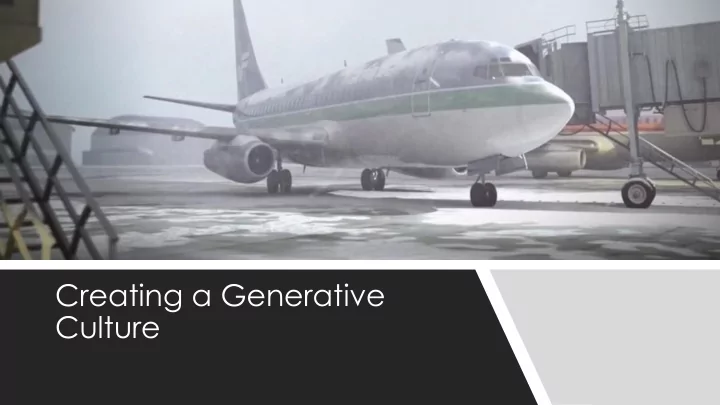
Culture Captain: It's spooled. Real cold, real cold. Co-pilot: God, - - PowerPoint PPT Presentation
Creating a Generative Culture Captain: It's spooled. Real cold, real cold. Co-pilot: God, look at that thing. That don't seem right, does it? Uh, that's not right. Captain: Yes it is, there's eighty. Co-pilot: Naw, I don't think that's right.
Creating a Generative Culture
Captain: It's spooled. Real cold, real cold. Co-pilot: God, look at that thing. That don't seem right, does it? Uh, that's not right. Captain: Yes it is, there's eighty. Co-pilot: Naw, I don't think that's right. Ah, maybe it is. Captain: Hundred and twenty. Co-pilot: I don't know Captain: Vee-one. Easy, vee-two.
Captain: Forward, forward, easy. We only want five hundred. Captain: Come on forward....forward, just barely climb. Captain: Stalling, we're falling! Co-pilot: Larry, we're going down, Larry.... Captain: I know it. [SOUND OF IMPACT]
About me.
Engineering at Redgate
creating software with freedom to act, clear purpose and space to learn.
What is culture?
Perks are not culture
https://www.atrixnet.com/bs-generator.htm
Organizational Culture Job Satisfaction Software Delivery Performance Organizational Performance
What makes a high performing team?
being able to show and employ one's self without fear of negative consequences of self- image, status or career”
What characterizes a generative culture?
Alignment Sense of ownership Proactive flow of information Psychological Safety Organizational learning
By Rain, Belinda, Photographer (NARA record: 8464467) - U.S. National Archives and Records Administration, Public Domain, https://commons.wikimedia.org/w/index.php?curid=16912769
Values and Attitudes
”It’s easier to act your way to a new way of thinking than to think your way to a new way
John Shook.
What We Do Culture
Shook’s Version
New Model
Change behaviour to change thinking
Old Model
Change thinking to change behaviour
Problem: New Team + New Project
difference
speaker ratio? How can you improve equality?
Problem: Celebrating learning from failure
That time we replaced all our products with Spotify by mistake….
What really happened?
power
history are important? Are you making the most of them?
Problem: Recruitment & Interview Rotas
can solve their own problems is key
to get more people involved in solving their own problems?
Problem: Silos
Team Chartering
Team Expo
Build Team Structure
choice preference accepted
satisfied
teams
What did we learn?
connections across teams.
reteaming
teaming?
Problem: How do increase focus on L&D?
Introduce 10% time.
Introduce Open Spaces
Guilds
Iteration 1….
Iteration 2 (in-progress)
Guild Communities of Practice
What did we learn?
important for you?
Level Up Conference
10% Time
External Conferences Ingeniously Simple Blog Communities
Training Courses Redgate Library
Learn on the Loo Ingeniously Simple Podcast Open Spaces Lightning Talks
your organization the best chance of success
Find out more about things we try at http://www.ingeniouslysimple.com/