Chicago River South Branch Amtrak JUNE 18, 2019 South Branch - - PowerPoint PPT Presentation

chicago river south branch
SMART_READER_LITE
LIVE PREVIEW

Chicago River South Branch Amtrak JUNE 18, 2019 South Branch - - PowerPoint PPT Presentation

Chicago River South Branch Amtrak JUNE 18, 2019 South Branch Chicago River Context New Amtrak seawall Related 78 Development site Amtrak proposed seawall reconstruction IDNR Public Notice Amtrak proposed seawall reconstruction of


slide-1
SLIDE 1

Chicago River South Branch Amtrak

JUNE 18, 2019
slide-2
SLIDE 2

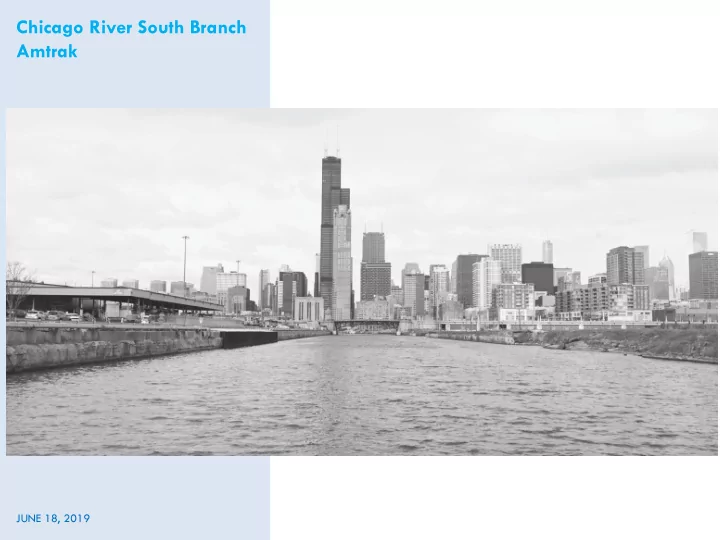
South Branch Chicago River Context

New Amtrak seawall Related 78 Development site

slide-3
SLIDE 3

Amtrak proposed seawall reconstruction

  • IDNR Public Notice
  • Amtrak proposed seawall reconstruction of half-mile long length of river
  • 7ft uniform height steel wall

Required approvals:

  • Army Corps Regional permit
  • IDNR Water Resources permit
  • CDOT Harbor permit
slide-4
SLIDE 4

Amtrak permit - existing condition

  • Remove existing roadway pavement and abandoned pipes
  • Concrete seawall cap on top of timber piles
  • 7’ setback from seawall to road
slide-5
SLIDE 5

Amtrak permit - proposed improvements

  • Regrade roadway at 9’ CCD
  • 9ft setback from seawall to road (gravel fill)
  • Seawall at 7’ CCD
slide-6
SLIDE 6

View of existing conditions

slide-7
SLIDE 7

View of existing concrete seawall and roadway

slide-8
SLIDE 8

View of constructed portion of seawall

slide-9
SLIDE 9

Chicago River Design Guidelines Recommendations

Consider implementing techniques outlined in the recently updated Chicago River Design Guidelines that emphasize improving the ecology and health of the river Recommendations: #1: Allow for wetland or habitat shelves to be attached to the seawall #2: Incorporate green infrastructure within the 9ft setback to improve stormwater management next to the river and provide a landscaped buffer

slide-10
SLIDE 10

Amtrak Response

Approx 6ft - 9ft space between new seawall and edge of road pavement to incorporate landscaping

  • 24” soil depth – can support taller prairie plants and trees
  • Less watering – easier maintenance
  • Need to consider salt tolerance because next to roadway
slide-11
SLIDE 11

Example of Floating habitat in front of Waste Management

slide-12
SLIDE 12
slide-13
SLIDE 13
slide-14
SLIDE 14
slide-15
SLIDE 15
slide-16
SLIDE 16
slide-17
SLIDE 17
slide-18
SLIDE 18
slide-19
SLIDE 19
slide-20
SLIDE 20
slide-21
SLIDE 21

River Ecology and Governance Science & Design Working Group Public Health Scoping Pathways

slide-22
SLIDE 22

Natural Environments and Public Health

  • Conserving and enhancing natural environments can have broad

impacts on health and well-being

  • Understanding those impacts during the planning stages of a project can

guide decision-making to mitigate negative impacts or amplify positive

  • nes
  • Other cities around the country have incorporated public health into

their waterfront planning (i.e. Minneapolis, MN; Rochester, NY; Seattle, WA)

slide-23
SLIDE 23

What is a scoping pathway?

  • Scoping pathways are a process for considering the impacts of

a decision to answer the following questions:

– What is the proposed change? – What are the short/long term outcomes? – Are the outcomes direct or indirect? – What are the health outcomes? – Who is impacted?

Remember: – Impacts can be positive or negative – We don’t need to have all of the answers about direction

  • r magnitude of change
slide-24
SLIDE 24

Scoping Pathway Framework

slide-25
SLIDE 25

Scoping Pathway Examples

 Motor vehicle crashes

slide-26
SLIDE 26

Scoping Pathways Brainstorming Activity

  • Large Group: What are some proposed changes for the

riverfront as part of this project? (5 mins)

  • Small group: Each group will be assigned a proposed change

and will create pathway diagrams using flip chart paper and post-its (10 mins)

– Short term outcomes – Long term outcomes – Health Impacts – Most impacted populations

  • Report back (10 mins)