
SLIDE 1
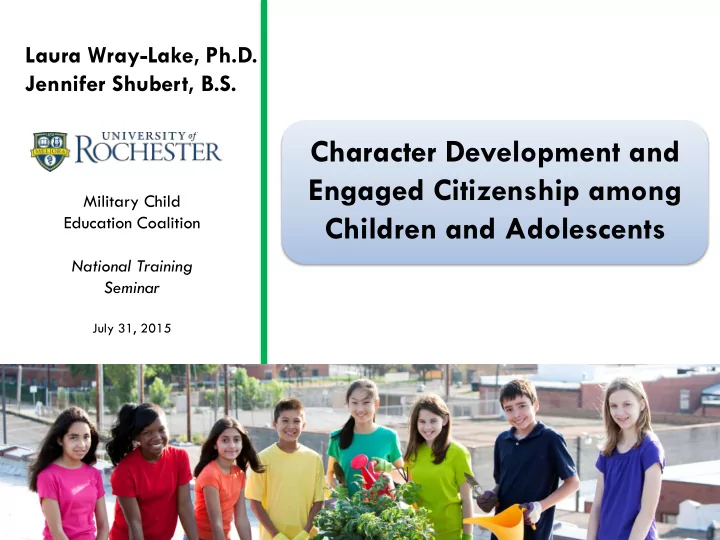
Character Development and Engaged Citizenship among Children and Adolescents
Military Child Education Coalition National Training Seminar
July 31, 2015
Laura Wray-Lake, Ph.D. Jennifer Shubert, B.S.
Character Development and Engaged Citizenship among Military Child - - PowerPoint PPT Presentation
Laura Wray-Lake, Ph.D. Jennifer Shubert, B.S. Character Development and Engaged Citizenship among Military Child Children and Adolescents Education Coalition National Training Seminar July 31, 2015 The opinions expressed in this
Character Development and Engaged Citizenship among Children and Adolescents
Military Child Education Coalition National Training Seminar
July 31, 2015
Laura Wray-Lake, Ph.D. Jennifer Shubert, B.S.
The opinions expressed in this presentation are those of the authors and do not necessarily reflect the values of the John Templeton Foundation.
Use your smart phone or laptop. Type “respond.cc” into the browser. Enter the session key. Answer the question. Submit with the check box!
Tell us about you! respond.cc Session Key:
70406
“Participation, your civic duty, is more than just voting…Only you can make sure the democracy you inherit is as good as we know it can be. But it requires your dedicated, and informed, and engaged citizenship. And that citizenship is a harder, higher road to take, but it leads to a better place. It’s how we built this country—together.” President Barack Obama May 5, 2013
Civic Engagement
Volunteering
Informal Helping
Environmental Behaviors
Watching News
Social Responsibility Values
Civic Skills Voting Intentions
Why do we care about youth civic engagement?
Builds strong communities Establishes life-long habits Benefits health & development Cultivates CHARACTER
Photo Credit: Noel Abejo
Strategies
Civic Engagement
Character
2,475 youth in grades 4- 12 Residing in CA, MN, and WV
55% Female 50 % White 30% Hispanic or Latino 10% Black
Leadership
to be a leader.
who suggests activities to my friends.
Perseverance
something I’m working
figure it out.
things that I start.
Future Orientation
future.
consider the impact it will have on my future.
when I’m older.
make a difference in the world.
life.
Results: Which character strength do YOU think is highest?
2 2.5 3 3.5 4 4.5
Leadership Perseverance Future Orientation
Males Females
Photo Credit: Karolina Grabowska
Leadership, Future Orientation, and Perseverance
Informal helping and skills predict all three character strengths.
Volunteering Leadership
News Consumption Voting Intentions Civic Skills Future Orientation
Environmental Perseverance
character
DISCUSS Civic Issues PROVIDE Opportunities MODEL Civic Behaviors BUILD Supportive Relationships
and understanding
when teachers and parents discuss:
– Politics – Current events – Problems facing their community – Injustice
DISCUSS Civic Issues
DISCUSS Civic Issues
Civic Engagement Volunteering
Watching News
Social Responsibility Values
Voting Intentions
Environmental Behaviors
Civic Skills Informal Helping
Civic Engagement Social Responsibility Values
Informal Helping Civic Skills
Environmental Behaviors
Classroom Discussions Parent Discussions
DISCUSS Civic Issues
Classroom Discussions
Leadership Perseverance Future Orientation
Parent Discussions Leadership Perseverance Future Orientation
DISCUSS Civic Issues
MODEL Civic Behaviors
behavior of people who are important to them – PARENTS
MODEL Civic Behaviors
Youth’s Views on Parents’ Modeling
the neighborhood
MODEL Civic Behaviors
Parent Civic Engagement Youth Civic Engagement Character Development
MODEL Civic Behaviors
www.generationon.org
Respond.cc Session key: 16917
PROVIDE Opportunities
– Learning about self and what is important to self – Learning new skills – Doing something you enjoy that gives you energy and passion
PROVIDE Opportunities
High Quality Organized Activities
Civic Engagement Volunteering
Informal Helping
Environmental Behaviors
Watching News
Social Responsibility Values
Civic Skills Voting Intentions Quantity: Time in Activities
PROVIDE Opportunities
BUILD Supportive Relationships
Supportive relationships are NECESSARY but INSUFFICIENT for fostering civic engagement.
BUILD Supportive Relationships
HIGH SUPPORT from PARENTS and TEACHERS LOW across other three strategies LOW levels of Civic Engagement
BUILD Supportive Relationships
Supportive relationships enhance the effectiveness of
BUILD Supportive Relationships
1 2 3 4 5 Environmental Behaviors
Parenting and Environmental Behaviors
Low Modeling, Low Support Low Modeling, High Support High Modeling, Low Support
High Modeling, High Support
BUILD Supportive Relationships
strategies
DISCUSS Civic Issues PROVIDE Opportunities MODEL Civic Behaviors BUILD Supportive Relationships
Strategies Working Together
Working Together
civic engagement.
families that can be leveraged for positive development.
Laura Wray-Lake, Ph.D. Laura.wray-lake@rochester.edu Jennifer Shubert, B.S. Jennifer.shubert@rochester.edu Visit our website www.civicroots.org
Acknowledgements:
Amy Syvertsen Aaron Metzger Roots Project Team PYD Lab (especially Karen Fu)