
SLIDE 1
Zachary Green has been recognized by the SBA as the 2015 Exporter of - - PowerPoint PPT Presentation
Zachary Green has been recognized by the SBA as the 2015 Exporter of the Year (Ohio) and was selected by the White House to represent the USA at the Global Entrepreneurial Summit. Learning Objectives Understand why changes were made to the
Zachary Green has been recognized by the SBA as the 2015 Exporter of the Year (Ohio) and was selected by the White House to represent the USA at the Global Entrepreneurial Summit.
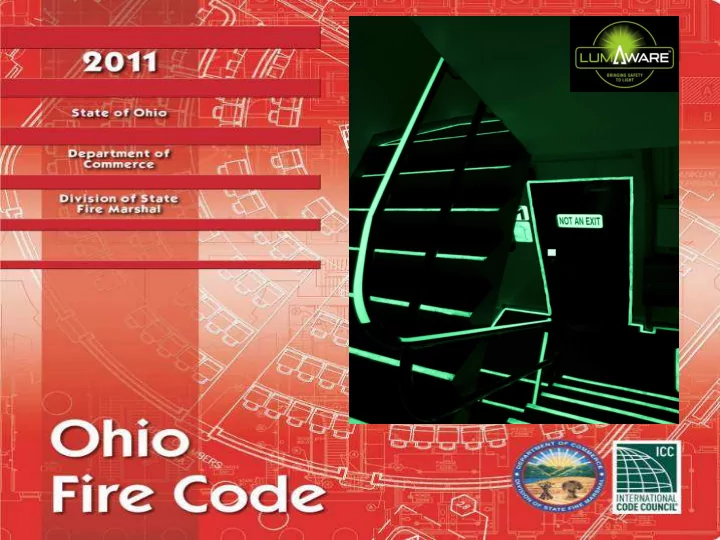
that pertain to luminous egress pathways
performance in an emergency
ZnS
LinkedIn’s Facilities Management Group (68,000+ members) recently asked the question “What are the most common diesel generator failures that you have come across?”
Facilities Management Poor/Non-Effective Human Error Maintenance/Service Records Poor or Non-existent Neglect NFPA 110, Chapter 8, 2013 edition Procedures Not Followed Plan Preventative Maintenance (PPM) or Maintenance Program is Poor or Non-existent Routine Inspection/Check Logging Poor or Non-existent Routine Inspection/Check Not Done Daily Routine Inspection/Check Not Done Thoroughly Every Time Routine Inspection/Check Procedure Poor or Non-existent Routine Inspection/Check Records Poor or Non-existent Service Contractor Not Competent Service Techs/Engineers Not Rotated Regularly Service Techs/Engineers Poor/Not Effective Shortcut Repairs to Reduce Spending Surprise Audits Non-Existent Training Poor or Non-Existent Equipment Specific (alphabetical order) Automatic Transfer Switch (ATS) Exercising Not Done Automatic Transfer Switch (ATS) Failure Batteries Too Hot Battery Charger Broken Battery Charger Fuses Blown Battery Contacts Corroded Battery Life Ended Bird Nests & Mud Daubers Clogging Air Intakes and Vents Block Heater Broken Coolant Level Low Drive Belt Broken Exercising Not Done or Auto Exercising Not Working Fuel Dirty Fuel Filters Blocked/Plugged Fuel Line Broken Fuel of Wrong Type Accidentally Used Fuel Polishing/Cleaning Not Done Fuel Stored Too Long Fuel Tank Low or Empty Fuel Testing/Checking Not Done Full Building Shutdown Tests Not Done Hose Broken Moisture in Fuel (common in humid and rainy areas, and situations susceptible to condensation) Oil Changes Not Done Per Manufacturer’s Recommendations Sump Heater Broken Water Filter In Diesel Fuel Lines Not Changed Regularly (some recommend every 6 months) Water Filter In Diesel Fuel Lines None Existent (see Moisture In Fuel) Water Heater Element Is Not Adequate (prevents generator won’t start in cold climate)
World Trade Center Truck Bombing February 26, 1993
replace
light to charge
Identification
Identification Bands
Connections
Building Code Occupancy Types Required to have luminous pathways
Restaurants
Section 1024 – Luminous Egress Path Markings of Florida Building Code
Summary of the 2015 International Building Code Requirements:
Area Affected Impact on New and Existing Building Construction Section of Code Stair Edges
A solid and continuous stripe of self-luminous meeting ASTM e2072 and shall be applied to the horizontal leading edge to each step and shall extend for the full length of the step.
1025.2.1 Landings
Leading edge of landings shall be marked with a self-luminous stripe meeting ASTM e2072 standards consistent with the dimensional requirement for steps.
1025.2.2 Hand Rails
Hand rails shall be marked with a solid and continuous stripe of self-luminous meeting ASTM e7072 placed on the top surface of the hand rail for the entire length (including extensions).
1025.2.3 Doorway Outlines
Top and sides of exit doorframes shall be marked with a solid and continuous self- luminous stripe meeting that ASTM e2072 standard.
1025.2.6.3 Door Handles
Door hardware shall be marked with not less than 16 sq. inches of self-luminous material meeting the ASTM e2072 standard, and shall be located immediately adjacent to or on the door handle.
1025.2.6.2 Stairwell ID Signs / Roof Access Signs
Self-luminous stairway identification signs meeting ASTM e2072 are required on each floor landing in interior exit stairways connecting more than three stories that designate the floor level, and the terminus of the top and bottom of the interior exit stairway. These signs should state the story of and direction to the exit, as well as availability of roof access.
1023.9 Low Level Exit Signs
Additional low level exit signs shall be provided in all areas serving hotel/motel guest rooms using UL 924 labelled exit signs, or universally recognized symbols for egress compliant with NFPA 170.
1013.2 Stand Pipe Signs
Stand pipes shall be identified in an improved manner by a permanently attached sign in a color that contrasts the background color indicating equipment contained therein.
912.5 Extinguisher Signs
Portable fire extinguishers shall not be obstructed or obscured in rooms or areas in which visual instruction cannot be completely avoided. Means shall be provided to locate the extinguisher locations.
906.6
Signs
A metal sign with raised letters shall be mounted on all fire department connections serving automatic sprinklers, stand pipes, or fire pump connections.
912.5
Can become loose over time
WILL become loose over time
Difficult to use for perimeters
PL Tape will need to be replaced
Difficult to use for perimeters
Excellent choice for handrails and doorframes*
* Ensure tape is tamper proof
Easy to Install
Excellent Adhesion Low Profile
Changes to stairwell signage identification in the new 2012 Life Safety Code will add to the responsibilities of facility managers in maintaining LSC compliance:
Area of LSC Affected Change Impact
A change in the stairwell identification signs involving illumination, tactile, dimension and location. This will effectively render the existing stairwell identification signs noncompliant. The 2012 LSC will require the identification signs in new stairwells 3 stories or more, where the older editions only required them in 5 stories or more. New stairwell identification signs will need to be illuminated with emergency power, and the characters
designation character must be tactile and other requirements in accordance with 7.2.2.5.4.1. Existing stairwell signs will have to be replaced if they do not already meet the new requirements. There will be no ‘grandfathering’ of existing signs. This new requirement applies to all
to healthcare.
www.lumawaresafety.com
MGM G Grand F Fire L Las Ve Vegas, N NV N V November 2 20th
th, 1
1980
– Lighting costs alone can eat up to one-third of all energy consumed in your building – 5 Watts of power per exit sign. (500 signs) 22,000 kWh of electricity; annually
– Saves Money
– photo luminescent products absorb and store ambient light, providing bright, visible illumination in blackout or smoky conditions – No operation costs – $3,000@.14kwh per 500 signs – No Maintenance – Batteries($7-$15) plus labor – bulbs ($5-$10)plus labor – replacement batteries/bulbs @ 500 signs = $6,000-$12,500 plus labor every 3-5 years
– Eco Friendly
MR Credit #4
– 100% recyclable, Products require no special disposal system
– While emergency generators can fail, backup batteries can die, and LED lamps can blow. Photo Luminescent products are 100% reliable every time
Energy and Atmosphere: Optimizing Energy Performance Materials and Resources Innovation in Design: Significant Environmental Benefits