SLIDE 1
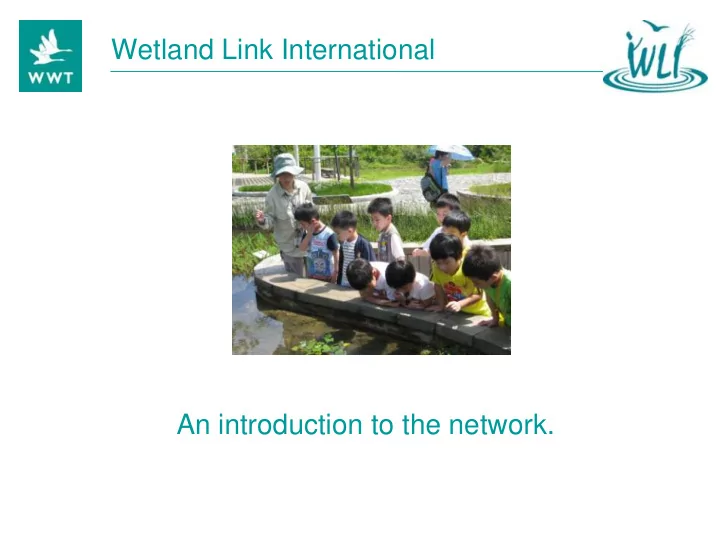
An introduction to the network. Wetland Link International
SLIDE 2
Wetland Link International
Set up in 1991, by the Wildfowl and Wetlands Trust (WWT) UK Specific focus on CEPA at wetland centres 300 members worldwide – free to join for wetland centres MoC with Ramsar, also part of Ramsar Resolution X.8 on CEPA (communication, education, participation and awareness) Website, resources, e-mail updates and conferences Functions through regional networks, at continental scale
SLIDE 3
What is a wetland centre?
A wetland site (normally with a built structure) where people find out about wetlands Can be government, private, NGO or community run Open to visitors – ranging from 10’s to 1,000’s per year Urban, suburban, rural, wilderness – as long as it’s got a wetland Themed – birds/animals, habitats, recreation, tourism etc
+ +
SLIDE 4
Key aims of WLI
Goal: To improve wetland CEPA through wetland centres globally Aims: Provide resources accessible to wetland centre staff Offer a coordination role at international, regional and local levels Work with Ramsar to deliver support to centres actively involved in CEPA Share best practice between centres Provide identity and branding Improve access to funding and resources
SLIDE 5 What is Ramsar?
International convention on wetlands Signed in 1971 in Ramsar, Iran 164 member countries Over 2000 Ramsar sites Secretariat in Gland, Switzerland Regular Conference of the Parties (COPs), next
www.ramsar.org
SLIDE 6
Case study 1: Hong Kong Wetland Park
Opened in 2006 1m visitors in 1st year Close work with WWT Complement to Mai Po
SLIDE 7
Case study 2: Lake Naivasha, Kenya
Lake Naivasha Riparian Association, 3 staff and numerous volunteers Freshwater lake in semi-arid Rift Valley, Ramsar site Iconic species – hippo, fish eagle, pelican Work with local farmers, fishers and landowners to raise awareness Education and conservation work on site, developing a centre
SLIDE 8
Case study 3: Creston Valley WMA
7,000ha over 20km valley Seasonal visitor centre 3,500 visitors per year 6 f/t staff, plus seasonal workers
SLIDE 9 Priority themes
Key areas for WLI members to use in their work, with support from WLI global.
- Invasive species
- Migratory birds
- Wise use of Wetlands (WWD)
- Climate Change
- Endangered species
SLIDE 10
Communication network
Web site E-mail lists by region / core group Skype meetings Web forum Monthly / six monthly newsletter Core groups (Europe/Oceania/Asia/North America) Regional meetings (biennial)
SLIDE 11
Web-resources
Image library Education and learning Centre-based support Community and involvement Biodiversity and wetlands
SLIDE 12
Want to know more or join?
Please contact the Head of WLI at wli@wwt.org.uk, or see our website at www.wli.org.uk Thank you!