SLIDE 1
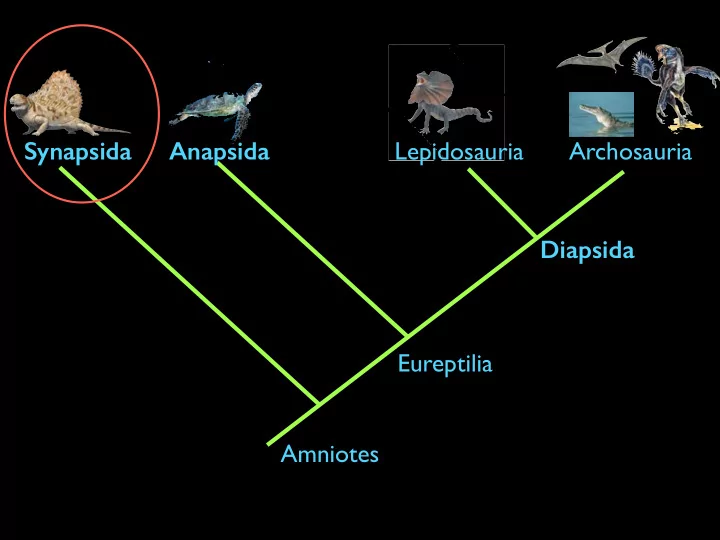
Amniotes Synapsida Diapsida Anapsida Eureptilia Lepidosauria Archosauria
SLIDE 2 Synapsida Therapsida Theriodontia
Gorgonopsia Therocephalia Cynodontia
Eupelycosauria
Dinocephalia Dicynodontia Pelycosauria (paraphyletic)
Anapsida Diapsida
Amniota
Eureptilia
Edaphosaurids Sphenacodontids
SLIDE 3 Pelycosaurs: Early Permian
Eothyris Cotylorynchus Edaphosaurus Dimetrodon Edaphosaurids Sphenacodontids
SLIDE 4 Tetraceratops Moschops Lystrosaurus Arctognathus
- Basal
- Dinocephalia
- Dicynodontia
- Gorgonopsids
- Mammal Ancest.
Cynodontia
Therapsida: Mid-Late Permian
SLIDE 5
Amniotes Synapsida Diapsida Anapsida Eureptilia Lepidosauria Archosauria
SLIDE 6 Anapsids
Scutosaurus
Pareiasaurs
SLIDE 7
Diapsida Lepidosauria Archosauria Diapsids in the Permian Weird, Wonderful, and Rare
SLIDE 8 Coelurosauravus Protorosaurus Prolacertiform Petrolacosaurus basal Diapsid Sharovipteryx Prolacertiform
SLIDE 9
SLIDE 10
The Permo-Triassic Extinction: The ‘Great Dying’
SLIDE 11 251 Ma
50% of marine families were lost across the Permo-Triassic @ 151 Ma scales to ca. 90% species loss in the sea
SLIDE 12 The ‘Death Curve’
Marine Invertebrates
SLIDE 13
SLIDE 14
What caused the extinction event?
Karoo Basin, South Africa Permian Dicynodon Zone Triassic Lystrosaurus Zone
SLIDE 15 Plant Dieback => Catastraphic Erosion
Hypothesis: Plant Dieback Evidence:
- Increased erosion
- Fungal explosion
- Worldwide distribution
- Coal Gap
SLIDE 16 Slow Terrestrial Floral Collapse- Greenland Pollen/Spore Cores
- Fungal activity followed loss of forests and herbaceous veg
- Successional weedy vegetation takes hold
- Fern and cycad expansion
- Most successional plants vanish, lycopsids remain
- Plant abundance is drastically reduced (few pollen/spores)
500,000 to 600,000 years
SLIDE 17
If plant collapse initiated terrestrial extinctions, what caused the plant collapse???
SLIDE 18
Flavor of the Day: The Siberian Traps
SLIDE 19
SLIDE 20
SLIDE 21 Lystrosaurus: the Disaster Taxon
Expansion
- Few herbivorous competitors
- Few carnivorous predators
95% terrestrial faunas!
- @ 1 meter, the largest animal on earth
There was probably nothing ‘special’ about Lystrosaurus... It was just lucky... this is a pattern in extinction events.
SLIDE 22 Other animals obviously survived... Low abundance => poor fossil documentation
Temnospondyl amphibians Mastodonsaurus (aquatic)
Fully terrestrial animals communities did not recover for ca. 30 Ma
Proterosuchus Archosaur Cynognathus early Triassic synapsid Dicynodonts Cynodonts Remained important Herbivores
SLIDE 23
Refugia
SLIDE 24 Urochordata Cephalochordata Assorted jawless fish Most ‘fishes’ Most ‘amphibians’ Synapsids Anapsids Lepidosaurs Archaic archosaurs Crocodiles Pterosauria Dinosauria
Chordata Vertebrata Gnathostomata Tetrapoda
Archosauromorphs
Amniotes
SLIDE 25
The RISE of the ARCHOSAUROMORPHS!
SLIDE 26 Rhyncosauria
early Triassic VERY abundant Herbivorous Pen-Knife Premaxilla/Dentary vs. ‘rostral bone’ Precision Shear
SLIDE 27
Amniotes Synapsida Diapsida Anapsida Eureptilia Lepidosauria Archosauria
Archosauromorpha
SLIDE 28 Archosauria Crown-clade Archosauria Ornithodira
Crurotarsi Ornithosuchidae Pterosauria Dinosauria “Rauisuchia” Crocodylomorpha Basal archosaurs
SLIDE 29 Basal archosaur? Maybe... or it split off before archosauria
Tanystropheus Prolacertiform Archosauria prolacertiform? Archosauromorpha
SLIDE 30 Archosauria: synapomorphies Antorbital fenestra (in front of eye) Teeth with serrated margins Mandibular fenestra
Proterosuchus Basal Archosaur
SLIDE 31
SLIDE 32 Euparkeria Derived, Basal Archosaur Bony dermal plates down back
Faculatative biped vs. Obligate biped