Status of Environmental Studies Draft Studies Completed* Studies - - PowerPoint PPT Presentation

status of environmental studies
SMART_READER_LITE
LIVE PREVIEW

Status of Environmental Studies Draft Studies Completed* Studies - - PowerPoint PPT Presentation

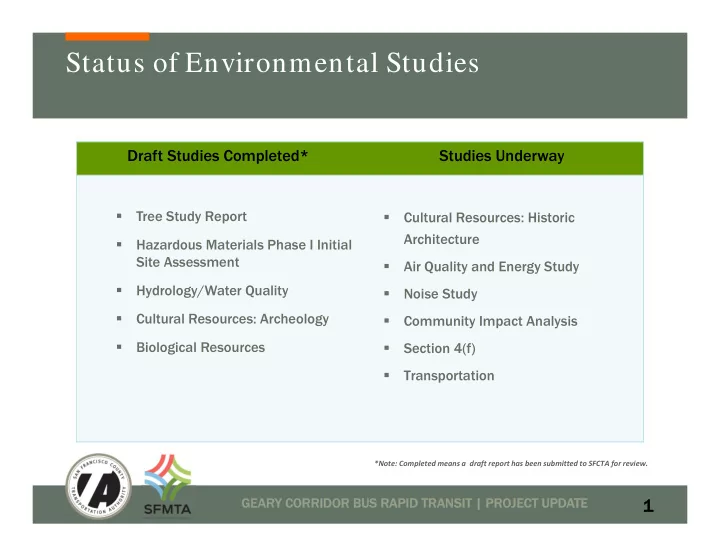
Status of Environmental Studies Draft Studies Completed* Studies Underway Tree Study Report Cultural Resources: Historic Architecture Hazardous Materials Phase I Initial Site Assessment Air Quality and Energy Study


slide-1
SLIDE 1

Status of Environmental Studies

GEAR GEARY CORRIDOR BUS RAPID TRANSIT | Y CORRIDOR BUS RAPID TRANSIT | PROJECT UPD PROJECT UPDATE TE

1

*Note: Completed means a draft report has been submitted to SFCTA for review.

Draft Studies Completed* Studies Underway

  • Tree Study Report
  • Hazardous Materials Phase I Initial

Site Assessment

  • Hydrology/Water Quality
  • Cultural Resources: Archeology
  • Biological Resources
  • Cultural Resources: Historic

Architecture

  • Air Quality and Energy Study
  • Noise Study
  • Community Impact Analysis
  • Section 4(f)
  • Transportation
slide-2
SLIDE 2

Environmental Studies - Timeline

GEAR GEARY CORRIDOR BUS RAPID TRANSIT | Y CORRIDOR BUS RAPID TRANSIT | PROJECT UPD PROJECT UPDATE TE

2

Note: Months reflect timeframe when a draft report is submitted to SFCTA for review.

2013 2014

Aug Sept Oct Nov Dec Jan Feb Mar Apr May June July Aug Sept Oct Nov Dec Hazardous Waste Geology/Soils Historic Architecture Section 4(f) Admin Draft EIR/EIS Draft EIR/EIS Final EIR/EIS Hydrology Floodplains Visual Impact Analysis Transportation Water Quality Noise Biological Resources Energy Archaeology Air Quality/ Greenhouse Gas Emissions Community Impacts

slide-3
SLIDE 3

Hazardous Materials Study: Purpose

GEAR GEARY CORRIDOR BUS RAPID TRANSIT | Y CORRIDOR BUS RAPID TRANSIT | PROJECT UPD PROJECT UPDATE TE

3

1. Identify and rank the level of risk associated with hazardous materials, hazardous waste, and/or contamination at the Project study area that could potentially affect proposed construction activities and/or operations 2. Identify potential sources of contamination in the study area as Recognized Environmental Conditions (“RECs”) as defined in the American Society of Testing and Materials (“ASTM”) Method E1527-05, Standard Practice for Environmental Site Assessments: Phase I Environmental Assessment Process.

slide-4
SLIDE 4

Hazardous Materials Study: Methodology

GEAR GEARY CORRIDOR BUS RAPID TRANSIT | Y CORRIDOR BUS RAPID TRANSIT | PROJECT UPD PROJECT UPDATE TE

4 Conduct Initial Site Assessment of areas within 1/8 mile of the project corridor

  • 1. Review physical setting
  • 2. Review historical land use data
  • 3. Review regulatory agency online files and databases
  • 4. Conduct site reconnaissance of current land uses
  • 5. Prepare the Initial Site Assessment to document findings, conclusions,

and recommendations

slide-5
SLIDE 5

Hazardous Materials Study: Findings

GEAR GEARY CORRIDOR BUS RAPID TRANSIT | Y CORRIDOR BUS RAPID TRANSIT | PROJECT UPD PROJECT UPDATE TE

5

  • 1. Reported HazMat Releases

with effects to groundwater

  • 3675 Geary Boulevard
  • 450 Mission Street
  • 2130 O’Farrell Street
  • 2. Other Environmental Concerns
  • Aerially-deposited lead (“ADL”)
  • Historical fill materials
  • Naturally-occurring asbestos
  • Lead and asbestos in structural

materials

3675 Geary Blvd

slide-6
SLIDE 6

Hazardous Materials: Recommendations

GEAR GEARY CORRIDOR BUS RAPID TRANSIT | Y CORRIDOR BUS RAPID TRANSIT | PROJECT UPD PROJECT UPDATE TE

6 Preliminary Site Investigation

Soil investigation Soil investigation

  • Aerially-Deposited Lead: Collect representative samples of exposed shallow

soils within 30 feet of the edge of the roadway and analyzed for total lead and soluble lead.

  • Naturally-occurring Asbestos: Collect representative samples of soils in areas

where serpentinite bedrock is present

Groundwater Groundwater

  • Collect groundwater near reported hazardous materials release sites
  • Analyze samples for Total Petroleum Hydrocarbons and volatile organic

compounds if project excavations may extend into the groundwater in those areas

slide-7
SLIDE 7

Hydrology/ Water Quality: Purpose/ Methodology

GEAR GEARY CORRIDOR BUS RAPID TRANSIT | Y CORRIDOR BUS RAPID TRANSIT | PROJECT UPD PROJECT UPDATE TE

7

  • 1. Identify potential effects to surface water features and groundwater supply

and water quality in compliance with:

 Clean Water Act  Porter-Cologne Water Quality Control Act  Water Quality Control Plan for the San Francisco Bay Region  San Francisco policies and regulations concerning water quality and stormwater runoff

  • 2. Review hydrologic data from federal, state and local agencies
  • 3. Review relevant regional and local policies concerning water quality
slide-8
SLIDE 8

Hydrology/ Water Quality: Findings

GEAR GEARY CORRIDOR BUS RAPID TRANSIT | Y CORRIDOR BUS RAPID TRANSIT | PROJECT UPD PROJECT UPDATE TE

8

  • Flooding Hazards
  • Increase flow to a specific area of the City Combined Sewer System
  • Implementation of required stormwater retention and treatment features would

result in beneficial, impacts to storm drainage

  • Implementation of a Storm Water Pollution Prevention Plan (SWPPP) during

construction would minimize potential impacts to water quality

  • No impacts to groundwater supply
slide-9
SLIDE 9

Archaeology Study: Purpose

GEAR GEARY CORRIDOR BUS RAPID TRANSIT | Y CORRIDOR BUS RAPID TRANSIT | PROJECT UPD PROJECT UPDATE TE

9

  • Comply with Section 106 of the National Historic Preservation Act
  • Identify historic properties that could be affected
  • Assess project effects to historic properties
  • Seek methods to avoid, minimize, or mitigate adverse effects to historic properties
  • Comply with California Public Resource Code Section 5024.1
  • Identify historic properties per California Register of Historic Resources
  • California Historical Landmarks
  • Locally designated city or county landmarks
slide-10
SLIDE 10

Archaeology Study: Methodology

GEAR GEARY CORRIDOR BUS RAPID TRANSIT | Y CORRIDOR BUS RAPID TRANSIT | PROJECT UPD PROJECT UPDATE TE

10 10

1. Identify Archaeological Area of Potential Effects 2. Search California Native American Heritage Commission Sacred Lands files 3. Search California Historical Resources Information System files 4. Determine areas of low, moderate and high sensitivity for the discovery of buried historic and pre-historic sites 5. Filter areas of sensitivity to those areas where excavation would go below the roadway surface and roadbed

slide-11
SLIDE 11

Archaeology Study: Findings/ Recommendations

GEAR GEARY CORRIDOR BUS RAPID TRANSIT | Y CORRIDOR BUS RAPID TRANSIT | PROJECT UPD PROJECT UPDATE TE

11 11

  • No known eligible historic or pre-historic

archaeological resources identified within the APE

  • Additional efforts pursuant to concurrence from the

State Historic Preservation Office (SHPO)

  • Areas requiring excavations below the roadbed

(~3 feet) with a high sensitivity for buried resources may require:

a. Historic coring in some areas of high sensitivity b. Historic archival research c. Based on coring and archival research, additional evaluation and mitigation may be needed