Slide 1 ___________________________________ - - PDF document

slide 1
SMART_READER_LITE
LIVE PREVIEW

Slide 1 ___________________________________ - - PDF document

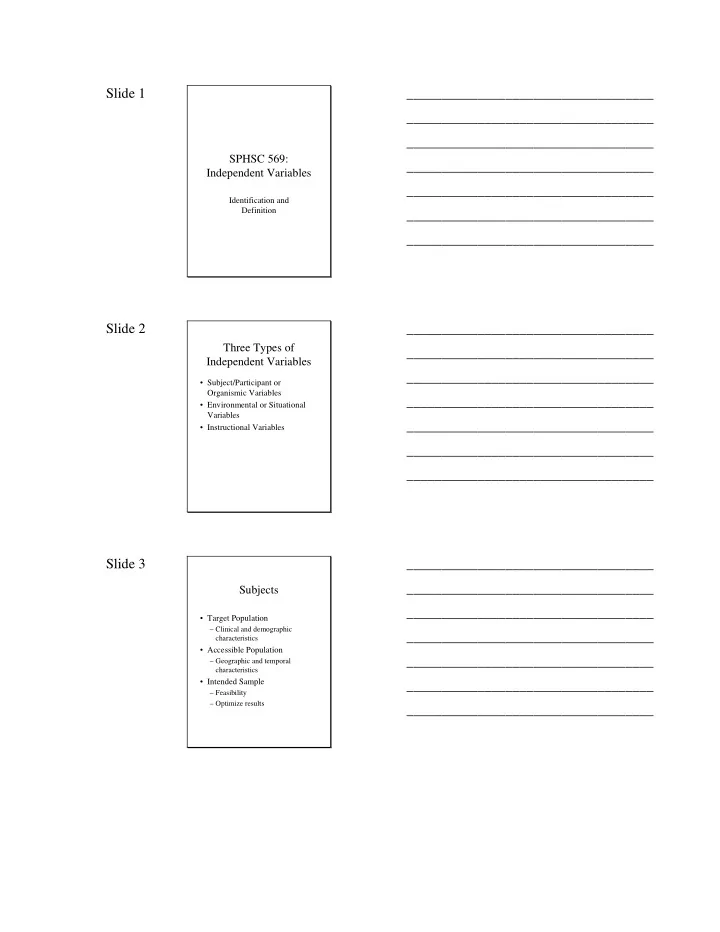
Slide 1 ___________________________________ ___________________________________ ___________________________________ SPHSC 569: ___________________________________ Independent Variables ___________________________________ Identification and


slide-1
SLIDE 1

Slide 1

SPHSC 569: Independent Variables

Identification and Definition

___________________________________ ___________________________________ ___________________________________ ___________________________________ ___________________________________ ___________________________________ ___________________________________ Slide 2

Three Types of Independent Variables

  • Subject/Participant or

Organismic Variables

  • Environmental or Situational

Variables

  • Instructional Variables

___________________________________ ___________________________________ ___________________________________ ___________________________________ ___________________________________ ___________________________________ ___________________________________ Slide 3

Subjects

  • Target Population

– Clinical and demographic characteristics

  • Accessible Population

– Geographic and temporal characteristics

  • Intended Sample

– Feasibility – Optimize results

___________________________________ ___________________________________ ___________________________________ ___________________________________ ___________________________________ ___________________________________ ___________________________________

slide-2
SLIDE 2

Slide 4

Subject Selection

  • Inclusionary Criteria

– What characteristics are required – Be specific

  • Exclusionary Criteria

– Of those who meet inclusionary criteria, who should be eliminated – Be parsimonious – Enhance feasibility; reduces generalizability

___________________________________ ___________________________________ ___________________________________ ___________________________________ ___________________________________ ___________________________________ ___________________________________ Slide 5

Subjects: Major Criteria

  • Diagnostic label from a known

source (e.g., DSM-Diagnostic and Statistical Manual of Mental Disorders, FAS-DPN)

– Agreed upon definition and large body of descriptive literature to support

  • Cut-offs on reliable and valid

tests/instruments

___________________________________ ___________________________________ ___________________________________ ___________________________________ ___________________________________ ___________________________________ ___________________________________ Slide 6

Subjects: Other Characteristics

  • Personal Characteristics

– Age – Gender – Family Situation – SES – Diagnosis

  • Behavioral Characteristics

– Current language/communication skills – Current cognitive, social, emotional, motor, self-help,etc. related to diagnosis

___________________________________ ___________________________________ ___________________________________ ___________________________________ ___________________________________ ___________________________________ ___________________________________

slide-3
SLIDE 3

Slide 7

Subjects: Other Characteristics

  • Medical/Developmental

Characteristics

– Medical history (medications) – Neurological status – Developmental history – Sensory status – Social/Emotional – Behavioral – Motor

  • Experiential Characteristics

– Educational background – Vocational background – Previous therapy-time, duration, degree

  • f success

___________________________________ ___________________________________ ___________________________________ ___________________________________ ___________________________________ ___________________________________ ___________________________________ Slide 8

Environmental or Situational Variables

  • Conditions that alter the

environment or situation in an experiment

  • Variations in what is done TO,

WITH or BY the participants

___________________________________ ___________________________________ ___________________________________ ___________________________________ ___________________________________ ___________________________________ ___________________________________ Slide 9

Environmental or Situational Variables

  • May consist of:

– Treatment vs. no treatment – Treatment A vs. Treatment B) – Providing different amounts of treatment (strength) at different points in time – Changing length of treatment – Providing qualitatively different conditions (integrity) at different points in time (variation in antec.,

  • conseq. or reinf. sch.)

___________________________________ ___________________________________ ___________________________________ ___________________________________ ___________________________________ ___________________________________ ___________________________________

slide-4
SLIDE 4

Slide 10

Instructional Variables

  • Specific type of environmental
  • r situational manipulation

Variation in what participants

– are told – are led to believe through verbal

  • r written statements about the

experiment and their participation Instructional variables are usually aimed at altering the participant’s perception or evaluation of a situation or condition

___________________________________ ___________________________________ ___________________________________ ___________________________________ ___________________________________ ___________________________________ ___________________________________ Slide 11

Behavioral Approaches

  • Increasing Behavior

– Reinforcers

  • Social/verbal
  • Tokens/points
  • Tangibles

– Reinforcement Schedules

  • Fixed
  • Intermittent
  • Decreasing Behavior

– Extinction – DRO – Differential reinforcement of

  • ther behavior

– TO – time out from positive reinforcer – Response cost, over correction, fines, restrictions – Physical Pain

___________________________________ ___________________________________ ___________________________________ ___________________________________ ___________________________________ ___________________________________ ___________________________________ Slide 12

Behavioral Approaches

  • Fading Instructor Assistance

(Billingsley)

– Increasing Assistance (least to most prompts across trials) – Decreasing Assistance (most to least prompts across trials) – Graduated Guidance (within trials) – Time Delay (natural + prompt) – Antecedent Prompt and Test – Antecedent Prompt and Fade

___________________________________ ___________________________________ ___________________________________ ___________________________________ ___________________________________ ___________________________________ ___________________________________

slide-5
SLIDE 5

Slide 13

Threats to Validity of Tx (Or Sources of Confound)

Consider:

  • Treatment
  • Therapist
  • Subject

___________________________________ ___________________________________ ___________________________________ ___________________________________ ___________________________________ ___________________________________ ___________________________________ Slide 14

Importance of Precision in Defining Independent Variable

  • “Provide operational definitions
  • f the independent variable

appropriate to the study’s theoretical and philosophical

  • rientation” (LeLaurin &

Wolery)

___________________________________ ___________________________________ ___________________________________ ___________________________________ ___________________________________ ___________________________________ ___________________________________ Slide 15

Define Critical Features

  • f the Treatment
  • Determine schedule of

implementation

  • Identify and define critical

events/behaviors comprising the intervention (clinician/instructor performance; client performance) – Quantify these components – Pace/intensity of components – How often (minutes)

  • Identify and define efforts to insure

“focus” or behavioral control

  • Develop a manual

___________________________________ ___________________________________ ___________________________________ ___________________________________ ___________________________________ ___________________________________ ___________________________________

slide-6
SLIDE 6

Slide 16

Define Critical Features

  • f the Treatment
  • How controlled do you need to

be in the delivery of treatment

  • Procedural Reliability

___________________________________ ___________________________________ ___________________________________ ___________________________________ ___________________________________ ___________________________________ ___________________________________