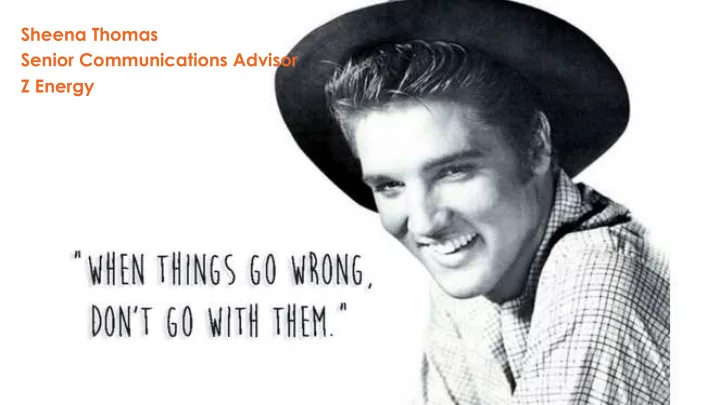
Sheena Thomas Senior Communications Advisor Z Energy What well - - PowerPoint PPT Presentation
Sheena Thomas Senior Communications Advisor Z Energy What well cover 1. Why reputation is important 2. Building a strong foundation 3. Managing risk and being prepared 4. Managing negative PR 5. Managing a reputational crisis Hows
What we’ll cover
- 2. Building a strong foundation
- 3. Managing risk and being prepared
- 4. Managing negative PR
- 5. Managing a reputational crisis
- 1. Why reputation is important
How’s your foundation?
Is your organisation built on rock or sand?
What are your values? Use them
Manage your risks
How to identify issues before they go wrong publicly
- Empower staff and volunteers to raise issues
- Look for “weak signals”. Pay attention to the niggling voice
- Seek feedback regularly, from customers, from staff, volunteers,
stakeholders, funders
- Monitor what people are saying (i.e. media, social media particularly
relevant), i.e. media monitoring, google alerts (free)
- Avoid group think
- Keep a risk register and make it part of your governance framework
Reputation risk register [EXAMPLE]
Likelihood of reputational impact Potential impact on reputation
Low High High
DECLINING INCREASING STABLE
Potential Risk New NEW /
REFRESHED RISK
Relative levels of management intervention
H H H M M M L L L
Potential Impact Assessment. High: Potential for regulatory intervention, criticism by Ministers, customer boycott, sustained negative national media coverage, enduring damage to brand / reputation Medium: Some negative national media coverage, public criticism by key stakeholders, customer complaints on site Low : Regional criticism, local media coverage over a short period of time, negative story mitigated by positive developments
Medium
15% or less Between 15 and 50% 50% or higher
Political /social issues Re-use of supermarket docket codes at Pay at Pump Neighbour issues with rebuild works Market rumours
Be prepared
Some practical things to think about:
- Do you have a media policy and social media policy?
- Who are your spokespeople and have they had media training?
- Do the rest of your staff and volunteers know what’s expected of
them if contacted by the media?
When things do go wrong
Let your values guide you
- Try to deal with it before it becomes a PR situation
- Deal with everything in a way that aligns with your values
- Being seen to be true to your values gives you the best chance of
coming out stronger at the other end
Be clear and consistent
- What do you want to leave your audience thinking / feeling?
- What are the facts?
- What are the key messages that will directly support how you want to
leave your audience thinking / feeling?
- Take the time to gather your facts and your thoughts
Be straight up
- People will tolerate an
honest mistake but they won’t tolerate lies
- Don’t be afraid to say sorry
- If something’s wrong, fess up
early
A recent example: Z’s Vegan Pie
Crisis Management
When is it considered a crisis?
Ultimately, we are managing a crisis when our license to operate is at risk – Z Energy Crisis Plan
Crisis Management
- Have a crisis plan that aligns with your values
- Who needs to know? (i.e. stakeholders. Board, funders, staff)
- Bear in mind the 3 C’s
Concern (or compassion – be human) Control (you are aware of the situation and have things under control or are taking steps) Competence (you know what you’re talking about, confident, without being defensive) And a fourth – Consistency (key messages are consistent, your “label” for the situation is consistent etc).
- Don’t lie or try to avoid the truth!
Some practical advice
Crisis Plan
- A reminder of your values
- Who you need to involve
- Who you need to inform
- Who will deal with media, social media and stakeholders (incl internal)
- Who your spokespeople are
- Who will make decisions and who needs to be involved
- How you will ensure consistency
- Important contact details
Your crisis plan should cover:
Go forth and conquer
- Values – have them, use them FOR EVERYTHING
- Keep an eye on your risks – actively solicit feedback, monitor what
people are saying, look for weak signals, include reputational risk in your board / governance processes
- Be prepared for things going wrong – identify and train spokespeople,
have a media policy, have a crisis plan
- Don’t forget your most important audience (staff, volunteers and
stakeholders)
- Never, ever lie
Remember the following and your organisation will be all set to “stand firm” when things go wrong
Let’s chat
Questions? Comments or anything to add? Examples you want to share? A problem you’d like to unpick?
Volkswagen and saying “sorry”
https://youtu.be/Cdif-zK4z14