
SLIDE 1
Portsmouth High School
Portsmouth High School
Restorative Practices
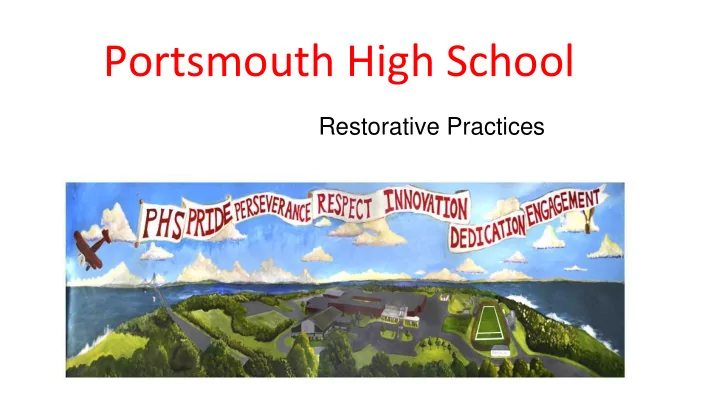
Portsmouth High School Restorative Practices Portsmouth High School - - PowerPoint PPT Presentation
Portsmouth High School Restorative Practices Portsmouth High School Fundamental hypothesis of RP What we call student and stakeholder voice Human beings are happier, more cooperative and productive, and more likely to make positive
Portsmouth High School
Restorative Practices
“Human beings are happier, more cooperative and productive, and more likely to make positive changes in their behavior when those in positions of authority do things with them, rather than to them or for them.”
What we call student and stakeholder voice
“The aim of Restorative Practices in school communities is to develop community and to manage conflict and tensions by repairing harm and restoring relationships. “build social capital and achieve social discipline through participatory learning and decision making.”
Insert content
Building Relationships
Responding to Challenging Behavior
Responding to Challenging Behavior
Proactive Restorative Practices Planning
Being Trauma-Informed Be conscious of –
Circle Structure:
Tool #2:
Tool #3: “I” Statements
We use “I” statements especially when:
The secret of success lies in:
★ Stating your case without arousing the
★ Saying how it is for you, rather than what they should or should not do.