Pharmacovigilance and Aquaculture Tony Wall. Vet/PVQP 15/05/2017 - - PowerPoint PPT Presentation

pharmacovigilance and aquaculture tony wall vet pvqp
SMART_READER_LITE
LIVE PREVIEW

Pharmacovigilance and Aquaculture Tony Wall. Vet/PVQP 15/05/2017 - - PowerPoint PPT Presentation

Pharmacovigilance and Aquaculture Tony Wall. Vet/PVQP 15/05/2017 Tony Wall; Fish Vet Group 1 Background Atlantic salmon. Rainbow trout. Halibut. Turbot. Tilapia. Brown trout. Carp. Sea bass and bream. Arctic charr. All with their own


slide-1
SLIDE 1

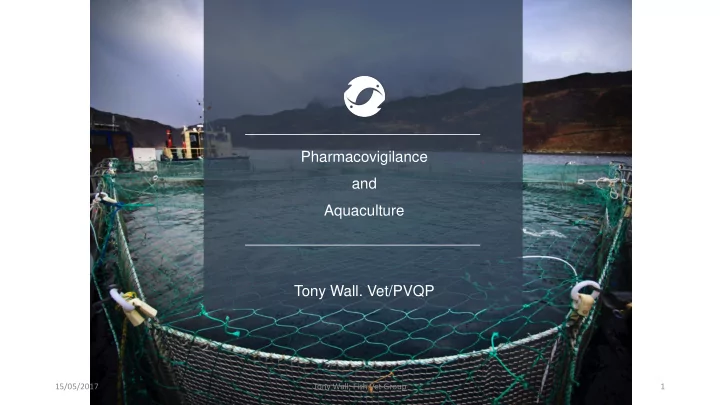
Pharmacovigilance and Aquaculture Tony Wall. Vet/PVQP

15/05/2017 1 Tony Wall; Fish Vet Group
slide-2
SLIDE 2

Background

Atlantic salmon. Rainbow trout. Halibut. Turbot. Tilapia. Brown trout. Carp. Sea bass and bream. Arctic charr. All with their own diseases and pharmacokinetic profiles. One fish is not the same as the next fish. Seawater (cages and pump ashore), Fresh water in rivers, lakes, recirculation, borehole….

15/05/2017 2 Tony Wall; Fish Vet Group

slide-3
SLIDE 3

Fish numbers 500,000 per cage Up to 10m on one site Always some background mortality Always some lack of efficacy/tolerance to the medicine

15/05/2017 3 Tony Wall; Fish Vet Group

slide-4
SLIDE 4

Treatments

Treatments have the potential to be damaging to the fish, especially bath treatments that are NOT related to the medicine Fish are enclosed and pumped/handled Respiration can be compromised if concurrent gill disease Skin and corneal abrasions are common Equipment failure. Environmental conditions (temperature/O₂)

15/05/2017 4 Tony Wall; Fish Vet Group

slide-5
SLIDE 5

Medicine availability

Very few licensed medicines available. Repeated use selects for resistance Environmental agencies control the amount of medicine that can be used at any one time. Not possible to treat a whole site at the same time

  • E. A.s also are involved in the assessment of the dossier for new medicines

(These medicines are released into the environment so this scrutiny is quite justified)

15/05/2017 5 Tony Wall; Fish Vet Group

slide-6
SLIDE 6

Oral medication Only the healthy fish are feeding Sick fish receive a suboptimal amount of medicine selecting for resistance Dominant behaviour and territorial aggression lead to underfeeding and therefore underdosing

15/05/2017 6 Tony Wall; Fish Vet Group

slide-7
SLIDE 7

What is reportable?

Mortality Physical damage Lack of efficacy

In the context of…..

Trapped in net. Gill disease Anorexic fish Overuse of medicine Oxygen failure Weather conditions

15/05/2017 7 Tony Wall; Fish Vet Group

slide-8
SLIDE 8

Why report?

  • Collection of the data too onerous.
  • No feedback from the VMD.
  • No information on outcomes and actions
  • Is this a one off or part of a wider concern?
  • Is this data confidential.? FOI considerations
  • Anonymising the reports
  • Concern that the medicine will be withdrawn

15/05/2017 8 Tony Wall; Fish Vet Group

slide-9
SLIDE 9

Why report?

“We know what’s going on and the reasons for the problem.”

  • Education. For vets, vet students, farmers.

Understanding the system Understanding the importance

15/05/2017 9 Tony Wall; Fish Vet Group

slide-10
SLIDE 10

M A Holders/Fish farms have conflicting views with Vets/PVQPs Fish kills and SLEEs : Production sensitivity Pressure on vets/QPs not to report. Confusion over what to report

15/05/2017 10 Tony Wall; Fish Vet Group

slide-11
SLIDE 11

Consider these points

Mandatory CPD for company vets and PVQPs PV included in the vet curriculum Submit data to MA holder and VMD at the same time

(Have submissions decreased since they are now sent to the MAH rather than the VMD?)

Legal requirement for vets/QPs to submit might give them some protection from company pressures Vet to assist in the collection of the data Feedback from regulatory authorities: actions and outcomes

15/05/2017 11 Tony Wall; Fish Vet Group

slide-12
SLIDE 12

Thank you

15/05/2017 12 Tony Wall; Fish Vet Group