
1
2 October 2001 Network 2 1 Data Communications, Jonny Pettersson, UmU
Network Layer
Goals:
❒ understand principles
behind network layer services:
❍ routing (path selection) ❍ dealing with scale ❍ how a router works ❍ advanced topics: IPv6,
multicast ❒ instantiation and
implementation in the Internet
Overview:
❒ last time
❍ network layer services ❍ IP addressing ❍ routing principle: path
selection ❒ today
❍ IP ❍ hierarchical routing ❍ Internet routing protocols
reliable transfer
- intra-domain
- inter-domain
❍ what’s inside a router? ❍ IPv6 ❍ multicast routing 2 October 2001 Network 2 2 Data Communications, Jonny Pettersson, UmU
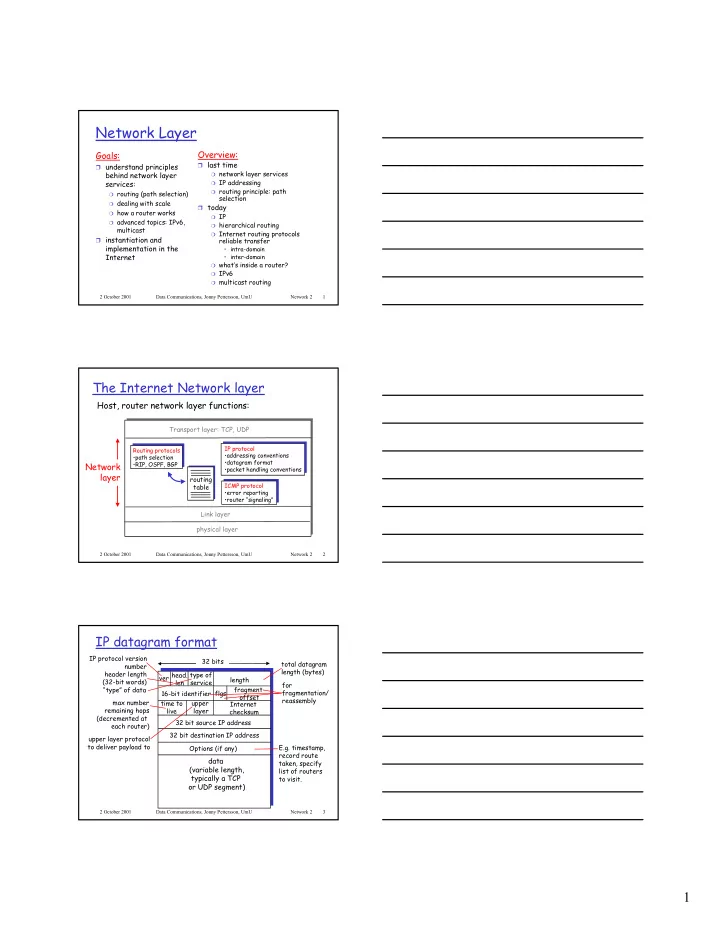
The Internet Network layer
routing table
Host, router network layer functions:
Routing protocols
- path selection
- RIP, OSPF, BGP
IP protocol
- addressing conventions
- datagram format
- packet handling conventions
ICMP protocol
- error reporting
- router “signaling”
Transport layer: TCP, UDP Link layer physical layer
Network layer
2 October 2001 Network 2 3 Data Communications, Jonny Pettersson, UmU
IP datagram format
ver length 32 bits
data (variable length, typically a TCP
- r UDP segment)
16-bit identifier Internet checksum time to live 32 bit source IP address IP protocol version number header length (32-bit words) max number remaining hops (decremented at each router) for fragmentation/ reassembly total datagram length (bytes) upper layer protocol to deliver payload to head. len type of service “type” of data flgs fragment
- ffset
upper layer 32 bit destination IP address Options (if any) E.g. timestamp, record route taken, specify list of routers to visit.