
SLIDE 1
6/12/2019 IsabelL-Explorations Presentation Outline - Google Docs https://docs.google.com/document/d/1S7ravGjIlE8lqr8KurTqWFz1_wN6jYfDwsNQw8xP__M/edit 1/3
how to convey emotion through camera movement
- different camera angles build character development
- it allows the director to fool the audience
○ maintains suspension of disbelief & engages the audience subtle ways directors trigger feelings for the characters by composition and angles angles
- low angle: appears biggerthanlife, confident, a more powerful perspective
○ difference between a leader and followers
- high angle: innocent look of a child, appears harmless/somewhat weak, subordinate to
another character in the scene
- dutch angle/dutch tilt: setting the camera at an angle so that the horizontal line of the shot
is not parallel with the bottom of the camera frame ○ German expressionism film movement in the 1920s ○ Soviet experimental documentary ○ fear, uneasiness, builds and heightens psychological distress and tension ○ thrilling and suspenseful dolly (ubiquitous in modernday filmmaking)
- 3 dimensional move towards or away from the subject in which is being focused on
○ physically moving audience through space
- tracking shot: follow along with the subject as he/she moves from one place to another
- world moves around subject
zoom
- magnification instead of movement
- no change in the spatial relationship between the surroundings and the subject
- bjects stay relatively in the same position but the background is compressed
○ effect of the world choking in on the character/world is closing in
- claustrophobic feeling; forces audience to fixate on a specific subject
- can also be used to give a sense of paranoia
- snap zoom: zooms in at a fast speed so the image seems to move from a wide shot to a
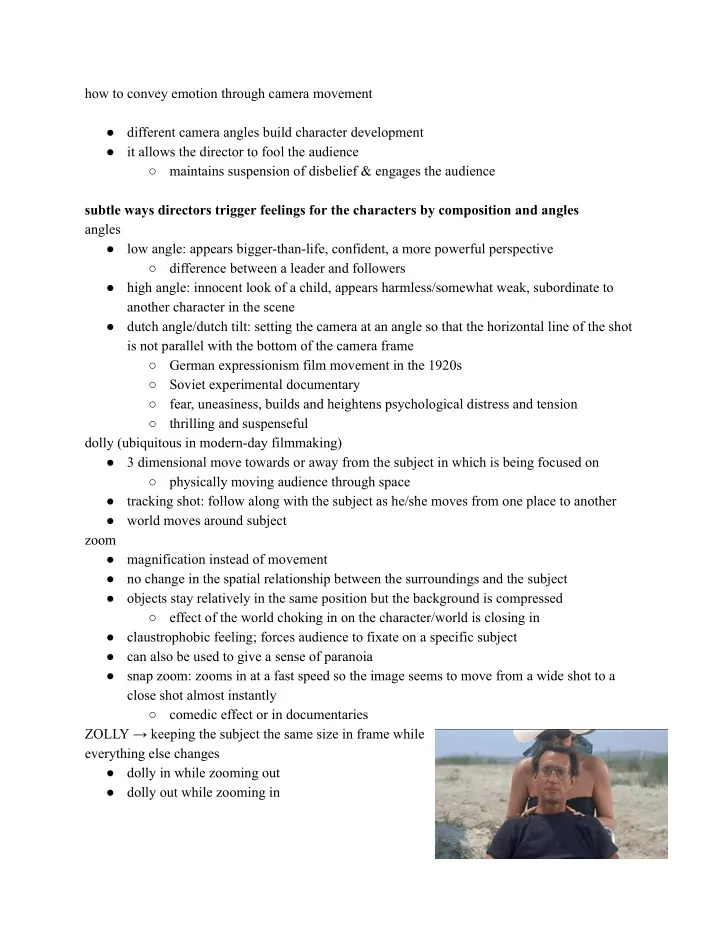
close shot almost instantly ○ comedic effect or in documentaries ZOLLY → keeping the subject the same size in frame while everything else changes
- dolly in while zooming out
- dolly out while zooming in