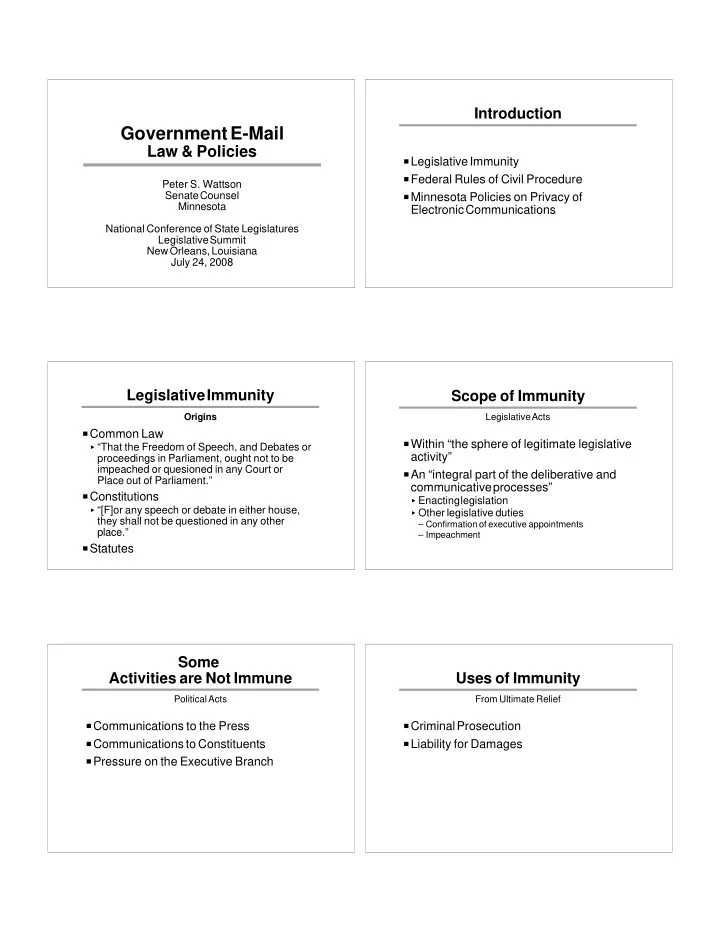
SLIDE 1
Uses of Immunity, cont’d
From Giving Testimony or Producing Documents
PIn Criminal Actions PIn Civil Actions
< Members of Congress < State Legislators < Local Legislators
Legislator and Aide “Treated as One”
Gravel v. United States (1972)
PSubcommittee on Buildings and Grounds PPentagon Papers
< Read aloud < Entered into public record
PGrand jury investigation of leak PProtective order - aide could not be questioned about the meeting
Electronic Documents Create Special Problems
United States v. Rayburn House Office Bldg. (2007) Congressman William Jefferson
PInvestigation of Congressman for bribery, wire fraud, conspiracy POffice searched
< Search of paper files violated Speech or Debate Clause < Copying computer files did not violate Speech
- r Debate Clause
PPaper documents returned, computer files not
Electronic Documents Create Special Problems, cont’d
In re John Doe Proceeding (2004)
PDistrict attorney investigating campaign law violations by legislators and staff PJohn Doe judge subpoena PAll backup tapes of all electronically stored communications on December 15, 2001 = “hundreds of millions of printed pages” POverly broad - quashed
Electronic Documents Create Special Problems, cont’d
- Wash. State Farm Bureau Fed. v. Gregoire (2006)
PSuit over state spending limit PE-mails among legislators, legislative staff, Governor’s staff, Attorney General PNon-privileged e-mails ordered disclosed PPrivileged message included within string
- f non-privileged messages
PCourt ordered recipient party to black it
- ut
Electronically Stored Information
Federal Rules of Civil Procedure
P“Electronically stored information stands
- n equal footing with . . . paper
documents” PExcept that, it doesn’t P“Because of lax corporate management, e-mail is often the most valuable source
- f evidence in civil or criminal litigation.”