Global current account balances as a % of world GDP 1 0.5 0 - - PowerPoint PPT Presentation

global current account balances as a of world gdp
SMART_READER_LITE
LIVE PREVIEW

Global current account balances as a % of world GDP 1 0.5 0 - - PowerPoint PPT Presentation

Global current account balances as a % of world GDP 1 0.5 0 1990 1991 1992 1993 1994 1995 1996 1997 1998 1999 2000 2001 2002 2003 2004 2005 2006


slide-1
SLIDE 1

Institute For New Economic Thinking

Too Much of the Wrong Sort of Capital Flow ¡|1 ¡

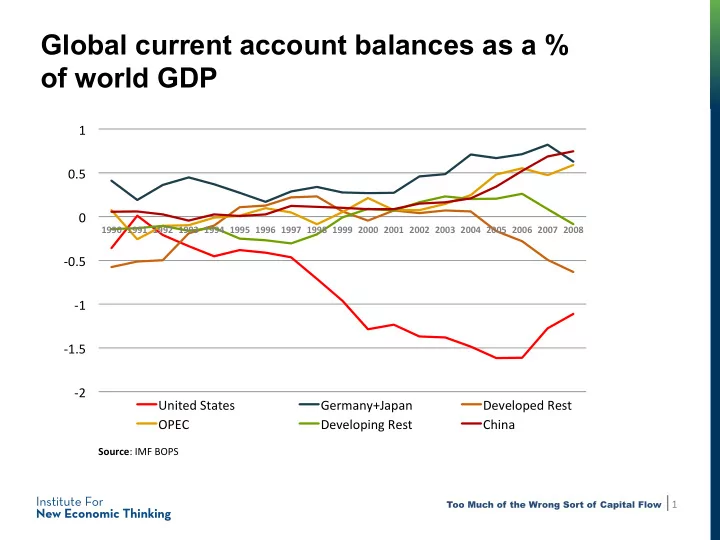
Global current account balances as a %

  • f world GDP
  • ­‑2 ¡
  • ­‑1.5 ¡
  • ­‑1 ¡
  • ­‑0.5 ¡

0 ¡ 0.5 ¡ 1 ¡

1990 ¡ 1991 ¡ 1992 ¡ 1993 ¡ 1994 ¡ 1995 ¡ 1996 ¡ 1997 ¡ 1998 ¡ 1999 ¡ 2000 ¡ 2001 ¡ 2002 ¡ 2003 ¡ 2004 ¡ 2005 ¡ 2006 ¡ 2007 ¡ 2008 ¡

United ¡States ¡ Germany+Japan ¡ Developed ¡Rest ¡ OPEC ¡ Developing ¡Rest ¡ China ¡ ¡

Source: ¡IMF ¡BOPS ¡

slide-2
SLIDE 2

Institute For New Economic Thinking

Too Much of the Wrong Sort of Capital Flow ¡|2 ¡

Eurozone current account deficits: 2000 – 2008

% of GDP 2000 – 2008

Source: ¡InternaIonal ¡Monetary ¡Fund, ¡World ¡Economic ¡Outlook ¡Database, ¡October ¡2012 ¡

  • ­‑16 ¡
  • ­‑14 ¡
  • ­‑12 ¡
  • ­‑10 ¡
  • ­‑8 ¡
  • ­‑6 ¡
  • ­‑4 ¡
  • ­‑2 ¡

0 ¡ 2000 ¡ 2001 ¡ 2002 ¡ 2003 ¡ 2004 ¡ 2005 ¡ 2006 ¡ 2007 ¡ 2008 ¡ % ¡ Year ¡ Greee ¡ Ireland ¡ Portugal ¡ Spain ¡

Greece ¡ Ireland ¡ Portugal ¡ Spain ¡ % ¡of ¡GDP ¡

slide-3
SLIDE 3

Institute For New Economic Thinking

Too Much of the Wrong Sort of Capital Flow ¡|3 ¡

US private and public leverage cycles

Source: ¡McCulley ¡and ¡Pozsar ¡

slide-4
SLIDE 4

Institute For New Economic Thinking

Too Much of the Wrong Sort of Capital Flow ¡|4 ¡

UK household deposits and loans: 1964 – 2009

0% ¡ 10% ¡ 20% ¡ 30% ¡ 40% ¡ 50% ¡ 60% ¡ 70% ¡ 80% ¡ 90% ¡ 100% ¡ 1964 ¡1967 ¡1970 ¡1973 ¡1976 ¡1979 ¡1982 ¡1985 ¡1988 ¡1991 ¡1994 ¡1997 ¡2000 ¡ 2003 ¡ 2006 ¡ 2009 ¡

% ¡of ¡GDP ¡

SecuriCsaCons ¡and ¡loan ¡transfers ¡ Deposits ¡ Loans ¡

Source: ¡Bank ¡of ¡England, ¡Tables ¡A4.3, ¡A4.1 ¡ ¡ ¡

slide-5
SLIDE 5

Institute For New Economic Thinking

Too Much of the Wrong Sort of Capital Flow ¡|5 ¡

Measures of increasing financial intensity

US ¡debt ¡as ¡a ¡% ¡of ¡GDP ¡by ¡borrower ¡type ¡

1971 250% 1929 1935 1941 1947 1953 1959 1965 1977 1983 1990 1996 2002 2007 10% 50% 100% 150% 200% 300%

slide-6
SLIDE 6

Institute For New Economic Thinking

Too Much of the Wrong Sort of Capital Flow ¡|6 ¡

US financial sector assets

0% ¡

50% ¡

100% ¡ 150% ¡ 200% ¡ 250% ¡ 300% ¡ 1960 ¡ 1965 ¡ 1970 ¡ 1975 ¡ 1980 ¡ 1985 ¡ 1990 ¡ 1995 ¡ 2000 ¡ 2005 ¡ 2010 ¡ Banks ¡ MMMFs ¡ GSE ¡ Agency ¡and ¡GSE-­‑ ¡Mortgage ¡Pools ¡ Issuers ¡of ¡ABS ¡ Finance ¡Companies ¡ Security ¡Broker-­‑Dealer ¡ Funding ¡CorporaCon ¡

slide-7
SLIDE 7

Institute For New Economic Thinking

Too Much of the Wrong Sort of Capital Flow ¡|7 ¡

Categories of debt: UK 2009

227 ¡ 1235 ¡ 243 232

Primarily ¡producCve ¡investment ¡ ¡ Some ¡producCve ¡investment ¡and ¡some ¡ leveraged ¡asset ¡play ¡ Mainly ¡purchase ¡of ¡exisCng ¡assets ¡ Pure ¡life-­‑cycle ¡consumpCon ¡smoothing ¡ Other ¡corporate ¡ Commercial ¡real ¡estate ¡ ResidenCal ¡mortgage ¡ (including ¡securiCzaCons ¡ and ¡loan ¡transfers) ¡ Unsecured ¡personal ¡ ¡

£bn ¡

slide-8
SLIDE 8

Institute For New Economic Thinking

Too Much of the Wrong Sort of Capital Flow ¡|8 ¡

Credit and asset price cycles

Expectation of future asset price increases Increased credit extended

Low credit losses: high bank profits

  • Confidence reinforced
  • Increased capital base

Increased asset prices Increased lender supply of credit Favourable assessments of credit risk Increased borrower demand for credit

slide-9
SLIDE 9

Institute For New Economic Thinking

Too Much of the Wrong Sort of Capital Flow ¡|9 ¡

Interactions between credit categories and effects

Increased ¡ apparent ¡ wealth ¡ Reduced ¡ saving: ¡ increased ¡ consumpCon ¡

Increased ¡ price ¡of ¡ exisCng ¡real ¡ estate ¡ Increasing ¡ credit ¡ supply ¡/ ¡ demand ¡

Equity ¡ withdrawal ¡ mortgage ¡ supply ¡& ¡ demand ¡

Boom ¡in ¡new ¡ real ¡estate ¡ construcCon ¡ Increased ¡ prices ¡for ¡ new ¡real ¡ estate ¡ Borrower ¡and ¡lender ¡ net ¡worth, ¡confidence ¡ and ¡expectaConal ¡ effects ¡ ¡

slide-10
SLIDE 10

Institute For New Economic Thinking

Too Much of the Wrong Sort of Capital Flow ¡|10 ¡

Categories of net capital flow effects

Finance ¡for ¡new ¡ real ¡estate ¡ construcIon ¡boom ¡ Finance ¡for ¡exisIng ¡ real ¡estate ¡ purchase ¡ Finance ¡of ¡ unsustainable ¡ consumpIon ¡ Over-­‑investment ¡ cycle ¡and ¡debt ¡

  • verhang ¡

Credit ¡and ¡asset ¡ price ¡cycle ¡and ¡ debt ¡overhang ¡ Debt ¡overhang ¡ Spain, ¡Ireland, ¡US ¡ UK ¡ (And ¡Spain, ¡Ireland, ¡US) ¡ US ¡in ¡parCcular ¡

slide-11
SLIDE 11

Institute For New Economic Thinking

Too Much of the Wrong Sort of Capital Flow ¡|11 ¡

Net capital flows and domestic credit cycles

Total ¡increase ¡in ¡credit ¡and ¡subsequent ¡debt ¡overhang ¡a ¡large ¡ mulIple ¡of ¡the ¡net ¡internaIonal ¡capital ¡flows ¡

Structural ¡drivers ¡

  • f ¡current ¡account ¡

imbalance ¡ Increased ¡debt ¡ finance ¡of: ¡

  • ¡Real ¡estate ¡
  • ¡ConsumpCon ¡

Wealth ¡effects ¡and ¡ increased ¡ consumpCon ¡ DomesCc ¡banking ¡ system ¡creaCon ¡of ¡ credit ¡and ¡matching ¡ money ¡

Credit and asset price cycles

slide-12
SLIDE 12

Institute For New Economic Thinking

Too Much of the Wrong Sort of Capital Flow ¡|12 ¡

Total cross-border capital inflows: 1980 – 2011

Loans and deposits Bonds Equity Foreign direct investment

2005 2000 1995 1990 2007 2011 12 10 8 6 4 2

  • 2
  • 4

5.8 2.0 4.9 4.8 5 5 13 15 7 21 % Global GDP

USD trillions, constant 2011 exchange rates

Source: Future of Long-term Finance, Group of Thirty Report, MGI, December 2012

slide-13
SLIDE 13

Institute For New Economic Thinking

Too Much of the Wrong Sort of Capital Flow ¡|13 ¡

Coefficient of variation of inward cross-border runs by type

Long maturity Short maturity

¡ Emerging ¡ Markets ¡

FDI Equity Bonds Long-term bank claims Short-term bank claims

¡ Developed ¡ Markets ¡

6.0 3.2 0.7 0.9 0.5 2.4 1.8 1.7 1.7 0.7

Source: Future of Long-term Finance, Group of Thirty Report, MGI, December 2012

slide-14
SLIDE 14

Institute For New Economic Thinking

Too Much of the Wrong Sort of Capital Flow ¡|14 ¡

Dynamics of increasing deficits in reserve currency economy

Naturally ¡arising ¡

  • peraConal ¡& ¡

investment ¡preferences ¡ $ ¡Reserve ¡ currency ¡ status ¡ Need ¡to ¡hold ¡$ ¡reserves ¡ – ¡matched ¡by ¡necessary ¡ US ¡current ¡account ¡ deficit ¡

  • SCll ¡further ¡

increase ¡in ¡market ¡ liquidity ¡

  • $ ¡interest ¡rates ¡

marginally ¡lower ¡

  • $ ¡exchange ¡rate ¡

higher ¡ No ¡constraint ¡on ¡ increasing ¡deficit ¡given ¡ reserve ¡currency ¡status ¡

Easier ¡supply ¡of ¡credit ¡– ¡ increased ¡consumpCon ¡ Increased ¡current ¡account ¡ deficit ¡

Consequent ¡current ¡account ¡deficit ¡and ¡overseas ¡holding ¡of ¡$ ¡ can ¡be ¡far ¡higher ¡than ¡reserve ¡currency ¡status ¡makes ¡necessary ¡