ecofeminism women ecology and development

ECOFEMINISM women, ecology and development: v UN Women - PDF document

ECOFEMINISM women, ecology and development: v UN Women conference, CSW, processes have been largely based on the assumption that the


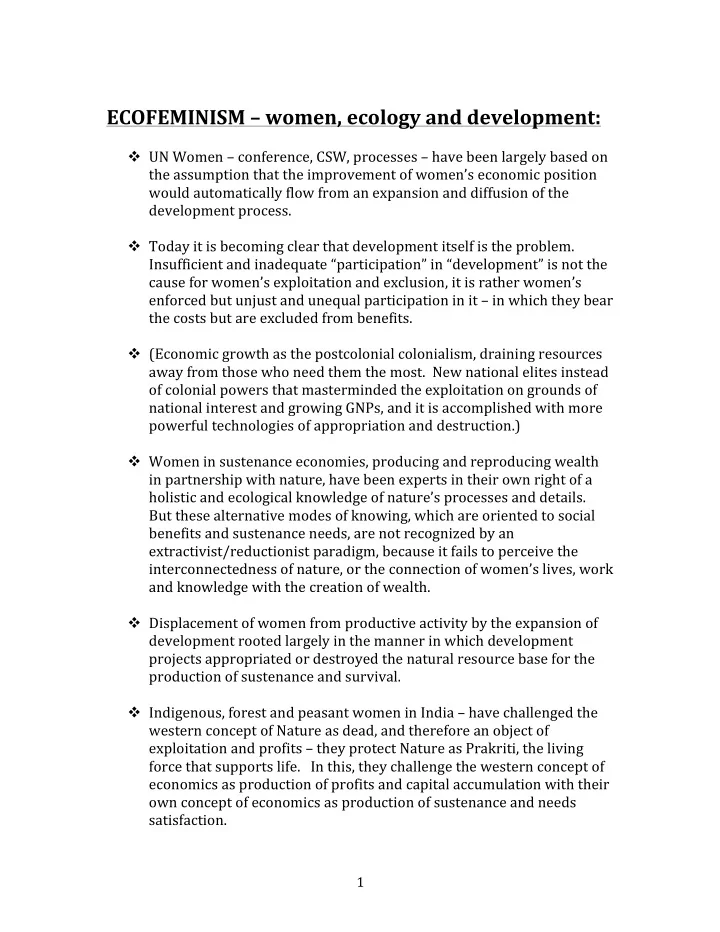
  1. ¡ ECOFEMINISM ¡– ¡women, ¡ecology ¡and ¡development: ¡ ¡ v UN ¡Women ¡– ¡conference, ¡CSW, ¡processes ¡– ¡have ¡been ¡largely ¡based ¡on ¡ the ¡assumption ¡that ¡the ¡improvement ¡of ¡women’s ¡economic ¡position ¡ would ¡automatically ¡flow ¡from ¡an ¡expansion ¡and ¡diffusion ¡of ¡the ¡ development ¡process. ¡ ¡ ¡ v Today ¡it ¡is ¡becoming ¡clear ¡that ¡development ¡itself ¡is ¡the ¡problem. ¡ Insufficient ¡and ¡inadequate ¡“participation” ¡in ¡“development” ¡is ¡not ¡the ¡ cause ¡for ¡women’s ¡exploitation ¡and ¡exclusion, ¡it ¡is ¡rather ¡women’s ¡ enforced ¡but ¡unjust ¡and ¡unequal ¡participation ¡in ¡it ¡– ¡in ¡which ¡they ¡bear ¡ the ¡costs ¡but ¡are ¡excluded ¡from ¡benefits. ¡ ¡ ¡ ¡ ¡ v (Economic ¡growth ¡as ¡the ¡postcolonial ¡colonialism, ¡draining ¡resources ¡ away ¡from ¡those ¡who ¡need ¡them ¡the ¡most. ¡ ¡New ¡national ¡elites ¡instead ¡ of ¡colonial ¡powers ¡that ¡masterminded ¡the ¡exploitation ¡on ¡grounds ¡of ¡ national ¡interest ¡and ¡growing ¡GNPs, ¡and ¡it ¡is ¡accomplished ¡with ¡more ¡ powerful ¡technologies ¡of ¡appropriation ¡and ¡destruction.) ¡ ¡ v Women ¡in ¡sustenance ¡economies, ¡producing ¡and ¡reproducing ¡wealth ¡ in ¡partnership ¡with ¡nature, ¡have ¡been ¡experts ¡in ¡their ¡own ¡right ¡of ¡a ¡ holistic ¡and ¡ecological ¡knowledge ¡of ¡nature’s ¡processes ¡and ¡details. ¡ ¡ But ¡these ¡alternative ¡modes ¡of ¡knowing, ¡which ¡are ¡oriented ¡to ¡social ¡ benefits ¡and ¡sustenance ¡needs, ¡are ¡not ¡recognized ¡by ¡an ¡ extractivist/reductionist ¡paradigm, ¡because ¡it ¡fails ¡to ¡perceive ¡the ¡ interconnectedness ¡of ¡nature, ¡or ¡the ¡connection ¡of ¡women’s ¡lives, ¡work ¡ and ¡knowledge ¡with ¡the ¡creation ¡of ¡wealth. ¡ ¡ v Displacement ¡of ¡women ¡from ¡productive ¡activity ¡by ¡the ¡expansion ¡of ¡ development ¡rooted ¡largely ¡in ¡the ¡manner ¡in ¡which ¡development ¡ projects ¡appropriated ¡or ¡destroyed ¡the ¡natural ¡resource ¡base ¡for ¡the ¡ production ¡of ¡sustenance ¡and ¡survival. ¡ ¡ v Indigenous, ¡forest ¡and ¡peasant ¡women ¡in ¡India ¡– ¡have ¡challenged ¡the ¡ western ¡concept ¡of ¡Nature ¡as ¡dead, ¡and ¡therefore ¡an ¡object ¡of ¡ exploitation ¡and ¡profits ¡– ¡they ¡protect ¡Nature ¡as ¡Prakriti, ¡the ¡living ¡ force ¡that ¡supports ¡life. ¡ ¡ ¡In ¡this, ¡they ¡challenge ¡the ¡western ¡concept ¡of ¡ economics ¡as ¡production ¡of ¡profits ¡and ¡capital ¡accumulation ¡with ¡their ¡ own ¡concept ¡of ¡economics ¡as ¡production ¡of ¡sustenance ¡and ¡needs ¡ satisfaction. ¡ ¡ ¡ 1 ¡

  2. v Productivity ¡is ¡a ¡measure ¡of ¡producing ¡life ¡and ¡sustenance ¡for ¡Third ¡ World ¡women. ¡ ¡That ¡this ¡notion ¡has ¡been ¡marginalized ¡to ¡near ¡ invisibility ¡in ¡the ¡mainstream ¡discourse ¡does ¡not ¡reduce ¡its ¡centrality ¡ to ¡survival ¡(it ¡merely ¡reflects ¡the ¡domination ¡of ¡modern ¡patriarchal ¡ economic ¡categories ¡which ¡see ¡only ¡profits, ¡not ¡life). ¡ ¡(Patriarchy ¡as ¡the ¡ new ¡scienfitic ¡and ¡technological ¡power ¡was ¡a ¡political ¡need ¡of ¡ emerging ¡industrial ¡capitalism). ¡ ¡ v It ¡is ¡only ¡by ¡bringing ¡the ¡as ¡yet ¡disparate ¡perceptions ¡and ¡struggles ¡of ¡ gender, ¡ecology, ¡ethnicity, ¡class, ¡and ¡human ¡rights ¡in ¡a ¡shared ¡ conception ¡of ¡restructuring ¡the ¡human ¡enterprise ¡that ¡there ¡is ¡a ¡future ¡ for ¡the ¡feminist ¡movement. ¡ ¡ ¡ EXTRACTIVES ¡as ¡RESOURCE ¡CURSE: ¡ -­‑ Arguably, ¡one ¡of ¡the ¡most ¡perverse ¡paradoxes ¡of ¡global ¡development ¡ is ¡that ¡of ¡the ¡‘ resource ¡curse ,’ ¡a ¡term ¡first ¡coined ¡in ¡1993 ¡by ¡an ¡ academic ¡to ¡describe ¡how ¡countries ¡rich ¡in ¡natural ¡resources, ¡and ¡in ¡ particular ¡non-­‑renewable, ¡point-­‑source ¡resources ¡like ¡minerals ¡and ¡ fuels, ¡had ¡lower ¡economic ¡growth ¡and ¡worse ¡development ¡outcomes ¡ than ¡countries ¡with ¡fewer ¡natural ¡resources. ¡ ¡ ¡ -­‑ Instead ¡of ¡creating ¡employment ¡and ¡prosperity ¡from ¡healthy ¡ domestic ¡coffers, ¡natural ¡resource ¡extraction ¡fuels ¡endemic ¡ corruption, ¡thwarts ¡effective ¡institutions, ¡ undermines ¡inclusive ¡ economic ¡growth, ¡perpetrates ¡rights ¡violations, ¡incites ¡armed ¡conflict ¡ and ¡devastates ¡the ¡natural ¡ecology ¡environment. ¡ ¡ -­‑ Following ¡a ¡history ¡of ¡extraction ¡activity ¡under ¡colonization, ¡the ¡ African ¡continent ¡continues ¡this ¡trajectory ¡today. ¡ The ¡continent ¡is ¡ home ¡to ¡a ¡third ¡of ¡the ¡planet’s ¡mineral ¡reserves , ¡two-­‑thirds ¡of ¡the ¡ world’s ¡diamonds ¡and ¡a ¡tenth ¡of ¡the ¡world’s ¡oil. ¡ ¡The ¡Democratic ¡ Republic ¡of ¡Congo, ¡as ¡we ¡saw ¡in ¡the ¡powerful ¡documentary, ¡is ¡endowed ¡ with ¡an ¡abundance ¡of ¡diamonds, ¡gold, ¡copper, ¡cobalt, ¡coltan ¡and ¡tin. ¡ ¡ ¡ -­‑ These ¡minerals ¡are ¡not ¡just ¡core ¡components ¡of ¡today’s ¡ indispensable ¡cell ¡phones ¡and ¡laptops, ¡they ¡very ¡much ¡uphold ¡the ¡ productive ¡activity ¡in ¡our ¡world ¡economy, ¡from ¡infrastructure ¡to ¡ energy, ¡technology ¡to ¡the ¡automotive ¡industry. ¡ ¡ ¡ 2 ¡

  3. Dutch ¡Disease, ¡& ¡Economic ¡Enclave ¡Effect: ¡ ¡ n Resource-­‑rich ¡countries ¡are ¡plagued ¡by ¡a ¡phenomenon ¡called ¡"Du tch ¡ disease ", ¡which ¡refers ¡to ¡a ¡situation ¡where ¡exports ¡of ¡natural ¡ resources ¡leads ¡to ¡foreign ¡exchange ¡inflows ¡that ¡drive ¡up ¡the ¡value ¡ of ¡the ¡national ¡currency. ¡ The ¡overvalued ¡currency ¡leads ¡to ¡a ¡ decrease ¡in ¡competitiveness ¡of ¡the ¡domestic ¡manufacturing, ¡ agriculture, ¡and ¡other ¡economic ¡sectors. ¡ ¡ ¡ n The ¡ enclave ¡effect ¡ ¡of ¡natural ¡resource-­‑based ¡economies ¡is ¡a ¡root ¡ cause ¡of ¡poverty, ¡lack ¡of ¡employment ¡and ¡vicious ¡inequality. ¡ ¡This ¡ is ¡because ¡natural ¡resources ¡often ¡provide ¡few ¡jobs, ¡and ¡tend ¡to ¡ operate ¡as ¡enclaves ¡with ¡few ¡forward ¡and ¡backward ¡connections ¡ to ¡the ¡rest ¡of ¡the ¡economy. ¡ ¡ ¡ n This ¡enclave ¡effect ¡thus ¡stagnates ¡ economic ¡diversification , ¡and ¡ thwarts ¡the ¡scaling ¡up ¡of ¡both ¡ productive ¡capacity ¡in ¡the ¡economy ¡ as ¡a ¡whole ¡and ¡ productive ¡capabilities ¡of ¡the ¡labor ¡force ¡in ¡ building ¡human ¡capital, ¡skills ¡training ¡and ¡industrial ¡expertise. ¡ ¡ ¡ n Policymakers ¡may ¡ neglect ¡or ¡delay ¡industrial ¡policy ¡for ¡ diversification, ¡especially ¡increasing ¡manufacturing ¡value-­‑added, ¡ agricultural ¡productivity, ¡services ¡in ¡light ¡of ¡the ¡high ¡profits ¡in ¡ natural ¡resources ¡which ¡out-­‑compete ¡other ¡sectors . ¡ ¡ ¡ FREE ¡TRADE ¡AGREEMENTS ¡+ ¡ INDUSTRIALIZATION ¡ v However, absent from the SDGs is any mention or recognition of the binding constraints that most developing countries face if they implement the very industrial policies and tools that today’s developed countries historically employed to industrialise. v These tools and policies include: -­‑ infant industry protection -­‑ and state-directed regulations and restrictions on foreign investment, such as performance requirements and local content sourcing, ¡ 3 ¡

Recommend


More recommend


Explore More Topics

Stay informed with curated content and fresh updates.