
SLIDE 1
DESERT SOUTHWEST REGION 10-YEAR PLAN FORMAL PRESENTATION FISCAL YEAR 2019-2028
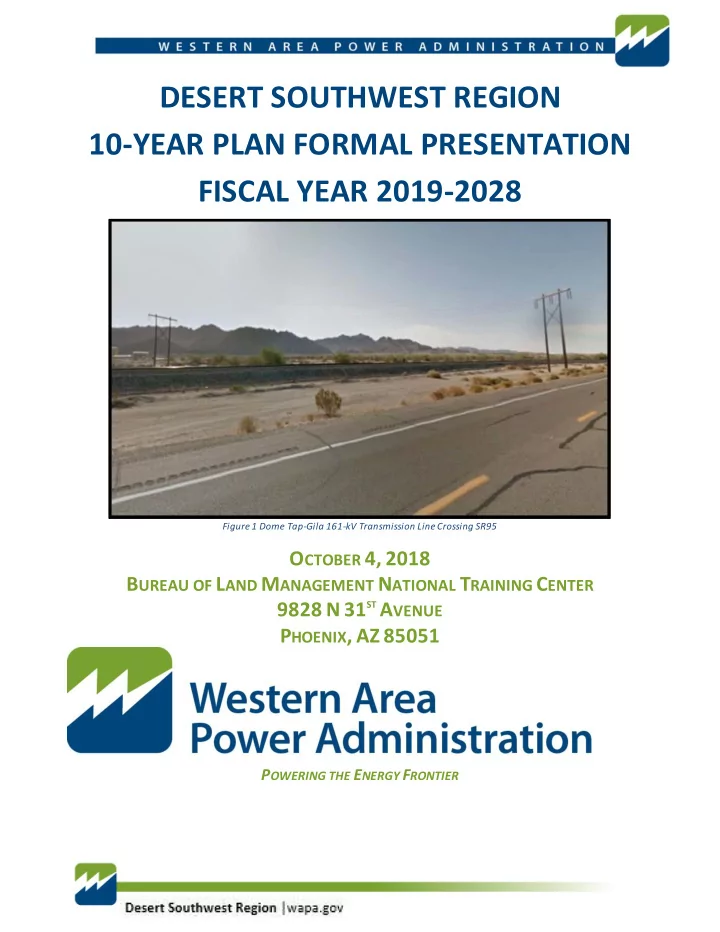
Figure 1 Dome Tap-Gila 161-kV Transmission Line Crossing SR95
OCTOBER 4, 2018 BUREAU OF LAND MANAGEMENT NATIONAL TRAINING CENTER 9828 N 31
ST AVENUE
DESERT SOUTHWEST REGION 10-YEAR PLAN FORMAL PRESENTATION FISCAL - - PDF document
DESERT SOUTHWEST REGION 10-YEAR PLAN FORMAL PRESENTATION FISCAL YEAR 2019-2028 Figure 1 Dome Tap-Gila 161-kV Transmission Line Crossing SR95 O CTOBER 4, 2018 B UREAU OF L AND M ANAGEMENT N ATIONAL T RAINING C ENTER 9828 N 31 ST A VENUE P HOENIX ,
Figure 1 Dome Tap-Gila 161-kV Transmission Line Crossing SR95
ST AVENUE
2
4
....................................................................................................................... 5
6
7 4.1 What Is The Pivot? ..................................................................................................................... 7 4.2 Why Do We Need to Pivot? ......................................................................................................... 7 4.3 Customer Benefits ..................................................................................................................... 7
8 5.1 Project Request Phase................................................................................................................ 8 5.2 Analysis of Alternatives (AOA) Study............................................................................................. 8 5.3 Seed Funding Phase ................................................................................................................... 8 5.4 Preconstruction Phase................................................................................................................ 9
7.1 Proposed Project Scope ............................................................................................................ 12 7.2 Proposed Project Advantages .................................................................................................... 14 7.3 Existing South of Parker Configuration ........................................................................................ 15 7.4 Proposed South of Parker Configuration ..................................................................................... 15 7.5 Impacts to Parker Substation..................................................................................................... 16 7.6 South of Parker – Voltage Benefits ............................................................................................. 18
................................................................................................................ 19 8.1 Prepayment Voting Ballot ......................................................................................................... 19 8.2 Pivot Project: Bouse-Kofa 161-kV Rebuild.................................................................................... 19 8.3 Bouse-Kofa Maintenance Report ............................................................................................... 25 8.4 Seed Funded Projects............................................................................................................... 26 8.5 Gila-Dome Tap 161-kV Rebuild .................................................................................................. 26 8.6 Kofa-Dome Tap 161-kV Rebuild ................................................................................................. 28 8.7 Coolidge-Valley Farms 115-kV Rebuild ........................................................................................ 29
.............................................................................................................................. 31 9.1 Rates Introduction ................................................................................................................... 31 9.2 Analysis of Capital Investments.................................................................................................. 31
3 9.3 Results of Analysis ................................................................................................................... 32 9.4 Formal 10-Year Spend Plan ....................................................................................................... 33 9.5 Parker Davis Estimated Rate Impact ........................................................................................... 34 9.6 Intertie Estimated Rate Impact .................................................................................................. 35
................................................................................................................................ 36 10.1 DSW Wood Pole Data............................................................................................................... 36 10.2 DSW Service Region Maintenance Report ................................................................................... 37
4
Bureau of Land Management, National Training Center Room Name: New Mexico Thursday, October 4, 2018 | 10 a.m. Mountain Daylight Time (Arizona) WEBEX VIDEO CONFERENCING AND CALL-IN NUMBER: To access the WebEx please click the below link and follow the on-screen prompts CLICK HERE Meeting number: 907 239 983 Meeting password: HFYEMV2n To join the conference call, please dial (415)-527-5035. When prompted, enter conference code number 907 239 983 and then enter #. OBJECTIVES: Provide follow up information on Draft 10-Year Plan Meeting hosted 31 July, 2018 Provide additional project details in advance of the December 3, 2018 Prepayment Vote Meeting AGENDA:
10 MINUTE BREAK
5
ACSR……………………………………………………………………….…………..ALUMINUM CONDUCTOR STEEL REINFORCED ACSS……………………………………………………………………….…………...ALUMINUM CONDUCTOR STEEL SUPPORTED APS…………………………………….……………………………………….…….……………………………….ARIZONA PUBLIC SERVICE AOA……….……………………………………………………………………………………………………..ANALYSIS OF ALTERNATIVES BES…………………………………………………………………………………..…………..………………….……BULK ELECTRIC SYSTEM BOR…………………………………...………………………………….……………………….……………….BUREAU OF RECLAMATION BSE……………………………………….…………………………………………………………………………………..BOUSE SUBSTATION CAP………………………………………………………………………………………….………….………...CENTRAL ARIZONA PROJECT CPC………………………………………………………………………………………….……………..CAPITAL PLANNING COMMITTEE CTC………………………………………………………………………………………….………..CUSTOMER TECHNICAL COMMITTEE CX…………………………………………………………………………………………….…...……………...….CATEGORICAL EXCLUSION CIP……….………………………………………………………………………………....…CRITICAL INFRASTRUCTURE PROTECTION DOE………………………………………………………………………..……………………..…………..……..DEPARTMENT OF ENERGY DSW……………………………………………………………………………………………………….……DESERT SOUTHWEST REGION EA………..………………………………………………………………………….………….……………ENVIRONMENTAL ASSESSMENT E&OC……………………………………………………………………………..………...ENGINEERING & OPERATING COMMITTEE EVM.………………………..………………………………………………………………..……….…….EARNED VALUE MANAGEMENT GFE…………….……………………………………………..……………………..…………GOVERNMENT FURNISHED EQUIPMENT IDC……………….………………………………………….………………………………………….INTEREST DURING CONSTRUCTION IDIQ………………………………...……………………….………………………….INDEFINITE DELIVERY/INDEFINITE QUANTITY JPA…………………………………………………………….…………………………………….…………JOINT PLANNING AGREEMENT KCMIL…………………………………………….………….………………………………………………...THOUSANDS CIRCULAR MILS MDCC…………………………………………………………..………...MAINTENANCE DESIGN CONSTRUCTION COMMITTEE MVA..………………………………………………………………………………………………..……………………………MEGA VOLT AMP NEPA…………………………….…………………………….………………..……….....NATIONAL ENVIRONMENTAL POLICY ACT NERC………………………………………………………………….NORTH AMERICAN ELECTRIC RELIABILITY CORPORATION NESC……………………………………………………………..………………………….……...NATIONAL ELECTRICAL SAFETY CODE NHPA…………………..………………………………………..……………………………NATIONAL HISTORIC PRESERVATION ACT NRHP…………………..………………………………………..………………..……..…NATIONAL REGISTER OF HISTORIC PLACES OGW……………..………………………..…………………….………………………………………………..OVERHEAD GROUND WIRE O&M……………………………………………………………….………………….………………..OPERATIONS AND MAINTENANCE OPGW………………………………..…………………………….……………………..………..OPTICAL OVERHEAD GROUND WIRE OGW………………………………………………………………..………………………………………..…… OVERHEAD GROUND WIRE PCB………………………………………………………….………………………………………………….POLYCHLORINATED BIPHENYL P-DP…………………………………………………….…………………………………………………………….…PARKER-DAVIS PROJECT USDA………………………………………………….…………………………..UNITED STATES DEPARTMENT OF AGRICULTURE RFP……………………………………………………..……………………………………………………………...REQUEST FOR PROPOSAL ROM…………………………………………………..………………..…………ROUGH ORDER OF MAGNITUDE COST ESTIMATE ROW…………………………………………………….…………………………………………….……………………………..RIGHT-OF-WAY SCE…………………………………………………………………….………………………..……...….SOUTHERN CALIFORNIA EDISON TEP……………………………………………………………………..…………………………………………….TUCSON ELECTRIC POWER TYP…………………………………………………………………………………………………………………………….……….10-YEAR PLAN WAPA……………………………………………….…………………………………….WESTERN AREA POWER ADMINISTRATION
6
Figure 1 Dome Tap-Gila 161-kV Transmission Line Crossing SR95 ............................................................... 1 Figure 2 Pivot strategy - Prepayment Vote Schedule Four Year Look Ahead.................................................. 7 Figure 3 Project Life Cycle with Estimate Accuracy Progression .................................................................. 8 Figure 4 Project Life Cycle with Estimate Accuracy Progression .................................................................. 9 Figure 5 Color Coded Project Status Bar Indicators ................................................................................. 10 Figure 6 Project Life Cycle Milestones with Estimate Accuracies ............................................................... 10 Figure 7 LEFT: Existing System Configuration. RIGHT: Bouse Upgrade System Configuration ......................... 11 Figure 8 Left: Existing Bouse Substation. Right: Proposed Bouse Substation 230-kV Additions ...................... 13 Figure 9 Aerial View of Parker 69-kV, 161-kV, & 230-kV Substations ......................................................... 16 Figure 10 Bouse-Kofa Existing Wood H-Frame Structure, February 2018.................................................... 20 Figure 11 Project Life Cycle with Estimate Accuracy Progression............................................................... 22 Figure 12 Bouse-Kofa Conceptual Project Phasing Map ........................................................................... 24 Figure 13 Project Life Cycle with Estimate Accuracy Progression............................................................... 26
7
4.1 What Is The Pivot?
The pivot is a strategic one-time shift in the 10-Year Plan process that requires simultaneous approval of multiple upcoming capital improvement projects. The pivot will span two 10-Year Plan cycles (two calendar years) and incorporate simultaneous prepayment funding approvals across fiscal year 2019 - 2022. A successful pivot will conclude in December 2019 at the Prepayment Vote Meeting. Upon Completion, the 10-Year Plan will be in alignment with the Government’s Budget Formulation Process such that prepayment funding will be approved two years in advance of the start of new projects.
Figure 2 Pivot strategy - Prepayment Vote Schedule Four Year Look Ahead
4.2 Why Do We Need to Pivot?
The Federal Government Budget Formulation process begins two fiscal years prior to the execution year (current year). Historically, conducting the prepayment funding vote in the same year as the proposed construction start creates inconsistencies and unpredictability in the execution of DSW’s annual budget, which is formulated two years prior. The result is last minute modifications to resource allocations in order to compensate for budgetary
was prone to changes and fluctuation due to competing priorities and uncertainty of approved prepayment
accuracy, consistency, and predictability in its budget formulation and execution. Aligning capital planning with budget formulation is imperative to the success of the 10-Year Plan.
4.3 Customer Benefits
As a result of a successful pivot, the customers will gain additional input into Analysis of Alternatives (AOA) study prioritization, planning, and results. Previously the AOAs were being performed concurrent with budget formulation processes, such that opportunities for customer input/engagement were limited. The strategic plan to pivot will provide customers with capital planning information in advance of budget formulation, therefore allowing sufficient time for WAPA to develop diverse, viable, and economical investment alternatives for customer consideration.
8
The graphic below was created to illustrate the major milestones of a typical 10-Year Plan Project from project request (inception) to project financial close-out (completion).
Figure 3 Project Life Cycle with Estimate Accuracy Progression
5.1 Project Request Phase
Project Request (PR) forms are required to initiate any capital improvement project with an anticipated budget great that one million dollars. PRs can be submitted by either WAPA internal stakeholders or external customer
deficiency between the current capabilities and capacities and those required in the mission need. Each PR is evaluated and prioritized based on compliance, reliability, and economic metrics. The submission of a PR does not guarantee the initiation of an active project. PRs are actively analyzed and those of the highest priority are handed off to the Analysis of Alternatives (AOA) study team for further investigation and development. Project Request Forms can be found here: https://www.wapa.gov/regions/DSW/Pages/10-year-capital-program.aspx
5.2 Analysis of Alternatives (AOA) Study
The Analysis of Alternatives (AOA) study phase is used to develop a conceptual design using the Project Request form information as the basis for the mission need. The AOA study aims to identify and analyze sufficient alternatives that are diverse, viable, and economically feasible, representing a suitable range of design
scope, schedule and cost estimate. AOA studies are performed in concert with WAPA customers and internal stakeholders from the point of identifying alternatives, to selecting the preferred alternative. The completion
to prioritization, competing priorities, resource availability, approved funding, and customer support. AOA studies must be completed for any project being considered for the budget formulation year.
5.3 Seed Funding Phase
Background New in 2016 was the implementation of the seed funding mechanism. This mechanism was initiated in response to the inherent variability of pre-design construction estimates (+/-30% accuracy). In Figure 3 above, you can see the progression from the Project Request Phase (Box #1) to Project Completion Phase (Box #5) and the associated level of accuracy of the project estimate at each phase. Estimate accuracies are approximate targets and may vary depending on the nature of the project.
9 Transition to Active Project The transition from the AOA Study Phase to the Seed Funding Phase is representative of the transition from O&M planning activities to formal active project activities. Once the Seed Funding Phase is initiated, a formal project management team is assigned to the project and year one of the active project is officially underway. Improved Estimate Accuracy While the AOA studies provide a +/-30% accurate project cost estimate based on conceptual design parameters, the seed funding phase improves to +/-20% estimate accuracy. The limitations of the AOA estimate exist in the inherent variables of the conceptual design and its impacts on lands/realty, the environment, outage coordination, procurement, market values, and a host of other cost drivers. Through the development of the preliminary design in the seed funded phase, these variables are identified, improving the estimate accuracy to within +/-20% accuracy. Once the design is deemed complete (100% drawings and specifications) at the end of the Pre-construction Phase, then the estimate accuracy is improved to +/-5%. Seed Funding Budget Determination Using conceptual design information developed in the AOA Study Phase, WAPA determines the amount of seed funding required to develop 50%-75% of the project design package. The project design package consists of the construction specifications, drawings, and associated preliminary procurement documents. The respective seed budget supports federal and contract labor only, no equipment is procured in the seed phase. Funding Through Completion Once a project has successfully been funded through the seed funding phase, it is then subject to review by WAPA and its customer’s for full funding consideration (Figure 4, Box #4 & #5). In the event appropriations cannot be secured to fully fund the remainder of the project to completion, prepayment funds will be requested from the customers during the annual prepayment vote meeting in December.
Figure 4 Project Life Cycle with Estimate Accuracy Progression
5.4 Preconstruction Phase
At the conclusion of the Seed Funding Phase, the project enters the Pre-Construction Phase which advances the partial design package from 50-75% to 100% final design. The final design includes the design drawings, specifications, and in some cases required procurement documents for solicitation of government furnished
execute all required contracts to complete the design package. This may include a variety of service, construction, and/or equipment contracts. At the conclusion of this phase the construction contractor will be issued a notice to proceed and field activities will begin.
10
The following project status bars have been created to identify each phase of the 10-Year Plan process. As you review the information throughout the PowerPoint and handout booklet, look for these status bars for quick reference to the project phase.
Figure 5 Color Coded Project Status Bar Indicators
The project status bars are color-coded to coincide with the estimate accuracy and design status of the Project Life Cycle figure previously reviewed.
Figure 6 Project Life Cycle Milestones with Estimate Accuracies
11
Beginning in October 2018 (Fiscal Year 2019) DSW will initiate seed funding for the Bouse Upgrade Project with appropriated funding budgeted at $816,000. The objective is to begin preliminary design and generate a refined total project estimate for prepayment customer review and eventually consideration for full project funding in the December 2019 Prepayment Vote Meeting. In this section you will find details and information from the AOA study that was completed on the Bouse Upgrade Project in late summer of 2018. This AOA was completed as part of the 10-Year Plan Pivot Strategy and as a result all future AOAs will be conducted with full customer engagement in concert with the budget formulation process.
Figure 7 LEFT: Existing System Configuration. RIGHT: Bouse Upgrade System Configuration
12
7.1 Proposed Project Scope
For AOA study purposes, you will find this project on the 10-Year Spend Plan in section 9.2 as a single project. However, it is WAPA’s intent to phase this project into manageable smaller scopes of work that can be spread across multiple years to mitigate unnecessary upward rate pressure. STEP ONE: Build a new 230-kV transmission line Construct 15 miles of new double circuit 230-kV transmission line from Bouse substation to existing Parker-Liberty #2 transmission line Results in redirection of Parker-Liberty 230-kV line through Bouse Substation Approximately 60 steel monopole structures Proposed 1272 kcmil ACSR conductor or most economical to support load One overhead ground wire and one overhead optical ground wire. Construct across flat, unpopulated, BLM land
13 STEP TWO: Expand Bouse Substation Bouse substation rebuilt in 2012 to 230-kV standards, operated at 161-kV Three breaker ring-bus configuration Renovate into a 161-kV double-breaker-double-bus configuration Add two 230-kV bays in 4-breaker ring-bus configuration with two 230/161-kV transformers
Figure 8 Left: Existing Bouse Substation. Right: Proposed Bouse Substation 230-kV Additions
STEP THREE: Connect Headgate Rock to Bouse utilizing a Jumper Install jumper between existing Parker-Headgate Rock 161-kV line and the existing Parker-Bouse 161-kV line Connect Bouse to Headgate Rock using a new Jumper New Headgate Rock-Bouse 161-kV line is established
14 STEP FOUR: Remove 20 miles of transmission line Remove 10 of the 14 miles of single circuit line from Parker towards Headgate Rock. Remove 10 of the 22 miles of existing single circuit line from Parker towards Bouse. Relinquish existing ROW through Parker strip
7.2 Proposed Project Advantages
Proposed Bouse T-Line crosses mostly flat BLM land, away from public corridor Enhanced maintainability and reliability Viable path forward with predictable cost and schedule Removal of 20 miles of transmission line and 141 structures through Parker Corridor Optimized constructability without:
Loads can be met during construction with radial feed from Liberty and Parker System is no longer vulnerable to the impacts of either of the 230/161-kV transformers at Parker being
15
7.3 Existing South of Parker Configuration 7.4 Proposed South of Parker Configuration
PAD 161 PAD 230 PAD 161 G G G G BLY 161 HDR 161 BSE 161 LEGEND 230-kV 161-kV To Liberty Substation To Liberty Substation BSE 230 PAD 161 PAD 230 PAD 161 G G G G BLY 161 BSE 161 HDR 161 LEGEND 230-kV 161-kV
16
7.5 Impacts to Parker Substation
Figure 9 Aerial View of Parker 69-kV, 161-kV, & 230-kV Substations
17 Bouse Upgrade Project Benefits for Parker Removal of the Parker-Headgate Rock and the Parker-Bouse lines would:
at Parker or Bouse, extending the life of the transformers Parker Substation Yards Historically in 10-Year Plan 161-kV upper and lower yards built in the late 1940’s and upgraded in 1978 Numerous options have been investigated since 2011 to mitigate reliability concerns while balancing economic viability
Two canceled projects in the last five years:
Parker substation rebuild efforts remain in the 5+ year 10-Year Plan window
Each scope has its own unique constraints between cost, operational/maintenance flexibility, outage sequencing, etc. Parker Substation Reliability The existing main and transfer bus configuration makes outage scheduling extremely difficult Oil circuit breakers are 35+ years old Most disconnect switches are 40+ year old Equipment failure rates are increasing Repairs often require custom parts and lengthy repair windows Status-quo maintenance is inefficient and costly 161-kV substation provides a radial feed to the 69-kV substation which in turn serves a variety of customers. Currently maintenance is bottlenecked due to outage restrictions due to current loading on 230/161-kV transformers If one 230/161-kV transformer goes out of service, WAPA’s committed load is constricted across the remaining 230/161-kV transformer Outage restrictions (up to several months) impede optimal maintenance cycles which negatively affect transformer life 230-kV yard is showing signs of steel structure twisting All yards are very congested and land locked. No room for any expansion or additional redundancy for loads (aka 69-kV tie) Transfer bay breaker shares a bay with a 230/161-kV transformer
18
7.6 South of Parker – Voltage Benefits
Existing System Proposed Layout Bus Outage Pre- Voltage Post- Voltage Delta Voltage Pre- Voltage Post- Voltage Delta Voltage Bouse 161 PAD-BSE 161 (P1) (worst P1 for Existing System) 0.98 0.91 0.07 N/A N/A N/A Bouse 161 PAD-EGL 230 (P1) (worst P1 for Proposed Layout) N/A N/A N/A 0.99 0.98 0.01 Wellton- Mohawk 161 GLA-WMS + GLA-DME 161 (P2 or P6) w/ no KOF caps 0.99 Divergence Divergence 0.99 0.78 0.22 Wellton- Mohawk 161 GLA-WMS + GLA-DME 161 (P2 or P6) w/ two 15 MVAR KOF caps 1.00 0.84 0.16 1.00 0.92 0.08
19
8.1 Prepayment Voting Ballot
Project Name Prepayment Vote Amount Bouse-Kofa 161-kV Rebuild $26,520,000 Gila-Dome Tap 161-kV Rebuild $7,130,000 Kofa-Dome Tap 161-kV Rebuild $4,830,000 Coolidge-Valley Farms 115-kV Rebuild $2,550,000 TOTAL PREPAYMENT VOTE PACKAGE $41,030,000
8.2 Pivot Project: Bouse-Kofa 161-kV Rebuild
Pivot Strategy DSW’s 10-Year Plan pivot strategy requires the full funding of the Bouse-Kofa 161-kV Rebuild effort, which includes two separate construction project efforts, phases I and II, respectively, in December of 2018. This funding requirement is necessary to achieve the goal of aligning the 10-Year Plan with the budget formulation
preliminary design effort, the customers will still be updated on the revalidated scope, schedule, and cost estimate at the completion of year one, when the design package is 50-75% complete. Background The Bouse (BSE) to Kofa (KOF) 161-kV transmission line is a single circuit, 84.3 mile line segment of the overall Parker-Gila 161-kV Transmission Line originally built in 1943. The BSE-KOF line is located in western Arizona running south from Bouse substation to Kofa substation. Bouse substation is located just north of the junction of AZ Highways 72 and 95 in La Paz county. Kofa substation is located approximately 16 miles northeast of the city of Yuma in Yuma County. The terrain along the line is mostly low desert with multiple wash crossings and low rises. Toward the south end of the transmission line the terrain becomes more mountainous across the Castle Dome Mountains near Dome Tap. The line was originally 78.9 miles long, constructed with three 300 kcmil hollow core copper conductors (Anaconda R178R2). Most of the wood H-Frame structures have been replaced with light-duty steel H-Frame structures, and only 82 wood structures remain. In 2006 a portion of the line was rerouted around the town of Project Name AOA Phase Estimate Seed Phase Estimate
[A]
Percent Change Seed Funds
[B]
Prepayment Vote Amount
[C]
Gila-Dome Tap 161-kV Rebuild $7,400,000 $7,630,000 3.01% $500,000 $7,130,000 Kofa-Dome Tap 161-kV Rebuild $5,360,000 $5,330,000
$500,000 $4,830,000 Coolidge-Valley Farms 115-kV Rebuild $4,800,000 $3,350,000
$800,000 $2,550,000
[A]-[B] = [C]
20
kcmil ACSR conductors supported on single circuit steel monopoles.
Figure 10 Bouse-Kofa Existing Wood H-Frame Structure, February 2018
Project Justification An Analysis of Alternatives (AOA) Study was performed in 2017 to identify various performance gaps and deficiencies associated with this line segment and to identify viable, diverse, and economical alternatives. Performance gaps and deficiencies: NERC/NESC violations have been identified and need to be corrected Noted deterioration and unsafe structures are significant Access road(s) and right-of-way availability and conditions are sub-par
Install fiber optic ground wire to meet current and future protection, control, communication, and security requirements NERC/NESC Violations: NERC requires all transmission line owners/operators to perform a Facility Rating Analysis of all transmission lines over 100-kV in order to determine the as-built condition and de-rate the line to that condition, or to mitigate the condition to achieve the design rating. There are 106 cases of phase-to-ground clearances and one phase-to-OGW of a crossing line clearance not meeting the minimum clearance required by the National Electrical Safety Code (NESC) and NERC. Transmission Line Conditions: There are 17 structures identified by maintenance forces as needing replacement with more expected when detailed ground inspection is completed.
21 Access Roads and ROW: According to maintenance field inspection reports, there are numerous cases of access roads and right-of-way paths requiring improvement to facilitate construction and maintenance activities. In some cases access roads need to be created. A lack of prompt access for appropriate resources presents reliability, safety, and cost risks. Communications Requirements: Installing Optical Overhead Ground Wire (OPGW) provides an alternate and physically independent path for protection, control, and communication. Currently microwave provides the only communication path and the addition of an OPGW will allow for the future communication bandwidth needs to be met. Those needs include security, which is currently in the process of installing live feed video cameras and IT networks at substations. The addition of these systems will tax and soon bypass the current communications bandwidth provided by microwave. Alternatives Studied There were a total of five alternatives that were explored to provide a diverse range of viable, economically feasible design options. The feasibility/value of these alternatives was explored in regards to Compliance, Reliability and Economy. A detailed breakdown of each alternative can be found below. Alternative 1- Status Quo (Maintenance only) Alternative 2- Re-conductor and Replace failing wood poles in-kind Alternative 3- Re-conductor and Replace all wood poles with light-duty steel H-frame structures Alternative 4- Rebuild to 230-kV Standards operated at 161-kV using light-duty steel H-Frame structures Alternative 5- Inset Structures as needed to mitigate NERC/NESC violations Preferred Alternative: Alternative #3- Rebuild with Light-Duty Steel H-Frame Structures WAPA will replace 75.6 miles of three 300 kcmil Anaconda hollow core copper conductors with three 336.4 kcmil Oriole ACSS conductors, replace one steel OGW with OPGW, and install light-duty steel H-frame structures to replace the 82 wood structures left in the line segment. New light-duty steel H-frame steel structures will be installed as needed to correct clearance issues not corrected by stringing new ACSS conductor. Access roads will be improved as needed to facilitate construction.
22 Conceptual Project Estimate
Figure 11 Project Life Cycle with Estimate Accuracy Progression
The below estimate was developed in the AOA study phase and is considered a conceptual design estimate. The $26,520,000 is the total estimated cost for the entire line segment, BSE to KOF. The BSE-KOF transmission line segment will be designed in its entirety from terminal end to terminal end. However, at the completion of design the line will be bifurcated into two separate project phases. The final design will determine the actual phasing split in terms of transmission line miles per phase. Each phase will be constructed as separate construction projects, each with its own budget reflective of the total line miles and degree of effort in that phase. Cost Category Project Phase I
[A]
Project Phase II
[B]
Total
[C]
% of Budget Administrative $305,000 $305,000 $610,000 2% Earned Value Management (EVM) $0 $0 $0 0% Design $150,000 $150,000 $300,000 1% Environmental $295,000 $295,000 $590,000 2% Land and Land Rights $155,000 $155,000 $310,000 1% Government Furnished Equipment (GFE) $2,030,000 $2,030,000 $4,060,000 16% Construction $9,545,000 $9,545,000 $19,090,000 76% Commissioning Activity $150,000 $150,000 $300,000 1% Subtotal $12,630,000 $12,630,000 $25,260,000 Management Reserve (5%) $630,000 $630,000 $1,260,000 TOTAL $13,260,000 $13,260,000 $26,520,000 [A]+[B] = [C] *Total Project Budget reflects current market value to salvage the existing copper conductor and related hardware. Conceptual Project Phasing For the purposes of planning in advance of the final design, DSW has split the total line segment budget in half to create place holders for each individual project phase. The budget estimate for each individual phase will be updated once the preliminary design is completed at the end of year one of the project. The project phases will be staggered by one year to aid in optimal constructability around outage windows. As a result the completion
entire line segment is minimized.
23 Conceptual Schedule Milestones Conceptual Schedule Milestones Project Phase I Project Phase II 75% Design Package September 2019 September 2019 Begin Construction November 2020 November 2021 Complete Construction April 2022 April 2023 Financial Closeout October 2022 October 2023 Conceptual Phase I Scope Design and construct 31.25 miles of 161-kV transmission line from structure 70-2 to Kofa Substation. Design includes replacing 43 wood structures, and selecting a new conductor that can be installed on existing and new light-duty steel H-Frame structures to eliminate NERC/NESC violations to the extent possible. It is anticipated some existing light-duty steel H-Frame structures will be replaced with taller structures. Preliminary design will analyze installing steel dead-end structures every 5 to 10 miles to prevent cascading failure. Conceptual Phase II Scope Design and construct 44.25 miles of 161-kV transmission line from Bouse Substation to structure 70-2. Design includes replacing 40 wood structures, and selecting a new conductor that can be installed on existing and new light-duty steel H-Frame structures to eliminate NERC/NESC violations to the extent possible. It is anticipated some existing light-duty steel H-Frame structures will be replaced with taller structures. Preliminary design will analyze installing steel dead-end structures every 5 to 10 miles to prevent cascading failure.
24
Figure 12 Bouse-Kofa Conceptual Project Phasing Map
8.3 Bouse-Kofa Maintenance Report
8.4 Seed Funded Projects
Figure 13 Project Life Cycle with Estimate Accuracy Progression
8.5 Gila-Dome Tap 161-kV Rebuild
Project Name AOA Phase Estimate Revalidated Estimate
[A]
Seed Funds
[B]
Prepayment Vote Amount
[C]
Gila-Dome Tap 161-kV Rebuild $7,450,000 $7,630,000 $500,000 $7,130,000
[A]-[B] = [C]
Cost Category Project Budget Percent of Budget Administrative $540,000 7% Earned Value Management (EVM) $0 0% Design $180,000 2% Environmental $130,000 2% Land and Land Rights $180,000 2% Government Furnished Equipment (GFE) $1,470,000 20% Construction $4,730,00 65% Commissioning Activity $30,000 0% Subtotal $7,260,000 Management Reserve (5%) $370,000 TOTAL PROJECT BUDGET $7,630,000 Gila (GLA) to Dome Tap (DME) is a single circuit, 7.6 mile, 161-kV transmission line segment of the overall Parker- Gila 161-kV line built in 1943. The line runs through agricultural, residential, and commercial property as well as hills and flat low desert terrain. The northern line section crosses Highway 95, the Union Pacific Railroad, and the Wellton Mohawk Canal.
27 Originally constructed with wood H-frame structures, maintenance activities have replaced all but 16 of the structures with light-duty steel. Ten NESC/NERC violations have been identified along the 300 kcmil hollow core copper conductor. Project Scope (Based on 75% design package): Replace 7.6 miles of 300 KCMIL hollow core copper conductors with 336.4 kcmil ACSS conductors Install light-duty steel H-frame structures, replacing the remaining 17 wood structures on the line Three Light-duty steel structures will be replaced with new taller structures to rectify NESC/NERC clearance issues Replace one steel OGW in-kind Upgrade one steel OGW to OPGW to improve communications Replace all insulators and hardware Clear ROW access roads and pads Replace two take-off structures inside Dome-Tap substation Conceptual Schedule Milestones 75% Design Package: September 2018 Prepayment Customer Vote: December 2018 100% Design Package: March 2019 Begin Construction: November 2019 Complete Construction: May 2020 Financial Closeout: November 2020
28
8.6 Kofa-Dome Tap 161-kV Rebuild
Project Name AOA Phase Estimate Revalidated Estimate
[A]
Seed Funds
[B]
Prepayment Vote Amount
[C]
Kofa-Dome Tap 161-kV Rebuild $5,360,000 $5,330,000 $500,000 $4,830,000
[A]-[B] = [C]
Cost Category Project Budget Percent of Budget Administrative $480,000 9% Earned Value Management (EVM) $0 0% Design $180,000 4% Environmental $130,000 3% Land and Land Rights $30,000 1% Government Furnished Equipment (GFE) $320,000 6% Construction $3,750,000 74% Commissioning Activity $190,000 4% Subtotal $5,080,000 Management Reserve (5%) $250,000 TOTAL PROJECT BUDGET $5,330,000 Kofa (KOF) to Dome Tap (DME) is a single-circuit, 7.3-mile, 161-kV transmission line segment along the Parker- Gila 161-kV line built in 1943. The KOF-DME Transmission Line is located in western Arizona running south from the Kofa substation to the Dome Tap substation. The line was originally constructed with 300 kcmil hollow-core- copper conductor. Most of the wood H-Frame structures have been replaced with light-duty steel H-Frame structures, and only seven wood structures remain in service. WAPA will replace existing copper conductor with 336.4 kcmil ACSS conductor, replace one steel overhead ground wire (OGW) with an optical overhead ground wire (OPGW), and install light-duty steel H-frame structures to replace the seven wood structures remaining in the line segment. WAPA will also install new light-duty steel H-frame steel structures as needed to correct NESC/NESC clearance issues not corrected by stringing new ACSS
29 Project Scope (Based on 75% design package): Replace 7.3 miles of 300 kcmil copper conductor with 336.4 kcmil ACSS conductor Replace remaining wood pole structures with light-duty steel structures Replace one steel OGW in-kind Upgrade one steel OGW to OPGW to improve communications Replace all insulators and hardware Correct all NESC clearance violations Replace both structures inside Dome-Tap substation Clear ROW access roads and pads as required for construction and maintenance Conceptual Schedule Milestones 75% Design Package: October 2018 Prepayment Customer Vote: December 2018 100% Design Package: March 2019 Begin Construction: November 2020 Complete Construction: May 2021 Financial Closeout: November 2021
8.7 Coolidge-Valley Farms 115-kV Rebuild
Project Name AOA Phase Estimate Revalidated Estimate
[A]
Seed Funds
[B]
Prepayment Vote Amount
[C]
Coolidge-Valley Farms 115-kV Rebuild $4,800,000 $3,350,000 $800,000 $2,550,000
[A]-[B] = [C]
Cost Category Project Budget Percent of Budget Administrative $240,000 8% Earned Value Management (EVM) $0 0% Design $200,000 6% Environmental $210,000 7% Land and Land Rights $70,000 2% Government Furnished Equipment (GFE) $110,000 3% Construction $2,220,000 70% Commissioning Activity $130,000 4% Subtotal $3,180,000 Management Reserve (5%) $170,000 TOTAL PROJECT BUDGET $3,350,000* *Total Project Budget reflects current market value to salvage the existing copper conductor and related hardware.
30 Coolidge to Valley Farms (COL-VAF) is a single circuit, 6.1-mile, 115-kV transmission line segment of the Coolidge to Oracle (COL-ORA) 45-mile transmission line. The existing structures are mainly wood H-frame structures with a 4/0 copper conductor and two overhead ground wires (OGW). The rebuild effort will include the replacement in-kind of existing deteriorated wood pole structures. Replacement of the new wood poles will be located in the same location as the existing poles to avoid environmental and access concerns. The existing copper conductor rated at 88 MVA will be upgraded to Cardinal 954 kcmil aluminum conductor steal reinforced (ACSR) conductor rated at approximately 180 MVA with the addition of one new overhead optical ground wire (OPGW) and one standard OGW. The scope also includes minor substation work at the terminal ends of the line to upgrade or replace equipment required to achieve the increased capacity on the conductor. This includes but is not limited to jumper
integrate the new OPGW. Project Scope (Based on 50% design package): Replace 6.1 miles of 4/0 copper conductor with 954 kcmil ACSR conductor and new insulators and hardware Replace one steel OGW in-kind Upgrade one steel OGW to OPGW to improve communications Replace wood structures in-kind where replacements are required or to support the new conductor Upgrade deteriorated cross arms assemblies with glue-laminated (glulam) cross-arms Install new steel angle, 4” x 3 ½” x 5/16” x 14’-6” long (pole-to-pole ties) between H-frame structures to support new OPGW and OGW Clear ROW access roads and pads as required for construction and maintenance Correct all NESC/NERC clearance violations Conceptual Schedule Milestones 50% Design Package: September 2018 Prepayment Customer Vote: December 2018 100% Design: February 2019 Begin Construction: October 2019 Complete Construction: March 2020 Financial Closeout: October 2020
31
9.1 Rates Introduction
WAPA must establish rates sufficient to cover operating, maintenance and purchase power expenses and repay capital investments in generation and transmission facilities within the allowable period. Capital investments are repaid independent of funding source – both appropriations and alternative financing such as prepayments. Repayment begins the fiscal year following the in-service date of the capital investment. Parker-Davis Project: Parker-Davis Project (P-DP) uses a formula rate; meaning the rate is calculated each year with updated financial and sales inputs. The P-DP rate is forward looking, which considers a 5-year forecast of annual expenses and repayment of capital investments, including replacements. P-DP uses a “mortgage-type” amortization to calculate the annual principal and interest to be included in the
investments identified in the 10-Year Plan. P-DP replacements are required to be repaid within 40 years, based
Intertie Project: The Intertie Project (Intertie) uses a stated rate; meaning once the rate is calculated, it is kept in place until no longer sufficient. The rate is reviewed annually to determine sufficiency. Similar to P-DP, the Intertie rate is also forward looking but considers the projected annual expenses and capital investments for the next 50 years. Intertie uses the “pinch-point” repayment methodology. The pinch-point year is when a significant required payment is due for a capital investment and therefore the annual revenue requirement is the highest. Repayment of capital investments includes existing unpaid investments as well as projections of future
Replacements Book and additions are required to be repaid within 50 years. The current pinch-point year for Intertie is fiscal year (FY) 2020, when most of the original capital investment in the project requires repayment.
9.2 Analysis of Capital Investments
The projects in the 10-Year Plan are analyzed to determine their rate impact. Project costs, including ‘Interest during Construction’, and in-service dates are used in the analysis. Estimated principal and interest from the projects in the 10-Year Plan is divided by typical sales for the period to determine the rate impact. In the analysis, the annual rate impact for each project is displayed. For the P-DP rate, an average of the amounts in the 5-year rate window would determine the rate impact of the 10-Year Plan. The Intertie rate analysis only reflects payments of interest before the FY 2020 pinch-point to maximize the amount of principal applied to the original capital investment in the project. After FY 2020, interest and principal will be collected for the investments in the 10-Year Plan.
32
9.3 Results of Analysis
Q: Are the amounts on the rate impact worksheet incremental or cumulative? A: The ‘Prior Year Projects (Pending Closeout)/RRADs’ line items show the cumulative rate impact, these are composed of multiple projects with varying in-service dates combined into a single line item. Q: What are ‘Prior Year Projects (Pending Closeout)/RRADs’? A: This amount represents prior 10-year Plan projects that have not yet been closed out and RRAD projects. Q: Why are some projects on the rate impact worksheet excluded (no dollar amount) from the rate analysis? A: These projects have in-service dates beyond the years shown in the 10-Year Plan. Q: What does the amount for ‘FY19 Rate without Future Capital’ represent for P-DP? A: This amount is the FY 2019 rate with only annual expenses and repayment on existing capital investments; it excludes the repayment of future capital investments. The rate impacts from the individual projects can be added to this amount to estimate what the FY 2019 rate would have been based on the 10-Year Plan. Q: How are service lives for replacements determined? How often are service lives evaluated? A: Service lives are determined using the Federal Hydropower Replacements Book. The manual is reviewed periodically and was last updated in 2017. (https://www.usbr.gov/power/data/2017_Federal_Hydropower_Replacements_Book_BW_1.1.pdf)
33
9.4 Formal 10-Year Spend Plan
34
9.5 Parker Davis Estimated Rate Impact
35
9.6 Intertie Estimated Rate Impact
36
10.1 DSW Wood Pole Data
Inspected Wood Pole Ratings As of July of 2018, there are approximately 5,751 wood structures in DSW’s Transmission service region. This includes two-pole and three-pole structure types, culminating for over 12,000+ individual wood poles. Of those, approximately 50% have been inspected. Of those inspected it is estimated that 38%, or 4,371 wood poles, need to be replaced. Referring to the table below, all of the “D” and “E” rated structures need replacement along with an estimated 50% of the “C” rated poles. A – Good or like new. No action required. B – Minor defect. Monitor degradation. C – Moderate defect. Rehabilitation recommended as scheduled maintenance. D – Serious defect. Repair, reinforce, or replace as soon as possible. E – Risk to public or system reliability. Projected Wood Pole Ratings The table below is the projected rating of all wood pole structures, considering the inspected poles to date as the sample group. Assuming the inspection results stated above are representative of all wood poles in DSW’s Transmission System, then an estimated 38% (2,174) of all wood pole structures in the system require replacing. Wood Pole Annual Replacements: Using the GIS data, DSW replaces approximately 200-300 wood poles a year through the RRADS program. Replacement Goals South of Parker: FY18: Blythe-Knob 156 structures FY19: Blythe-Knob 132 structures FY20: Blythe-Knob 136 structures FY21: Blythe-Knob 56 structures; Bouse-Kofa 56 structures
10.2 DSW Service Region Maintenance Report