Culture is King to Achieve Op4mized Design-Build Results - - PDF document

culture is king to achieve op4mized design build results
SMART_READER_LITE
LIVE PREVIEW

Culture is King to Achieve Op4mized Design-Build Results - - PDF document

10/16/14 Culture is King to Achieve Op4mized Design-Build Results Barbara J Jackson. PhD, DBIA Director, Franklin L. Burns School Daniels College of


slide-1
SLIDE 1

10/16/14 ¡ 1 ¡

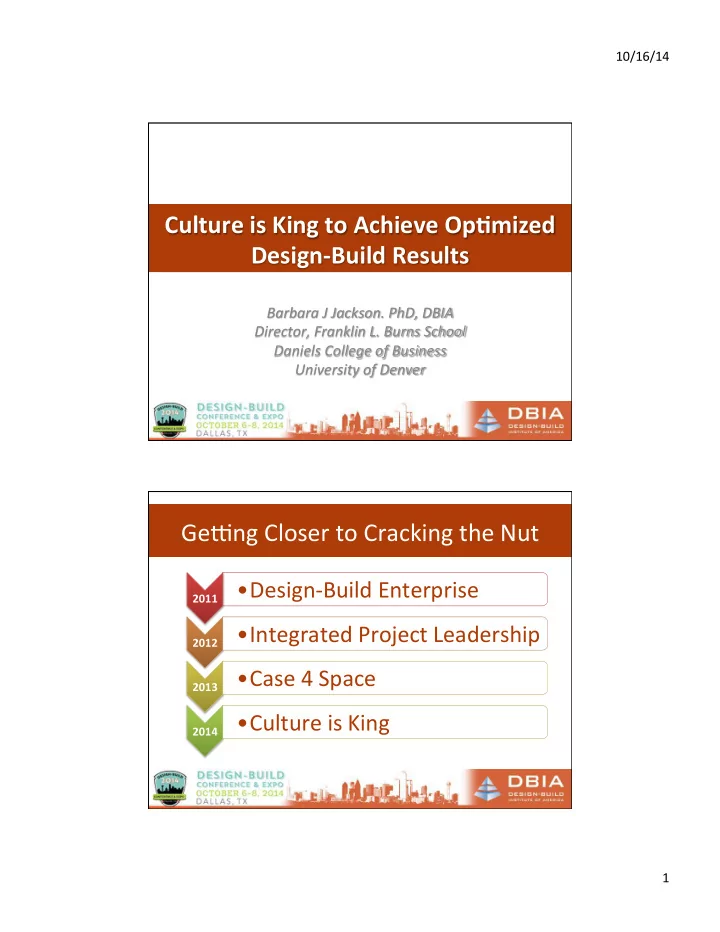
Culture ¡is ¡King ¡to ¡Achieve ¡Op4mized ¡ Design-­‑Build ¡Results ¡

Barbara ¡J ¡Jackson. ¡PhD, ¡DBIA ¡ Director, ¡Franklin ¡L. ¡Burns ¡School ¡ Daniels ¡College ¡of ¡Business ¡ University ¡of ¡Denver ¡

2011 ¡ • Design-­‑Build ¡Enterprise ¡ 2012 ¡ • Integrated ¡Project ¡Leadership ¡ 2013 ¡ • Case ¡4 ¡Space ¡ 2014 ¡ • Culture ¡is ¡King ¡

GeCng ¡Closer ¡to ¡Cracking ¡the ¡Nut ¡

slide-2
SLIDE 2

10/16/14 ¡ 2 ¡

High ¡Chances ¡of ¡Success ¡in ¡Business ¡

  • High ¡barriers ¡to ¡entry ¡
  • No ¡subsKtuKon ¡for ¡products ¡
  • Large ¡market ¡share ¡
  • Low ¡levels ¡of ¡bargaining ¡power ¡for ¡customers ¡
  • Suppliers ¡have ¡low ¡levels ¡of ¡bargaining ¡power ¡
  • Rivalry ¡among ¡compeKtors ¡
  • How ¡does ¡a ¡liPle ¡company ¡headquartered ¡in ¡

Bentonville, ¡Arkansas, ¡become ¡one ¡of ¡the ¡ largest ¡retailers ¡in ¡the ¡world, ¡with ¡more ¡than ¡ $400 ¡billion ¡in ¡sales? ¡

slide-3
SLIDE 3

10/16/14 ¡ 3 ¡

  • How ¡does ¡a ¡company ¡selling ¡a ¡commodity ¡

product ¡that ¡has ¡existed ¡for ¡centuries ¡grow ¡ from ¡$122 ¡million ¡in ¡slaes ¡to ¡more ¡than ¡$5 ¡ billion ¡in ¡slightly ¡more ¡than ¡a ¡decade, ¡and ¡ more ¡than ¡$12 ¡billion ¡in ¡two ¡decades? ¡ ¡

  • How ¡does ¡a ¡small ¡company ¡in ¡Texas ¡with ¡all ¡

the ¡cards ¡stacked ¡against ¡it—whose ¡business ¡ plan ¡was ¡created ¡on ¡a ¡napkin—grow ¡into ¡one ¡

  • f ¡the ¡largest ¡and ¡most ¡profitable ¡players ¡in ¡its ¡

market? ¡

slide-4
SLIDE 4

10/16/14 ¡ 4 ¡

  • How ¡does ¡a ¡company ¡with ¡an ¡odd, ¡un-­‑

businesslike ¡name ¡come ¡out ¡of ¡nowhere ¡in ¡ the ¡compeKKve ¡environment ¡of ¡Silicon ¡Valley ¡ to ¡challenge ¡the ¡behemoth ¡Microso^ ¡and ¡ replace ¡it ¡as ¡the ¡leader ¡in ¡the ¡Internet ¡space? ¡

  • Being ¡different ¡makes ¡all ¡the ¡difference ¡
  • Sharing ¡your ¡values ¡beats ¡selling ¡value ¡
  • Nobody ¡is ¡as ¡smart ¡as ¡everybody ¡
  • People ¡are ¡the ¡culture ¡
slide-5
SLIDE 5

10/16/14 ¡ 5 ¡

What ¡is ¡Culture? ¡ Observable ¡and ¡Non-­‑Observable ¡

  • Culture ¡can ¡be ¡thought ¡of ¡as ¡the ¡

personality ¡of ¡a ¡team ¡or ¡

  • rganizaKon ¡
  • It’s ¡the ¡emoKonal ¡climate ¡and ¡

atmosphere ¡in ¡which ¡team ¡ members ¡or ¡employees ¡work ¡

  • Culture ¡is ¡‘the ¡way ¡we ¡do ¡things ¡

around ¡here’ ¡

  • It ¡is ¡the ¡set ¡of ¡shared, ¡taken-­‑for-­‑

granted ¡implicit ¡assumpKons ¡that ¡ members ¡of ¡an ¡organizaKon ¡hold, ¡ and ¡that ¡ ¡

  • Determines ¡how ¡they ¡perceive, ¡

think ¡about ¡and ¡react ¡to ¡things ¡

Observable ¡ Behaviors ¡ Hidden ¡ ¡ Beliefs ¡ ¡ Values ¡ ¡ AssumpKons ¡

slide-6
SLIDE 6

10/16/14 ¡ 6 ¡

Elements ¡of ¡OrganizaKonal ¡Culture ¡

¡

Explicit ¡ Behaviors ¡

ArKfacts ¡ Conscious ¡Contracts ¡& ¡ Norms ¡ Implicit ¡AssumpKons ¡

Unobservable ¡ ¡ ¡ ¡ ¡ ¡ ¡ ¡ ¡ ¡ ¡ ¡ ¡ ¡ ¡ ¡ ¡ ¡ ¡ ¡ ¡ ¡ ¡ ¡ ¡ ¡ ¡ ¡ ¡Observable ¡ “How ¡things ¡are ¡around ¡ here…” ¡ Decor, ¡posters, ¡cloths, ¡ artwork… ¡ Unspoken, ¡taken ¡for ¡ granted… ¡ Policies ¡created ¡based ¡upon ¡ assumpKons… ¡

Walmart ¡

slide-7
SLIDE 7

10/16/14 ¡ 7 ¡

Starbucks ¡ Southwest ¡

slide-8
SLIDE 8

10/16/14 ¡ 8 ¡

Google ¡ Culture ¡Can ¡Enhance ¡or ¡Diminish ¡ ¡

  • 1. ¡Engagement ¡

– how ¡an ¡employee ¡or ¡team ¡member ¡feels ¡connected ¡ and ¡commiPed ¡to ¡the ¡organizaKon. ¡

  • 2. ¡Produc4vity ¡ ¡

– the ¡quality ¡and ¡quanKty ¡of ¡work ¡produced ¡daily ¡by ¡ each ¡employee ¡or ¡team ¡member ¡

  • 3. ¡Discre4onary ¡effort ¡ ¡ ¡

– an ¡employee’s ¡or ¡team ¡member’s ¡willingness ¡to ¡ happily, ¡and ¡regularly ¡go ¡the ¡extra ¡mile ¡to ¡get ¡the ¡job ¡ done ¡

slide-9
SLIDE 9

10/16/14 ¡ 9 ¡

What ¡is ¡Culture ¡

  • Described ¡posiKvely: ¡

– focused; ¡fast-­‑paced; ¡results-­‑oriented; ¡customer ¡ focused; ¡supporKve; ¡challenging; ¡fun; ¡opKmisKc; ¡ rewarding… ¡

  • Described ¡negaKvely: ¡

– confusing; ¡frustraKng; ¡full ¡of ¡mixed ¡signals; ¡not ¡ supporKve; ¡negaKve; ¡puniKve; ¡ambiguous; ¡ confining; ¡depressing; ¡uncaring… ¡ ¡

Culture ¡is ¡Important ¡Because ¡

  • “It ¡is ¡a ¡powerful, ¡latent, ¡and ¡o3en ¡

unconscious ¡set ¡of ¡forces, ¡that ¡ determine ¡both ¡our ¡individual ¡and ¡ collec9ve ¡behavior, ¡ways ¡of ¡perceiving, ¡ thought ¡pa<erns, ¡and ¡values.” ¡

– (Schein ¡E. ¡H. ¡1999) ¡p14. ¡ ¡

slide-10
SLIDE 10

10/16/14 ¡ 10 ¡

Describe ¡a ¡Design-­‑Build ¡Culture? ¡

slide-11
SLIDE 11

10/16/14 ¡ 11 ¡

Culture ¡ClassificaKons ¡

Clan ¡ ¡ ¡ ¡ ¡ ¡ ¡ ¡

(CollaboraKve) ¡

Adhocracy ¡ ¡

(Create) ¡

Hierarchy ¡

(Control) ¡

Market ¡

(CompeKKve) ¡

Compe4ng ¡ Values ¡ Framework ¡– ¡ ¡

a ¡theoreKcal ¡ model ¡that ¡is ¡now ¡ the ¡dominant ¡ framework ¡in ¡the ¡ world ¡for ¡ assessing ¡

  • rganizaKonal ¡
  • culture. ¡

Six ¡ Dimensions– ¡ ¡

  • 1. Dominant ¡

CharacterisKcs ¡

  • 2. OrganizaKonal ¡

Leadership ¡

  • 3. Management ¡
  • f ¡Employees ¡
  • 4. OrganizaKon ¡

Glue ¡

  • 5. Strategic ¡

Emphasis ¡

  • 6. Criteria ¡of ¡

Success ¡

Flexibility ¡& ¡DiscreKon ¡ Stability ¡and ¡Control ¡ Internal ¡Focus ¡and ¡IntegraKon ¡ External ¡Focus ¡and ¡DifferenKaKon ¡

Clan ¡Culture ¡

  • A ¡very ¡friendly ¡place ¡where ¡people ¡share ¡a ¡

lot ¡of ¡themselves. ¡ ¡It ¡is ¡like ¡an ¡extended ¡

  • family. ¡ ¡The ¡leaders ¡are ¡considered ¡to ¡be ¡

mentors ¡and, ¡maybe ¡even, ¡parent ¡figures. ¡ ¡ The ¡organizaIon ¡is ¡held ¡together ¡by ¡loyalty ¡ and ¡tradiIon. ¡ ¡Commitment ¡is ¡high. ¡ ¡ ¡The ¡

  • rganizaIon ¡emphasizes ¡the ¡long ¡term ¡

benefit ¡of ¡human ¡resource ¡development ¡and ¡ aJaches ¡great ¡importance ¡to ¡cohesion ¡and ¡

  • morale. ¡ ¡Success ¡is ¡defined ¡in ¡terms ¡of ¡

sensiIvity ¡to ¡customers ¡and ¡concern ¡for ¡

  • people. ¡ ¡The ¡organizaIon ¡places ¡a ¡premium ¡
  • n ¡teamwork, ¡parIcipaIon, ¡and ¡consensus. ¡

Design-­‑ Build? ¡ Design-­‑ Bid-­‑Build? ¡

slide-12
SLIDE 12

10/16/14 ¡ 12 ¡

The ¡Hierarchy ¡Culture ¡

  • A ¡very ¡formalized ¡and ¡structured ¡place ¡to ¡work. ¡ ¡

Procedures ¡govern ¡what ¡people ¡do. ¡ ¡The ¡ leaders ¡pride ¡themselves ¡on ¡being ¡good ¡ coordinators ¡and ¡organizers, ¡who ¡are ¡efficiency ¡

  • minded. ¡ ¡Maintaining ¡a ¡smoothly ¡running ¡
  • rganizaIon ¡is ¡most ¡criIcal, ¡Formal ¡rules ¡and ¡

policies ¡hold ¡the ¡organizaIon ¡together. ¡ ¡The ¡ long ¡term ¡concern ¡is ¡on ¡stability ¡and ¡ performance ¡with ¡efficient, ¡smooth ¡operaIons. ¡ ¡ Success ¡is ¡defined ¡in ¡terms ¡of ¡dependable ¡ delivery, ¡smooth ¡scheduling, ¡and ¡low ¡cost. ¡ ¡The ¡ management ¡of ¡employees ¡is ¡concerned ¡with ¡ secure ¡employment ¡and ¡predictability. ¡

Design-­‑ Build? ¡ Design-­‑ Bid-­‑Build? ¡

The ¡Adhocracy ¡Culture ¡

  • A ¡dynamic, ¡entrepreneurial, ¡and ¡creaIve ¡place ¡

to ¡work. ¡ ¡People ¡sIck ¡their ¡necks ¡out ¡and ¡take ¡

  • risks. ¡ ¡The ¡leaders ¡are ¡considered ¡to ¡be ¡

innovators ¡and ¡risk ¡takers. ¡ ¡The ¡glue ¡that ¡holds ¡ the ¡organizaIon ¡together ¡is ¡commitment ¡to ¡the ¡ experimentaIon ¡and ¡innovaIon. ¡ ¡The ¡emphasis ¡ is ¡being ¡on ¡the ¡leading ¡edge. ¡ ¡The ¡organizaIon’s ¡ long ¡term ¡emphasis ¡is ¡on ¡growth ¡and ¡acquiring ¡ new ¡resources. ¡ ¡Success ¡means ¡gaining ¡new ¡ products ¡and ¡services. ¡ ¡Being ¡a ¡product ¡or ¡ service ¡leader ¡is ¡important. ¡The ¡organizaIon ¡ encourages ¡individual ¡iniIaIve ¡and ¡freedom. ¡ ¡

Design-­‑ Build? ¡ Design-­‑ Bid-­‑Build? ¡

slide-13
SLIDE 13

10/16/14 ¡ 13 ¡

The ¡Market ¡Culture ¡

  • A ¡results ¡oriented ¡organizaIon. ¡ ¡The ¡major ¡

concern ¡is ¡gePng ¡the ¡job ¡done. ¡ ¡People ¡are ¡ compeIIve ¡and ¡goal ¡oriented. ¡ ¡The ¡leaders ¡are ¡ hard ¡drivers, ¡producers, ¡and ¡compeItors. ¡ ¡They ¡ are ¡tough ¡and ¡demanding. ¡ ¡The ¡glue ¡that ¡holds ¡ the ¡organizaIon ¡together ¡is ¡n ¡emphasis ¡on ¡

  • winning. ¡ ¡ReputaIon ¡and ¡success ¡are ¡common ¡
  • concerns. ¡ ¡The ¡long ¡term ¡focus ¡is ¡on ¡compeIIve ¡

acIons ¡and ¡achievement ¡of ¡measurable ¡goals ¡ and ¡targets. ¡ ¡Success ¡is ¡defined ¡in ¡terms ¡of ¡ market ¡share ¡and ¡penetraIon. ¡ ¡CompeIIve ¡ pricing ¡and ¡market ¡leadership ¡are ¡important. ¡ ¡ The ¡organizaIonal ¡style ¡is ¡hard-­‑driving ¡

  • compeIveness. ¡ ¡

Design-­‑ Build? ¡ Design-­‑ Bid-­‑Build? ¡

AEC ¡Industry ¡Culture ¡

slide-14
SLIDE 14

10/16/14 ¡ 14 ¡

Different ¡Emphasis ¡

Contractors ¡ Architects ¡

Design-­‑Build ¡strategy ¡will ¡not ¡work ¡in ¡a ¡Design-­‑Bid-­‑Build ¡culture… ¡

slide-15
SLIDE 15

10/16/14 ¡ 15 ¡

The ¡Challenge ¡in ¡Design-­‑Build ¡

slide-16
SLIDE 16

10/16/14 ¡ 16 ¡

Building ¡a ¡Design-­‑Build ¡Culture ¡ Where ¡to ¡Begin? ¡

¡

¡ ¡

Industry ¡ Influences ¡

¡ ¡ ¡ ¡ Company ¡ Influences ¡ Team ¡ Influences ¡

Layers ¡of ¡ influencing ¡ culture… ¡

slide-17
SLIDE 17

10/16/14 ¡ 17 ¡

Individual ¡Values ¡and ¡PerspecKves ¡

slide-18
SLIDE 18

10/16/14 ¡ 18 ¡

How ¡Do ¡We ¡Change ¡ Culture? ¡

slide-19
SLIDE 19

10/16/14 ¡ 19 ¡

Steps ¡1 ¡& ¡2 ¡

  • Reach ¡consensus ¡on ¡the ¡ ¡current ¡culture ¡
  • Reach ¡consensus ¡on ¡the ¡preferred ¡future ¡
  • rganizaKonal ¡culture ¡
  • IdenKfy ¡leadership ¡implicaKons ¡
  • IdenKfy ¡metrics, ¡measures, ¡and ¡milestones ¡to ¡

maintain ¡accountability ¡

  • IdenKfy ¡a ¡communicaKon ¡strategy ¡

Step ¡3 ¡

The ¡“Means ¡– ¡Does ¡Not ¡Mean” ¡Analysis ¡

  • Clan ¡Culture ¡ ¡

– Increase ¡✓ ¡ ¡ – Decrease ¡ – Remain ¡the ¡Same ¡

  • Means ¡– ¡Promote ¡teamwork ¡and ¡parKcipaKon, ¡

create ¡higher ¡levels ¡of ¡trust, ¡express ¡more ¡obvious ¡ concern ¡for ¡people, ¡etc. ¡

  • Does ¡not ¡Mean ¡– ¡Becoming ¡undisciplined, ¡group ¡

hugs ¡everyday, ¡forgeCng ¡about ¡stretch ¡goals, ¡etc. ¡

slide-20
SLIDE 20

10/16/14 ¡ 20 ¡

Step ¡3 ¡(cont) ¡

The ¡“Means ¡– ¡Does ¡Not ¡Mean” ¡Analysis ¡

  • Adhocracy ¡Culture ¡ ¡

– Increase ¡✓ ¡ ¡ – Decrease ¡ – Remain ¡the ¡Same ¡

  • Means ¡– ¡Encourage ¡and ¡celebrate ¡risk ¡taking, ¡

become ¡more ¡forward ¡looking, ¡create ¡innovaKon ¡ programs, ¡etc. ¡

  • Does ¡not ¡Mean ¡– ¡Does ¡not ¡mean ¡running ¡the ¡

company ¡with ¡reckless ¡abandon, ¡missing ¡goals, ¡ disregarding ¡customer ¡requirements, ¡etc. ¡

Step ¡3 ¡(cont.) ¡

The ¡“Means ¡– ¡Does ¡Not ¡Mean” ¡Analysis ¡

  • Hierarchy ¡Culture ¡ ¡

– Increase ¡ – Decrease ¡✓ ¡ – Remain ¡the ¡Same ¡

  • Means ¡– ¡Eliminate ¡useless ¡rules ¡and ¡paperwork, ¡

reduce ¡corporate ¡direcKves, ¡push ¡decision ¡making ¡ down, ¡etc. ¡

  • Does ¡not ¡Mean ¡– ¡Loss ¡of ¡logical ¡structure, ¡leCng ¡

the ¡inmates ¡run ¡the ¡asylum, ¡eliminaKon ¡of ¡ accountability, ¡ ¡etc. ¡
slide-21
SLIDE 21

10/16/14 ¡ 21 ¡

Step ¡3 ¡(cont.) ¡

The ¡“Means ¡– ¡Does ¡Not ¡Mean” ¡Analysis ¡

  • Market ¡Culture ¡ ¡

– Increase ¡ – Decrease ¡✓ ¡ – Remain ¡the ¡Same ¡

  • Means ¡– ¡Stop ¡driving ¡for ¡numbers ¡at ¡all ¡cost, ¡focus ¡
  • n ¡key ¡goals, ¡adapt ¡to ¡human ¡as ¡well ¡as ¡market ¡

needs, ¡etc. ¡

  • Does ¡not ¡Mean ¡– ¡Ignoring ¡the ¡compeKKon, ¡losing ¡

the ¡spirit ¡of ¡winning, ¡missing ¡stretch ¡goals, ¡stop ¡ looking ¡at ¡results, ¡etc. ¡

¡ Step ¡4 ¡ ¡

  • IdenKfy ¡stories ¡illustraKng ¡the ¡desired ¡future ¡

culture ¡

– That ¡idenKfy ¡the ¡key ¡values, ¡desired ¡orientaKon, ¡ and ¡behavioral ¡principles ¡that ¡characterize ¡the ¡ new ¡culture ¡ – Southwest ¡Airlines ¡describes ¡the ¡CEO ¡working ¡on ¡ baggage ¡line ¡on ¡holidays ¡so ¡that ¡employees ¡could ¡ take ¡the ¡day ¡off… ¡

  • To ¡illustrate ¡the ¡value ¡that ¡customers ¡are ¡number ¡two ¡

and ¡employees ¡are ¡number ¡one ¡at ¡Southwest ¡

slide-22
SLIDE 22

10/16/14 ¡ 22 ¡

Step ¡5 ¡

Clan ¡Culture ¡

  • What ¡should ¡we ¡do ¡

MORE ¡of? ¡

  • What ¡should ¡we ¡

START? ¡

  • What ¡should ¡we ¡

STOP? ¡

Adhocracy ¡Culture ¡

  • What ¡should ¡we ¡do ¡

MORE ¡of? ¡

  • What ¡should ¡we ¡

START? ¡

  • What ¡should ¡we ¡

STOP? ¡

Hierarchy ¡Culture ¡

  • What ¡should ¡we ¡do ¡

MORE ¡of? ¡

  • What ¡should ¡we ¡

START? ¡

  • What ¡should ¡we ¡

STOP? ¡

Market ¡Culture ¡

  • What ¡should ¡we ¡do ¡

MORE ¡of? ¡

  • What ¡should ¡we ¡

START? ¡

  • What ¡should ¡we ¡

STOP? ¡

IdenIfy ¡a ¡ Strategic ¡ AcIon ¡ Agenda ¡

Step ¡6 ¡

  • IdenKfy ¡immediate ¡small ¡wins ¡

– Find ¡something ¡easy ¡to ¡change, ¡change ¡it, ¡and ¡then ¡publicize ¡it! ¡

  • What ¡are ¡the ¡easy ¡things ¡in ¡our ¡organizaKon ¡that ¡can ¡be ¡

targeted ¡for ¡change? ¡

  • What ¡visible ¡acKons ¡can ¡spark ¡an ¡impression ¡of ¡change? ¡
  • What ¡aspects ¡of ¡the ¡physical ¡environment ¡can ¡be ¡altered? ¡
  • What ¡kinds ¡of ¡celebraKons ¡and ¡recogniKons ¡can ¡be ¡

conducted? ¡

  • How ¡frequently ¡can ¡and ¡should ¡we ¡highlight ¡the ¡small ¡

victories? ¡

slide-23
SLIDE 23

10/16/14 ¡ 23 ¡

Step ¡7 ¡

  • IdenKfy ¡the ¡Leadership ¡ImplicaKons ¡

– Leaders ¡must ¡have ¡the ¡necessary ¡capabiliKes ¡and ¡ competencies ¡to ¡facilitate ¡the ¡change ¡process ¡ – Plus ¡they ¡must ¡have ¡the ¡competencies ¡necessary ¡ to ¡lead ¡the ¡organizaKon ¡when ¡it ¡has ¡developed ¡ the ¡desired ¡future ¡culture ¡ – Incongruence ¡between ¡new ¡culture ¡and ¡old ¡ leadership ¡ – Steve ¡Jobs ¡at ¡Apple ¡

APPLE’s ¡Cultural ¡TransformaKon ¡

¡

  • Started ¡out ¡with ¡emphasis ¡on ¡Adhocracy ¡– ¡“Renegades ¡and ¡

Crazies” ¡

  • Shi^ed ¡to ¡an ¡emphasis ¡on ¡Clan ¡+ ¡Adhocracy ¡– ¡The ¡Apple ¡

Family ¡

  • Sales ¡souring ¡– ¡shi^ed ¡to ¡Hierarchy ¡
  • Then ¡to ¡an ¡emphasis ¡on ¡Hierarchy ¡+ ¡Market ¡
slide-24
SLIDE 24

10/16/14 ¡ 24 ¡

Step ¡8 ¡

  • IdenKfy ¡metrics, ¡measures, ¡and ¡milestones ¡

– How ¡do ¡you ¡know ¡if ¡your ¡culture ¡is ¡actually ¡changing? ¡ – What ¡are ¡the ¡key ¡indicators ¡of ¡progress? ¡ – What ¡consKtutes ¡success? ¡ – Who ¡should ¡be ¡held ¡accountable, ¡and ¡for ¡what? ¡ – What ¡are ¡the ¡best ¡metrics ¡to ¡collect? ¡ – How ¡o^en ¡should ¡we ¡assess ¡progress? ¡ – By ¡what ¡date ¡will ¡we ¡have ¡documented ¡noKceable ¡ change? ¡ – When ¡will ¡total ¡change ¡have ¡occurred? ¡

Step ¡9 ¡

  • IdenKfy ¡a ¡CommunicaKon ¡Strategy ¡

– Best ¡ways ¡to ¡spread ¡the ¡message ¡ – Most ¡important ¡changes: ¡

  • Logos ¡
  • LePerhead ¡
  • Bumper ¡sKcker ¡slogans ¡
  • Signage ¡
  • Colors ¡
  • Other ¡idenKfiable ¡characterics ¡ ¡ ¡
slide-25
SLIDE 25

10/16/14 ¡ 25 ¡

When ¡Do ¡We ¡Change? ¡

Difficulty ¡of ¡Change ¡

slide-26
SLIDE 26

10/16/14 ¡ 26 ¡

Cost ¡of ¡Change ¡ CompeKKve ¡Advantage ¡

slide-27
SLIDE 27

10/16/14 ¡ 27 ¡

“Problems ¡cannot ¡be ¡solved ¡at ¡the ¡same ¡ level ¡of ¡awareness ¡that ¡created ¡them.” ¡ ¡

  • ­‑Albert ¡Einstein ¡

A ¡BIG ¡Culture ¡ShiQ ¡ ¡

Design-­‑Build ¡Done ¡Right ¡Requires ¡

slide-28
SLIDE 28

10/16/14 ¡ 28 ¡

You ¡can’t ¡do ¡big ¡things ¡if ¡you’re ¡content ¡ with ¡doing ¡things ¡a ¡li<le ¡be<er ¡than ¡ everyone ¡else ¡or ¡a ¡li<le ¡differently ¡than ¡ how ¡you ¡did ¡them ¡before. ¡ ¡ ¡

¡

The ¡Other ¡Side ¡of ¡a ¡Cultural ¡Shi^ ¡will ¡ be ¡Radically ¡Different ¡

FACT ¡ It ¡will ¡require ¡new ¡tools, ¡new ¡values, ¡ new ¡behaviors…and ¡new ¡people. ¡

slide-29
SLIDE 29

10/16/14 ¡ 29 ¡

How ¡We ¡Engage ¡

Focus ¡– ¡No ¡Discre4on ¡ ¡ Fluid ¡– ¡Real ¡Time ¡

VerKcal ¡SpecializaKon ¡

slide-30
SLIDE 30

10/16/14 ¡ 30 ¡

Where ¡and ¡How ¡We ¡Engage ¡

From ¡-­‑ ¡Alone ¡ To ¡-­‑ ¡Together ¡

When ¡we ¡Engage ¡

Was ¡Clear ¡ Now ¡Blurred ¡

slide-31
SLIDE 31

10/16/14 ¡ 31 ¡

From ¡Push ¡to ¡Pull ¡ From ¡OrganizaKonal ¡FicKon ¡to ¡Reality ¡

slide-32
SLIDE 32

10/16/14 ¡ 32 ¡

People ¡+ ¡Purpose ¡Factor ¡ Culture ¡is ¡the ¡Challenge ¡

FACT ¡ The ¡old ¡culture ¡that ¡once ¡brought ¡ success ¡will ¡hold ¡on ¡and ¡resist ¡a<empts ¡ to ¡change. ¡

slide-33
SLIDE 33

10/16/14 ¡ 33 ¡

It ¡all ¡starts ¡with ¡the ¡From ¡/ ¡To ¡Formula ¡

FACT ¡ Culture ¡shi3 ¡begins ¡with ¡a ¡departure. ¡

CreaKve ¡DestrucKon ¡

¡ ¡ ¡ ¡ ¡ ¡ ¡ ¡

CreaKve ¡destrucKon ¡occurs ¡when ¡ something ¡new ¡kills ¡something ¡older ¡

slide-34
SLIDE 34

10/16/14 ¡ 34 ¡

Other ¡Ways ¡to ¡ Influence ¡Culture? ¡

slide-35
SLIDE 35

10/16/14 ¡ 35 ¡

Using ¡Space ¡to ¡Shape ¡Culture ¡

  • Space ¡MaPers! ¡

– Think ¡about ¡your ¡ companies ¡space… ¡ – Does ¡it ¡facilitate ¡

  • CommunicaKon? ¡
  • CollaboraKon? ¡
  • CreaKvity? ¡
  • InnovaKon? ¡
  • Think ¡about ¡your ¡

typical ¡teaming ¡ space ¡ arrangement… ¡

– Why ¡is ¡co-­‑locaKon ¡ so ¡important? ¡ – What’s ¡the ¡BIG ¡deal ¡ about ¡the ¡BIG ¡ room? ¡

Using ¡Space ¡to ¡Shape ¡Culture ¡

slide-36
SLIDE 36

10/16/14 ¡ 36 ¡

hPps://www.youtube.com/watch?v=k7V_zcwYNMc ¡

Ready ¡for ¡the ¡ ¡ ¡ ¡ ¡ ¡ ¡ ¡ ¡ ¡ ¡ ¡ ¡ ¡ ¡ ¡ ¡ ¡ ¡ Design-­‑Bid-­‑Build ¡a ¡Rap? ¡

Culture ¡is ¡King ¡

¡

  • Culture ¡First ¡
  • Strategy ¡Second ¡
  • Structure ¡Third ¡

¡ Communica4on ¡impacts ¡all ¡

slide-37
SLIDE 37

10/16/14 ¡ 37 ¡

barbara.jackson@du.edu ¡