BOATY MCFLOATY FEDD 2016 Research Focused on the general - - PowerPoint PPT Presentation

boaty mcfloaty
SMART_READER_LITE
LIVE PREVIEW

BOATY MCFLOATY FEDD 2016 Research Focused on the general - - PowerPoint PPT Presentation

Parker Eaton, Tyler Bowes, Preston Cecil, Haleigh Tucker BOATY MCFLOATY FEDD 2016 Research Focused on the general composition and utility of concrete structures Main objective geared toward methods of reinforcement and processes of


slide-1
SLIDE 1

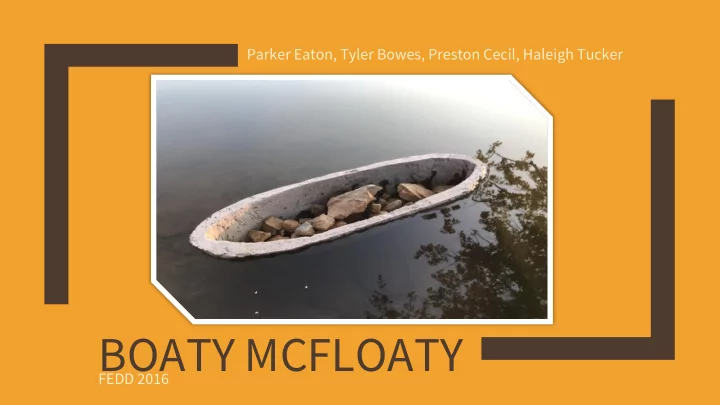
BOATY MCFLOATY

Parker Eaton, Tyler Bowes, Preston Cecil, Haleigh Tucker FEDD 2016
slide-2
SLIDE 2

Research

  • Focused on the general composition and utility of concrete structures
  • Main objective geared toward methods of reinforcement and processes
  • f mixing and curing cement
  • Found that greater water-cement ratio leads to greater air entrainment
  • Adding variety of chemical admixtures to cement increases durability

and water resistance

  • Proper curing allows cement to retain sufficient hydration before

hardening (prevents shrinking/cracking)

  • Providing reinforcements for the cement while drying is critical to

maintaining desired structure

slide-3
SLIDE 3

Materials

  • Glass microspheres
  • Aluminum powder
  • Quikrete
  • Plastic cups and forks
  • Plywood (for base)
  • Trash bags
  • Insulation Foam
  • Hot glue
  • Concrete bonder
  • Gloves
  • Plastic Wrap
  • Paper Towels
slide-4
SLIDE 4

Foam Mold

  • Purchased 1x24 sheet of insulation foam
  • Cut foam into shaped pieces and hot glued layers on top of each other
  • Sanded mold by hand into final curved shaped
  • Finished by joining two halves of mold with glue
  • Also built wooden mixing box in craft center woodshop
slide-5
SLIDE 5

Construction of Boaty McSinky

  • Equation: 58% Quikrete, 20% glass

microspheres, 16%water, and 6% air

  • 2 Liters total worth of mix
  • Covered foam mold with trash bag prior to

application of cement

  • Scooped Quikrete into plastic cups and

pulled out larger pieces of gravel

  • Poured concrete powder into wooden

mixing box

  • Added concrete binding liquid, aluminum

powder, and glass microspheres into wooden box—mixed with plastic forks

  • Used gloves and forks to coat mold with

cement

  • Repeated application three times,

attempting to smooth layers and prevent holes in structure

slide-6
SLIDE 6

Results of First Iteration

  • Layering cement in multiple layers caused

canoe to take on water

  • Flimsy structure created cracks
  • Canoe shattered after sinking and hitting a

rock

  • Addition of aluminum powder may have

widened pores—increasing likelihood of developing holes

  • Required team to go back to the drawing

board

  • Cured with wet paper towels, which were

less capable of retaining moisture

  • Outer structure was not smooth
  • Failure to construct a foam mold using the

Garage Shopbot prolonged construction process

slide-7
SLIDE 7

Second Iteration

  • Modified plastic cups to sift out Quikrete

powder and remove gravel more efficiently

  • Eliminated aluminum powder from list of

aggregates added

  • Mixed all cement in one bath instead of

applying the four layers separately

  • Cured twice daily for a period of one week

by sprinkling with water and covering with cling wrap to retain moisture for longer periods of time

  • Sanded Interior and exterior to smoothen

texture

  • Tested Boaty McFloaty II in Lake Raleigh on

Centennial Campus– it didn’t sink!

slide-8
SLIDE 8

Conclusion

  • Errors with “Boaty McSinky” required all members of the team to

consider the Engineering Design Cycle and resolve problems through critical thinking

  • Learned the importance of preserving resources in case of

disaster—taught team members the importance of preparing for failure

  • Exploration of resources and facilities aided the construction of the

canoe and prevented team from going over budget

  • Each team member contributed their unique skills and talents to

promote the project overall