
SLIDE 1
ARLINGTON’S PUBLIC SPACES MASTER PLAN (PSMP)
Also referred to as Plan Our Public Spaces
- r “POPS”
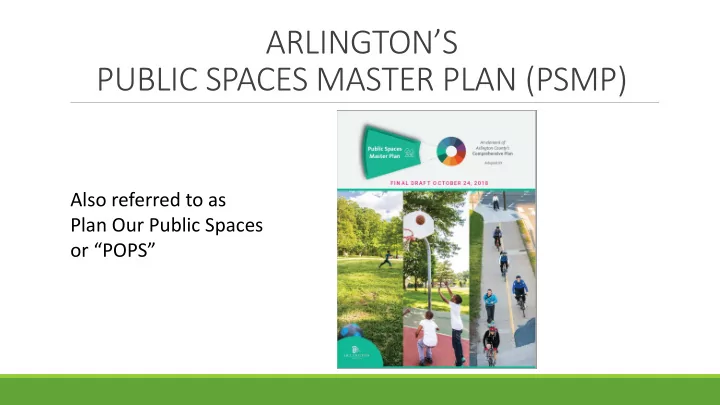
ARLINGTONS PUBLIC SPACES MASTER PLAN (PSMP) Also referred to as - - PowerPoint PPT Presentation
ARLINGTONS PUBLIC SPACES MASTER PLAN (PSMP) Also referred to as Plan Our Public Spaces or POPS Level of Service (LOS) Standards PSMP, page 175 2 Critical Data Missing from the Public Spaces Master Plan (PSMP) Negatively Impacts
2
PSMP, page 175
HOW QUESTI TIONABL NABLE L LEVEL O OF SERVICE CE ( (LOS) ST STAND ANDAR ARDS S HIDE C CRITICAL AL DATA AN AND UND UNDERMINE RESIDENT P T PRIORITIES
3
4
Example: 1 diamond field per 7k people with 230k population = 33 diamond fields needed
number of people 1 facility
Facilities needed
(Current or Projected) Population
5
Affecting 20 years of planning decisions for:
The PMSP final Draft states by 2035, “L “Level of
servi rvice [L [LOS] stand standard rds s show show that that Arl rling ngton n will ne need..”
But the PSMP plan does NOT incorporate current or future supply and demand data.
discovered via a FOIA request.
explanation throughout the process. DPR did not respond to these requests.
Consultant’s Methodology statement on how to conduct Population Based Level of Service (LOS) “POPS LOS Methodology 171220.”
7
8
SCREEN SHOT OF DPR’S spreadsheet, POPS Field Est v3, Tab “Diamond Review”
Data shows:
than needed for demand (even during the Spring season).
than needed.
required for next 20+ years. DPR’s calculations found an unutilized capacity of 11,000 + diamond field PRIME HOURS (evening and weekend) in 2016.
See handout appendix for more details on DPR’s comprehensive supply/demand data.
9
Fields are over-reserved
Fields scheduled up to double what is used/needed by teams and appear “needed” when they are empty but are unavailable to other users
DPR’s staff rover reports
In-person staff visits to reserved rectangular and diamond fields found reserved fields empty
Outside Consultants Review of DPR’s practices
GreenPlay Consultants identified poor scheduling and prioritization practices by DPR
See handout appendix for more details on DPR’s Inefficient Field Management.
10
DARK BLUE – RESERVED TIMES RED = PRIME HOURS, NO RESERVATIONS – Fields are empty
See handout appendix for more details on DPR’s Inefficient Field Management. Sample week of Adult Softball diamond field reservations (May 2017)
Teams prefer only a few days and times during the season, leaving many fields empty.
11
12
LACK OF TRANSPARENCY
NOT MAKE IT PART OF THE PUBLIC PROCESS.
SKEWED BY MISPERCEPTION LIKE THERE ARE TOO FEW FIELDS
SCHEDULING AND PRIORITIZATION MANAGEMENT ISSUES
PMSP MISSING CRITICAL DATA
DETERMINING THE REAL NEED FOR FIELDS IN ARLINGTON
INTO SUBSEQUENT INDIVIDUAL PLANNING PROCEEDINGS.
DATA MUST BE INTRODUCED IN A NEW PUBLIC REVIEW FOR THE LOS OF ATHLETIC FIELDS
FLAWED POPULATION-BASED LOS
STATEMENT WAS NEVER MADE PUBLIC.
AND DEMAND DATA CAN BE MEANINGLESS.
METHODOLOGY NEEDS TO BE SOCIALIZED WITH COMMISSIONS AND PUBLIC