APNA 30th Annual Conference Session 2047: October 20, 2016 The - - PDF document

apna 30th annual conference session 2047 october 20 2016
SMART_READER_LITE
LIVE PREVIEW

APNA 30th Annual Conference Session 2047: October 20, 2016 The - - PDF document

APNA 30th Annual Conference Session 2047: October 20, 2016 The Connection Between Food and Mood What The Research Is Telling Us @2015 J. Evans Learning Outcomes Select one research study identifying the correlation between mood and food


slide-1
SLIDE 1

APNA 30th Annual Conference Session 2047: October 20, 2016 Evans 1

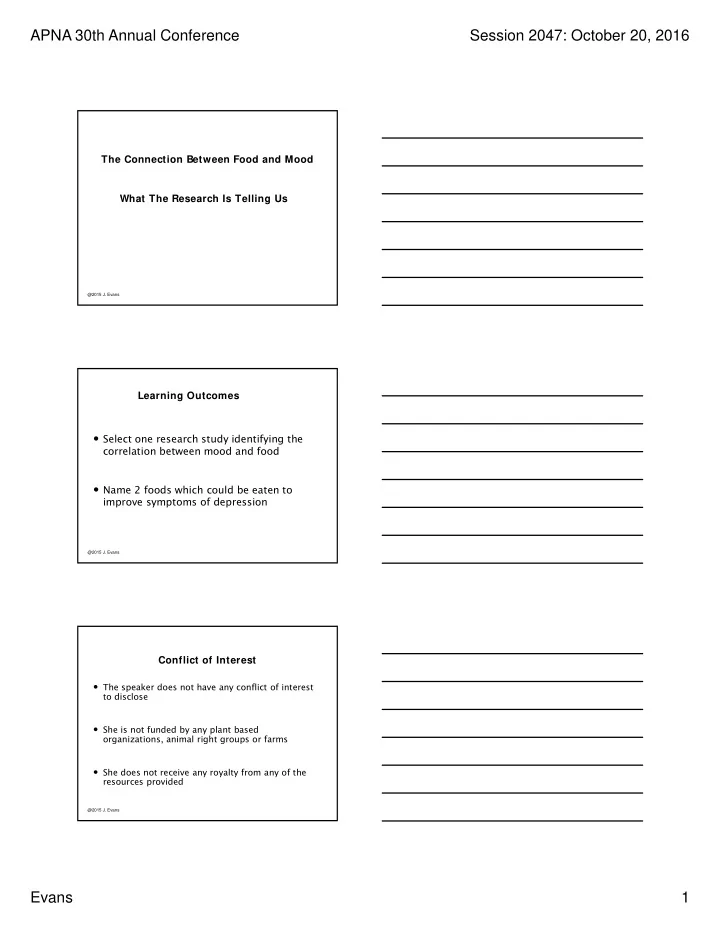
The Connection Between Food and Mood What The Research Is Telling Us

@2015 J. Evans

Learning Outcomes

 Select one research study identifying the

correlation between mood and food

 Name 2 foods which could be eaten to

improve symptoms of depression

@2015 J. Evans

Conflict of Interest

 The speaker does not have any conflict of interest

to disclose

 She is not funded by any plant based

  • rganizations, animal right groups or farms

 She does not receive any royalty from any of the

resources provided

@2015 J. Evans

slide-2
SLIDE 2

APNA 30th Annual Conference Session 2047: October 20, 2016 Evans 2

Consult Your Health Care Provider

 If you take medication or have serious health

concerns, please discuss this change in eating with your heath care provider

 A diet change can be very powerful and impact

your medication

@2015 J. Evans

Research Connecting Food and Mood

Increased fruit and vegetable consumption – lower anxiety for male vegans and lower stress levels for women eating animal free diets (1)

Study - work place setting – overweight and diabetic employees – 5 months on plant-based nutrition – improved digestion, increased energy, better sleep, improved mental health and vitality (2)

Study – 10 corporate locations in US on plant-based nutrition – improvement in body weight, blood sugar levels, emotional state including depression and anxiety (3)

Decrease odd of developing depression by 62% with higher consumption of vegetables and fruits (4)

@2015 J. Evans

Research

Some plant foods including apples, berries, grapes, onions and green tea, as well as cloves, oregano, cinnamon and nutmeg - have phytonutrients that naturally inhibit MAO – (5)

Eating a single carb-rich, protein poor, meal has been shown to improve tension, anger, depression, sadness, fatigue, confusion, alertness and calmness scores among women with PMS (6)

Study – those eating a high-carb diet experienced less hostility, depression, and mood disturbance then those in the low-carb group (7)

Drinking 2 or more cups of coffee a day - half the suicide risk of non-coffee drinkers (8)

@2015 J. Evans
slide-3
SLIDE 3

APNA 30th Annual Conference Session 2047: October 20, 2016 Evans 3

Research

Double blind, placebo-controlled trial - Butter-nut squash seeds for social anxiety – improvement in 1 hour of consumption (9)

Frequent consumption of sweetened beverages especially diet beverages – associated with higher risk of depression (10)

After 8 days of high aspartame use, participants had more depression and irritability and did less well on some brain function tests (11)

Canadian study – 300,000 participants – greater vegetable and fruit consumption associated with lower risk of psychological stress, depression, anxiety and mood disorders and poor perceived mental health (12)

@2015 J. Evans

Research

Study of elderly men – if ate tomato or tomato products daily – half the odds of depression compared to people who only had them

  • nce a week (13)

Study – low dietary folate intake can increase risk of severe depression by as much as threefold (14)

Study – Took meat, eggs, chicken and all other meats from people who ate it once a day and in 2 weeks they had a significant improvement in mood states (15)

Higher consumption of vegetables may decrease developing depression by 62% (16)

@2015 J. Evans

Arachidonic Acid

Inflammatory – promoting compound found in chicken, and eggs – and also beef, pork, and fish

Those eating plant-based had significantly fewer negative emotions than omnivores

Omnivores have about nine times more arachidonic acid than plant-eaters – (17)

High level of arachidonic acid – higher risk of suicide and episodes

  • f major depression – (18)

@2015 J. Evans

slide-4
SLIDE 4

APNA 30th Annual Conference Session 2047: October 20, 2016 Evans 4

Improving Mood Through Diet – 3 min

 http://nutritionfacts.org/video/improving-mood-through-

diet/

Permission granted by Dr Gregor and Nutritionfacts.org

@2015 J. Evans

Kickstart Program with PCRM (Physicians Committee For Responsible Medicine)

 21 day free, online plant-based program – received

menus, recipes, grocery lists, cooking demos and lab work completed

 Did follow up survey –

 up to 59 point drop in cholesterol  84% lost weight  73% more energy  55% sleep better  32% fewer or no mood swings

@2015 J. Evans

Healthy Foods

 Whole Grains – pasta, rice, corn, whole grain bread,

tortilla etc.

 Vegetables – dark greens, dark yellows and orange,

sweet potato etc.

 Fruit – whole fruit is better than juice due to fiber  Legumes – beans, peas, lentils, tofu, soymilk, chick

peas etc.

@2015 J. Evans

slide-5
SLIDE 5

APNA 30th Annual Conference Session 2047: October 20, 2016 Evans 5

Foods to Avoid

 Animal foods – all beef, chicken, pork, lamb, fish  Dairy – milk, eggs, yogurt, cheese, ice cream  Fats  Sugar  Salt

@2015 J. Evans

What Were The 2 Hardest To Give Up On The Plant-Based Program?

  • Cheese 48%
  • Fish 48%
  • Other dairy – ice cream, yogurt, chocolate 40%
  • Chicken 28%
  • Milk 12%
  • Beef 12%
  • Pork 8%

@2015 J. Evans

Contact Information

 Joanne Evans MEd, RN, PMHCNS-BC  Healthy Nurses…Healthy Communities  http://healthynurseshealthycommunities.net/  joanneevans@verizon.net

@2015 J. Evans