SLIDE 1
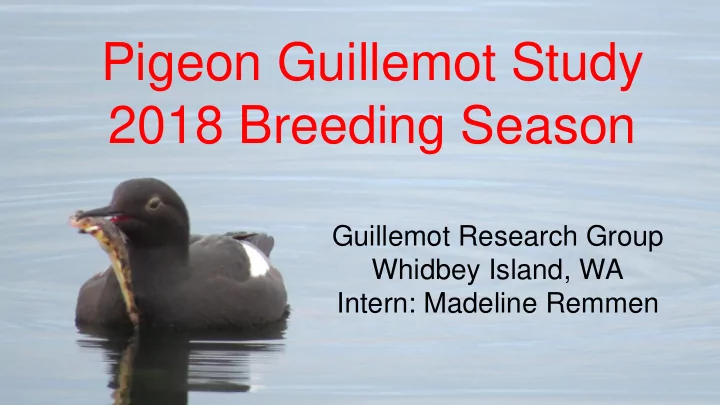
Pigeon Guillemot Study 2018 Breeding Season
Guillemot Research Group Whidbey Island, WA Intern: Madeline Remmen
SLIDE 2 Pigeon Guillemots
- Cepphus Columba
- Alcidae family
○
Puffins, Auklets, Murres, Murrelets
- Native to the Pacific NW
- Remain in Puget Sound area year
round
- Feed on fish and other invertebrates
- Nest in burrows
SLIDE 3 Project Focus
- Track type of prey delivered
- Track population
- Record all disturbances
- Continue to add data to baseline
and monitor it
SLIDE 4 Colonies Studied
- 27 colonies across Whidbey Island
○ Monitored once a week for one hour by volunteers
- Intern focus colonies: Rolling Hills and
Mutiny Sands
SLIDE 5 Methods
- Monday- Friday/ Tuesday- Saturday
- 6am-10am
- Track:
○ Population ○ Prey Deliveries ■ Gunnels ■ Sculpins ■ Other/ Unknown ○ Disturbances
SLIDE 6 Site Summary Rolling Hills
- Highest pop. count 45
- Average pop. count 23
- # of occupied burrows 6
- 83% probable fledging success
SLIDE 7 Site Summary Mutiny Sands
- Highest pop. count 63
- Average pop. count 22
- # of occupied burrows 8
- 87% probable fledging success
SLIDE 8
Estimated Fledging Success and Weekly Deliveries Rolling Hills
SLIDE 9
Estimated Fledging Success and Weekly Deliveries Mutiny Sands
SLIDE 10
Estimated Fledging Success Through the Years
SLIDE 11
Prey Choice
SLIDE 12
Prey Delivered to Chicks
SLIDE 13
Daily Rate of Deliveries Rolling Hills
SLIDE 14
Daily Rate of Deliveries Mutiny Sands
SLIDE 15
Daily Population Rolling Hills
SLIDE 16
Daily Population Mutiny Sands
SLIDE 17
Disturbances Rolling Hills
SLIDE 18
Disturbances Mutiny Sands
SLIDE 19
Population: Whidbey Island
SLIDE 20 Conclusion
○ Not being able to see the whole bluff
○ Continue collecting disturbance data ○ Look into why adults specialize in prey type
SLIDE 21
SLIDE 22
Questions?
SLIDE 23
Thank You!
Mutiny Sands Community Association