SLIDE 1
What Style Is It?
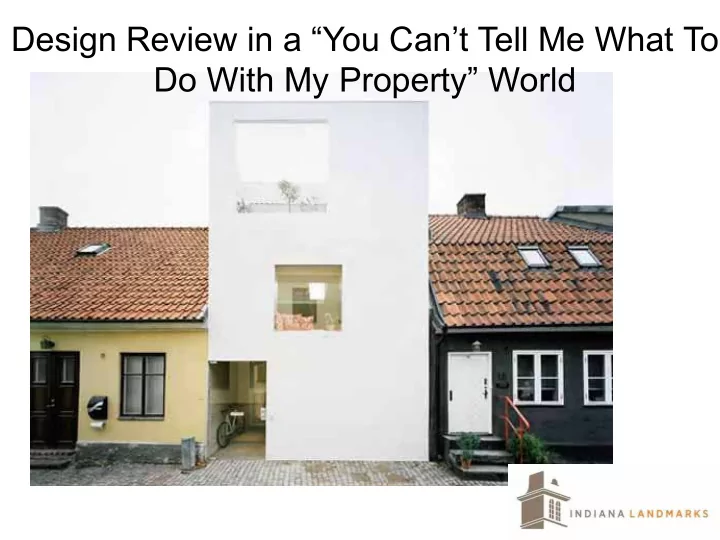
Design Review in a “You Can’t Tell Me What To Do With My Property” World
SLIDE 2
SLIDE 3
SLIDE 4
SLIDE 5
SLIDE 6
HLFI Network Headquarters plus 5 Regional Offices and 4 Field Offices
SLIDE 7
Veraestau 1810, 1838, 1913, 1936
SLIDE 8
SLIDE 9
SLIDE 10
SLIDE 11
SLIDE 12 Community Assistance Program
- Provide consultation and staff support for
historic preservation commissions and design review districts.
SLIDE 13 Education:
Forum The Alliance Review NAPC-L, our member Listserv Technical assistance and research library
Education + Advocacy + Training
SLIDE 14 Advocacy:
National partners in Washington, D.C. Preservation Advocacy Week A voice for local commissions at the federal level
Education + Advocacy + Training
SLIDE 15 Training:
CAMP Speakers Bureau National Trust Conference
Education + Advocacy + Training
SLIDE 16
SLIDE 17
SLIDE 18
SLIDE 19
SLIDE 20
SLIDE 21
SLIDE 22
SLIDE 23
SLIDE 24
SLIDE 25
SLIDE 26
- Review some basic historic building design
- Outline baby steps for implementing design
review for an area of your community
- Discuss some best practices for managing a
design review process
- Windows and Signs – oh my.
SLIDE 27
SLIDE 28
SLIDE 29
SLIDE 30
SLIDE 31
SLIDE 32
SLIDE 33
SLIDE 34
SLIDE 35
SLIDE 36
SLIDE 37
SLIDE 38
SLIDE 39
SLIDE 40
SLIDE 41
SLIDE 42
SLIDE 43
SLIDE 44
SLIDE 45
SLIDE 46
SLIDE 47
SLIDE 48
SLIDE 49
SLIDE 50
SLIDE 51
SLIDE 52
SLIDE 53
SLIDE 54
SLIDE 55
SLIDE 56
SLIDE 57
SLIDE 58
SLIDE 59
SLIDE 60
SLIDE 61
SLIDE 62
SLIDE 63
SLIDE 64
SLIDE 65
SLIDE 66
SLIDE 67
SLIDE 68
SLIDE 69
The design police – not a helpful perception for your design review process or vision……
SLIDE 70
Create the lead group Involve the public
Educate before you create
SLIDE 71
Identify your historic buildings and districts
Create a ranking and catalogue known resources about the building
SLIDE 72 Build understanding/appreciation
SLIDE 73
Economic Benefits of Historic Preservation
SLIDE 74 How specific do guidelines get?
- Guidelines should be created with input from the owners of the
proposed district
- Should not be advisory – you either have to play fair or not at all
- Guidelines should address all aspects of the built environment.
Anything visible from the public way is the general term used.
- Yes landscaping may be reviewed if desired
- Must be user friendly
Craft draft guidelines
SLIDE 75
SLIDE 76
SLIDE 77
SLIDE 78
SLIDE 79
SLIDE 80
SLIDE 81
SLIDE 82
SLIDE 83
SLIDE 84
SLIDE 85
SLIDE 86
SLIDE 87
SLIDE 88
SLIDE 89
SLIDE 90
SLIDE 91
SLIDE 92
SLIDE 93
SLIDE 94
SLIDE 95
SLIDE 96
SLIDE 97
SLIDE 98
SLIDE 99
SLIDE 100
SLIDE 101
SLIDE 102
SLIDE 103
SLIDE 104
SLIDE 105
SLIDE 106
SLIDE 107
SLIDE 108
SLIDE 109
SLIDE 110
SLIDE 111
SLIDE 112
SLIDE 113
SLIDE 114
SLIDE 115
SLIDE 116
SLIDE 117
SLIDE 118
SLIDE 119
SLIDE 120
SLIDE 121
SLIDE 122
SLIDE 123
SLIDE 124
SLIDE 125
SLIDE 126
SLIDE 127
SLIDE 128
SLIDE 129
SLIDE 130
SLIDE 131
The vision for the district shouldn’t be a secret.
SLIDE 132
Be aware of perceptions
SLIDE 133
SLIDE 134
SLIDE 135
SLIDE 136
SLIDE 137
SLIDE 138 Set Expectations
- Not museums – living, active commercial districts
- Process, timeframes, application expectations (what to submit, where
to submit, dates for submission)
SLIDE 139
SLIDE 140
SLIDE 141
SLIDE 142 Invest in Relationships
- Service Club talks
- Merchant association meetings
- Building Department/City Inspector
- Sign Shops
- Building Owners
SLIDE 143
SLIDE 144
SLIDE 145 Create and Share the Vision
- Guidelines – graphic
- Written in plain English and are easy
to understand. Avoid jargon
- Focus on the important
- Authentic
SLIDE 146 Tell the Story
- Design Workshops
- Window Workshops
- Archi-treasurer hunts
- Walking Tours
- Realtor training
SLIDE 147 Engage in a professional manner
- Not personal
- Listen first to understand then work to bridge gaps in
understanding about the vision
- Work to understand what the building owner is trying to
achieve – find solutions that attempt to meet that plan within the vision for the area.
SLIDE 148
SLIDE 149
SLIDE 150
SLIDE 151
SLIDE 152
SLIDE 153
SLIDE 154
SLIDE 155
SLIDE 156
SLIDE 157
SLIDE 158
SLIDE 159
SLIDE 160
SLIDE 161
SLIDE 162
SLIDE 163
SLIDE 164
SLIDE 165
SLIDE 166
SLIDE 167
SLIDE 168 http://www.downtowndevelopment.com/downtown_research_and_development_center_books.php
SLIDE 169 http://napc.uga.edu/resources-links/
SLIDE 170
SLIDE 171
SLIDE 172
SLIDE 173 574-232-4534 tzeiger@indianalandmarks.org www.indianalandmarks.org
http://www.facebook.com/IndianaLandmarks
@IndLmrksNorth