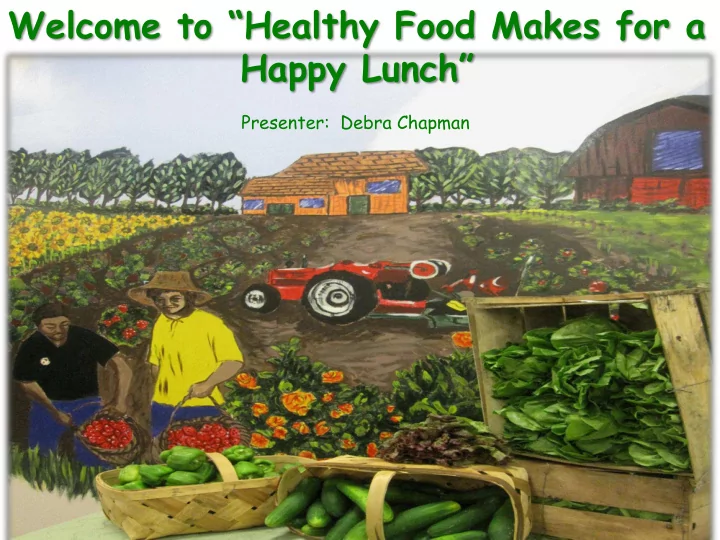
SLIDE 1 Welcome to “Healthy Food Makes for a Happy Lunch”
Presenter: Debra Chapman
SLIDE 2 Purpose of Session
provide students with a healthy learning environment
provide students with a healthy lunch utilizing local foods
SLIDE 3
Our Mission: A Whole Child, Whole School Approach Helping children reach their full potential
SLIDE 4 Our Recipe for Every Child: Three Interconnected Ingredients
Developing the Radiant Child-- Reaching Full Potential A Wise Nutrition & Healthy Life Styles Program A Healthy-High Performance School Building & Campus
SLIDE 5
- Creating a National prototype for “Green” and Healthy Schools
- Recipient of the Governor’s 2009 Serve to Preserve “Green” School Award
- Fully accredited by Southern Association of Colleges and Schools (SACS)
- Designated a High Performing Charter School by the FL Commissioner of Education
Odyssey Charter School
Florida’s First Healthy High Performance School
SLIDE 6 The Healthy Facility
Quality
- Natural Day Lighting
- Energy Efficient
- Hospital Grade “Green”
Cleaners
95%
SLIDE 7 The Sustainable Campus
Designated National Wildlife Federation Campus
Making connections with nature through:
Garden Courtyards Gopher Tortoise Preserve and Butterfly Garden
SLIDE 8 Wise Nutrition and Healthy Lifestyles Program
Our Healthy Café serves:
- 80% naturally prepared, made-
from- scratch wholesome foods
- Locally grown and seasonal
produce
- Growth-hormone free chicken
- Local farm-fresh eggs and
honey
- Fresh baked whole grain bread
and whole grains
- No high fructose corn syrup
SLIDE 9 Nutrition Education
- Teachers College, Life Curriculum
- The Big Ideas, Center for Eco-Literacy
SLIDE 10 The Garden Integrated into the Curriculum
Learning
- Vermiculture
- Rain Barrels
- Composting
SLIDE 11 Developing the Radiant Child
- Spiritually
- Emotionally
- Intellectually
- Physically
- Socially
Reaching full potential holistically:
SLIDE 12 Developing the Whole Child Through Healthy Learning Environments
- Montessori Hands-on Education
- Experiences in Nature
– Place-based Environmental Education – Organic Gardening
- Creating the Culture for Learning
– Positive Discipline in the Classroom – Conflict Resolution – Peace Education
SLIDE 13 Setting the School’s Food Compass through Food Policy
- “Rethinking the School Lunch Guide” – A systems
approach from The Center for Ecoliteracy
- A well defined Wellness Policy includes:
- Parent and Student Pledge
- Healthy Celebrations & Birthday Policy
- Healthy Fundraisers
- Alternatives for Food as Reward
- Nutrition Education
- Environmental Health
- Fundraising Policy – Sweet Deals: School
Fundraising Can Be Healthy and Profitable
Experiences – Gardening
- Waste Reduction
- Physical Activity
- Professional Development
- A Self-Assessment Rubric
SLIDE 14
Our Mission: Raising student achievement from the inside out
SLIDE 15 Healthy Options/Portions – Every Lunch a Rainbow
- Fresh Fruit
- Fresh Veggies
- Whole Grain
SLIDE 16
Healthy Earth + Healthy Food = Happy Children
SLIDE 17 A Healthy Future for Tomorrow’s Leaders
Impacting all aspects
Positively impacting their home life
Far-reaching
adulthood
SLIDE 18
Ten Ways to Improve Your School Lunch Program
SLIDE 19
- 1. Cook from scratch delicious, nutritious,
seasonal and sustainable food
- Fresh local fruits and veggies
- Eliminate processed foods/meats
SLIDE 20
- 2. Serve antibiotic and hormone-free milk
- To prevent the early onset of puberty from
added hormones
- To reduce antibiotic accumulation
- To reduce sugar consumption through the
elimination of chocolate and strawberry milk
SLIDE 21
menu to healthier
- ptions
- Don’t be afraid to experiment
- Be creative
- Keep options light and appealing
SLIDE 22
- 4. Eliminate trans-fats and high fructose
corn syrup
- Read ALL of your labels carefully
- Our Café does not serve chicken nuggets or
French fries
SLIDE 23
- 5. Use Only Whole Grains
- Ask your supplier for whole grain items such as
pasta and breads
- We bake homemade bread that is a blend of
whole wheat and ten grain flour
SLIDE 24
- 6. Apply for a salad bar from Michelle Obama
and Chef Ann Cooper’s “Lets Move” campaign at www.thelunchbox.org
SLIDE 25
Our Salad Bar
SLIDE 26
Self-serve encourages independence and teaches portion control
SLIDE 27
- 7. Experiment with new veggies, fruits
and recipes
- Students sample new recipes monthly
- Students provide feedback using surveys and
comment boxes
- Students may sample items before selecting
SLIDE 28
Keep your students involved in the decisions of which foods to eat
SLIDE 29
Xtreme Cuisine Cooking Class
SLIDE 30
- 8. Reformulate recipes to make them healthier
- Replace salt with an Herb blend
- Reduce sugar by replacing with applesauce
- Use local honey sparingly in place of sugar
- Activity: Making Standard Recipes Healthier
SLIDE 31
- 9. Examples of how we incorporate leftovers in
- ur meals:
- Cooked chicken in Taquitos
- Cooked pasta used on salad bar as pasta salad
- Veggies or meats for pizza & soups
- Menu/Wellness Newsletter
SLIDE 32
Leftovers can be used in all aspects of your lunch
SLIDE 33
- 10. Start a “Farm to School” Program
- Visit local farmers markets to find both
farmers and vendors willing to work with your school
SLIDE 34 Support Local Growers - Purchase Whole Foods
local organic free range eggs
farms provide lettuce, cucumbers, tomatoes, and peppers
honey from a local bee farm
SLIDE 35
SLIDE 36
Builds Self-Reliance
SLIDE 37
- Be patient. Start slowly.
- From small salad 3x weekly to full salad bar
- Samplings determined our menu offerings
- Finding nutritious recipes that kids will eat
can be challenging
- Encourage feedback both positive and
negative
In the Beginning… Lessons Learned
SLIDE 38 Future Plans
suppliers
- Offer a more diverse ethnic
menu
- Cater to dietary restrictions
- Develop parent education
tools
SLIDE 39 Reflections
& Healthy Food Links
Center for Eco-Literacy, www.ecoliteracy.org/ Teachers College, Columbia University www.lifecurriculum.info/ Chef Ann Cooper http://www.chefann.com/ Odyssey Charter School www.odysseycharterschool.com Sweet Deals: School Fundraising can be Healthy and Profitable http://www.cspinet.org/schoolfundraising. pdf Local Harvest http://www.localharvest.org/ Let’s Move http://www.letsmove.gov/