Update on the work of the SRWA Presented by: AnnLisa Jensen, - - PowerPoint PPT Presentation

update on the work of
SMART_READER_LITE
LIVE PREVIEW

Update on the work of the SRWA Presented by: AnnLisa Jensen, - - PowerPoint PPT Presentation

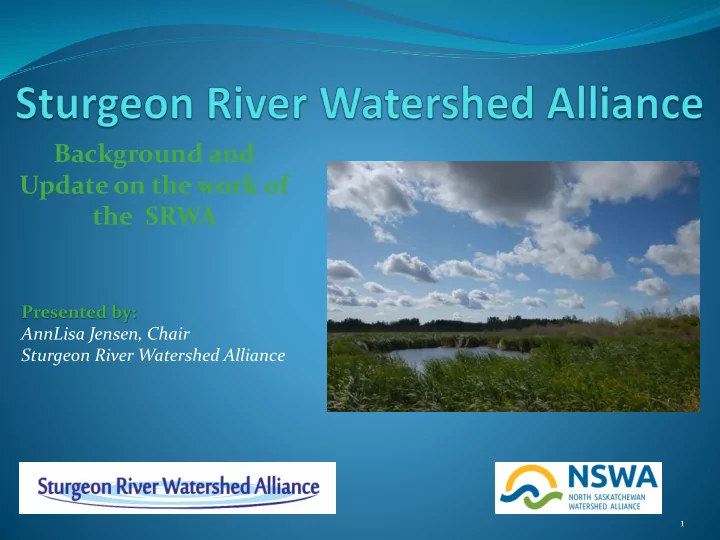
Background and Update on the work of the SRWA Presented by: AnnLisa Jensen, Chair Sturgeon River Watershed Alliance 1 Presentation Outline State of the Sturgeon River Watershed Issues and Challenges SRWA Technical Studies


slide-1
SLIDE 1

Background and Update on the work of the SRWA

1

Presented by: AnnLisa Jensen, Chair Sturgeon River Watershed Alliance
slide-2
SLIDE 2

Presentation Outline

  • State of the Sturgeon

River Watershed

  • Issues and Challenges
  • SRWA Technical

Studies

  • Municipal Collaboration
  • Next Steps

2

Photos: Dave Conlin

slide-3
SLIDE 3

North Saskatchewan Watershed

3

slide-4
SLIDE 4

Sturgeon River Watershed

4

slide-5
SLIDE 5

Sturgeon River Watershed

Sturgeon river is a small, precipitation and groundwater fed prairie river

  • 260 km in length
  • 3,301 sq km watershed area
  • High variability in water level

and flow

  • Significant riparian and

upland habitat diversity

5

slide-6
SLIDE 6

Sturgeon River Watershed

Major Tributaries:

  • Atim Creek
  • Kilini Creek
  • River Que Barre
  • Carrot Creek
  • Little Egg Creek

Major Lakes:

  • Isle Lake
  • Lac St. Anne
  • Birch Lake
  • Sandy Lake
  • Big Lake
  • Manawan Lake

6

slide-7
SLIDE 7

Sturgeon River Watershed Land Cover

7

  • 71% agriculture
  • 20% natural features
  • 5% water
  • 4% developed
slide-8
SLIDE 8

Sturgeon River Watershed Land Use

  • Urban Areas have 74.5% of

population with high growth rates

  • Country Residential
  • Crops and livestock
  • Gravel extraction
  • Roads and pipelines

8

slide-9
SLIDE 9

9

slide-10
SLIDE 10

Sturgeon River Watershed Issues

10

  • Low and fluctuating

water levels

  • High nutrient inputs and

poor water quality

  • Invasive species –

Flowering Rush and Asian Goldfish

slide-11
SLIDE 11

Sturgeon River Watershed Issues

  • Rapid urban development
  • Loss of natural areas, riparian

buffers and wetlands

  • Increase in stormwater runoff

and pollution

  • Localized flooding and

shoreline erosion

11

slide-12
SLIDE 12

12

slide-13
SLIDE 13

State of Watershed Report

13

  • What is the current condition of the

watershed?

  • How does this compare to past conditions?
  • What are the critical or emerging issues?
  • What the data/knowledge gaps that need to

be addressed?

  • What mechanisms are in place or need to be

in place to maintain and protect the health of the Sturgeon River Watershed?

slide-14
SLIDE 14

Ecological Health Indicators

  • 15 indicators with categories

for:

  • Land Use
  • Water Quantity
  • Water Quality
  • Biological health
  • Graded POOR, FAIR or

GOOD

  • Insufficient Data

14

slide-15
SLIDE 15

Overall Grade and Key Issues

  • Minimize impacts of urban

sprawl

  • Prevent further loss of natural

areas especially wetlands and riparian areas

  • Reduce amounts of pollutants

entering the watershed - fertilizers, pesticides and road salts

  • Establish a municipally lead

watershed group

15

slide-16
SLIDE 16

16

slide-17
SLIDE 17

Sturgeon River Watershed Alliance

  • Establish a municipally lead

watershed group

  • Municipalities have a

significant influence on land development

  • Watershed management at the

sub-watershed level is effective has each area has its

  • wn issues related to

variations in landscape, land uses and types of development

17

slide-18
SLIDE 18

Sturgeon River Watershed Alliance

  • SRWA formed in 2013
  • Composed of Steering

and Technical Advisory Committees

  • Technical and

administrative support from NSWA

  • 10 member

municipalities

18

slide-19
SLIDE 19

Sturgeon River Watershed Alliance

19

  • Parkland County
  • City of St. Albert
  • Sturgeon County
  • City of Edmonton
  • Lac St. Anne County
  • City of Spruce Grove
  • Town of Onoway
  • Town of

Morinville

  • Town of Gibbons
  • SLVACE

Committees and Studies Facilitated by NSWA

slide-20
SLIDE 20

20

slide-21
SLIDE 21

SRWA Technical Studies

  • SRWA partnership has been

able to secure over $500,000 in grants

  • NSWA able to coordinate

grants and consultants

  • Municipal staff are able to

collaborate and use information to develop and align planning and environmental policies

21

slide-22
SLIDE 22

SRWA Technical Studies

Water Quantity

 Literature review and summary of historic data  Lake water balance studies for Isle Lake and Lac St. Anne

  • Watershed modelling to show impacts from development

 Groundwater overview

Ecosystem Health

  • Riparian habitat condition assessment of river, creeks and lakes
  • Fish habitat condition assessment including dissolved oxygen in

winter

22

slide-23
SLIDE 23

SRWA Technical Studies

Water Quality

 Overview of current and historic conditions

Landscape and Hydrology

  • How land cover and use can affect overland flow

Gravel Impacts

  • On surface and ground water quality and flow

Intermunicipal Policy Alignment

  • Review of existing policies and legislation; recommendations

for municipal policy/bylaw alignment

23

slide-24
SLIDE 24

24

slide-25
SLIDE 25

Next Steps

  • Completion of technical

studies

  • Technical and Steering

Committee review

  • Determine key areas to align

policies

  • Information for public

education and awareness

  • Development of Integrated

Watershed Management Plan

25

slide-26
SLIDE 26

What is an Integrated Watershed Management Plan?

Outlines actions and responsibilities for:

  • Water quality protection
  • Water supply management
  • Aquatic ecosystem protection
  • Groundwater protection
  • Alignment of land and water
  • Planning at regional scale

26

slide-27
SLIDE 27

27

slide-28
SLIDE 28

Collaboration is Key

  • There is no real precedent for watershed

planning work

  • We need to speak as one voice in our

watersheds

  • Create cohesion through municipal

leadership and collaboration

  • Indigenous engagement is essential

28

slide-29
SLIDE 29

Questions for Elected Officials

  • How do the decisions I make affect the

watershed?

  • Where do I need to gain knowledge?
  • How can my experience help others make

good decisions?

  • What can I do to move it forward?
  • Where do conversations need to happen? – the

importance of advocacy

29

slide-30
SLIDE 30

Summary

30

“If everyone is moving forward together, then success takes care of itself.” Henry Ford

slide-31
SLIDE 31

Thank You!

31

Leah Kongsrude, Executive Director North Saskatchewan Watershed Alliance leah.kongsrude@nswa.ab.ca 587-525-6827 For more information on the SRWA or the NSWA contact: