
SLIDE 1
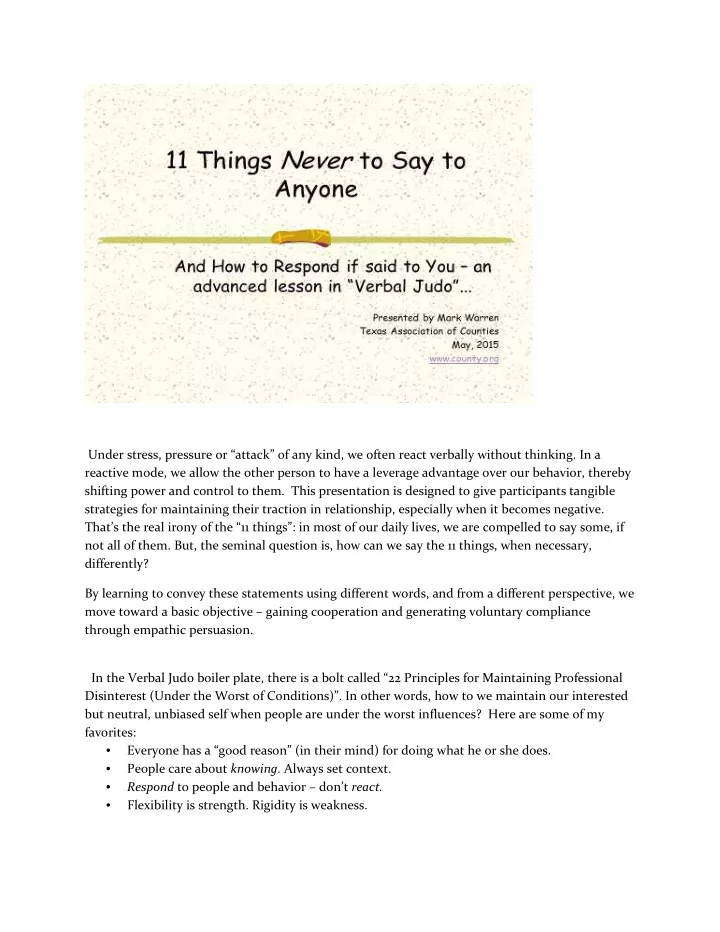
Under stress, pressure or “attack” of any kind, we often react verbally without thinking. In a reactive mode, we allow the other person to have a leverage advantage over our behavior, thereby shifting power and control to them. This presentation is designed to give participants tangible strategies for maintaining their traction in relationship, especially when it becomes negative. That’s the real irony of the “11 things”: in most of our daily lives, we are compelled to say some, if not all of them. But, the seminal question is, how can we say the 11 things, when necessary, differently? By learning to convey these statements using different words, and from a different perspective, we move toward a basic objective – gaining cooperation and generating voluntary compliance through empathic persuasion. In the Verbal Judo boiler plate, there is a bolt called “22 Principles for Maintaining Professional Disinterest (Under the Worst of Conditions)”. In other words, how to we maintain our interested but neutral, unbiased self when people are under the worst influences? Here are some of my favorites:
- Everyone has a “good reason” (in their mind) for doing what he or she does.
- People care about knowing. Always set context.
- Respond to people and behavior – don’t react.
- Flexibility is strength. Rigidity is weakness.