typically have two pairs of wings made of chitin. Flight has - - PowerPoint PPT Presentation

typically have two
SMART_READER_LITE
LIVE PREVIEW

typically have two pairs of wings made of chitin. Flight has - - PowerPoint PPT Presentation

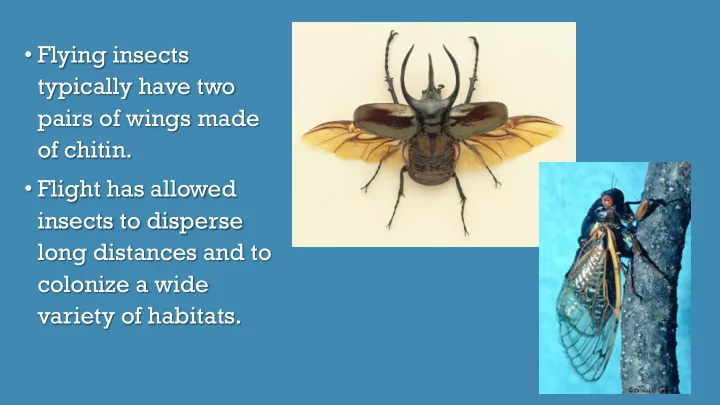
Flying insects typically have two pairs of wings made of chitin. Flight has allowed insects to disperse long distances and to colonize a wide variety of habitats. METAMORPHOSIS The growth and development of insects usually


slide-1
SLIDE 1
  • Flying insects

typically have two pairs of wings made

  • f chitin.
  • Flight has allowed

insects to disperse long distances and to colonize a wide variety of habitats.

slide-2
SLIDE 2

METAMORPHOSIS

  • The growth and development
  • f insects usually involves

metamorphosis, which is a process of changing shape and form.

  • Insects undergo either

incomplete metamorphosis or complete metamorphosis.

slide-3
SLIDE 3
  • Immature insects that

undergo incomplete metamorphosis look very much like the adults.

  • These immature

forms are called nymphs.

slide-4
SLIDE 4
  • In complete metamorphosis,

animals hatch into larvae that look and act nothing like their parents.

  • They feed and grow rapidly

and molt a few times.

  • They undergo a final molt

and change into a pupa—the stage in which an insect changes from larva to adult.

slide-5
SLIDE 5
slide-6
SLIDE 6

COMMUNICATION

  • Insects communicate

using sound, visual, chemical, and other types of signals.

  • Much of their

communication involves finding a mate.

slide-7
SLIDE 7

INSECT SOCIETIES

  • Ants, bees, termites, and

some of their relatives form complex associations called societies.

  • A society is a group of closely

related animals of the same species that work together for the benefit of the whole group

slide-8
SLIDE 8

COMMUNICATION IN SOCIETIES

  • Each species of social insect

use visual, touch, sound, and chemical signals to communicate information among members of the colony.

  • Honeybees communicate

information about food through a series of complex movements.