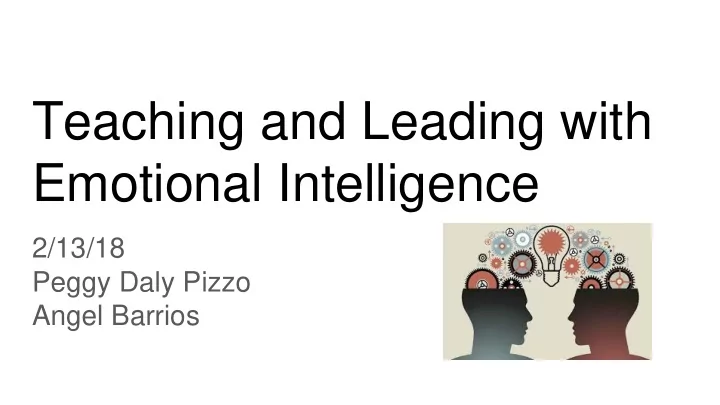
Teaching and Leading with Emotional Intelligence 2/13/18 Peggy - - PowerPoint PPT Presentation

teaching and leading with emotional intelligence
SMART_READER_LITE
LIVE PREVIEW

Teaching and Leading with Emotional Intelligence 2/13/18 Peggy - - PowerPoint PPT Presentation

Teaching and Leading with Emotional Intelligence 2/13/18 Peggy Daly Pizzo Angel Barrios Objectives of Presentation 1: Overview of Emotional Intelligence 2: Opportunity to discuss dilemmas that leaders face and how it provides opportunities


slide-1
SLIDE 1

Teaching and Leading with Emotional Intelligence

2/13/18 Peggy Daly Pizzo Angel Barrios

slide-2
SLIDE 2

Objectives of Presentation

1: Overview of Emotional Intelligence 2: Opportunity to discuss dilemmas that leaders face and how it provides opportunities to solve problems effectively and further develop emotional intelligence skills

slide-3
SLIDE 3

What is Emotional Intelligence?

“The capacity to reason about emotions and of emotions to enhance thinking. It includes the abilities to accurately perceive emotions, to access and generate emotions so as to assist thought, to understand emotions and emotional knowledge, and to reflectively regulate emotions so as to promote emotional and intellectual growth.”(Mayter, Salovey, & Carson, 2004)

slide-4
SLIDE 4

What is Emotional Intelligence?

  • Recognize, understand and manage our own emotions
  • Recognize, understand and influence the emotions of
  • thers
  • In practical terms, this means being aware that emotions

can significantly influence our behavior and impact people.

slide-5
SLIDE 5

What is Emotional Intelligence?

  • Awareness would lead to desire to regulate one’s

emotions and behaviors

  • Awareness and self-regulation contributes to positive

relationships.

  • These skills can be used in responsible problem-solving.
slide-6
SLIDE 6

The Office

slide-7
SLIDE 7

Framework of Emotional Intelligence

  • 1. Self-awareness: The ability to accurately recognize one’s own emotions,

thoughts, and values and how they influence behavior.

  • 2. Social Awareness: The ability to take the perspective of and empathize with
  • thers.
  • 3. Self –Management: The ability to successfully regulate one’s emotions,

thoughts, and behaviors in different situations — effectively managing stress, controlling impulses, and motivating oneself.

slide-8
SLIDE 8

Framework of Emotional Intelligence

  • 4. Relationship Building: The ability to establish and maintain healthy and

rewarding relationships with diverse individuals and groups. The ability to communicate clearly, listen well, cooperate with others, resist inappropriate social pressure, negotiate conflict constructively, and seek and offer help when needed.

  • 5. Responsible Decision Making: The ability to make constructive choices about

personal behavior and social interactions based on ethical standards, safety concerns, and social norms.

slide-9
SLIDE 9

Leadership and Emotional Intelligence

slide-10
SLIDE 10

Teaching Cases

  • Research-based narratives that uses a story to illustrate a

dilemma faced by many others in the same field.

  • These dilemmas do not have easy answers or solutions.
slide-11
SLIDE 11

Using a Teaching Case to illustrate dilemmas… ...Unique way to approach to learning

slide-12
SLIDE 12

Table Discussion:

slide-13
SLIDE 13

Closing words