
SLIDE 1
SimpleGenericHTTPSoapClient
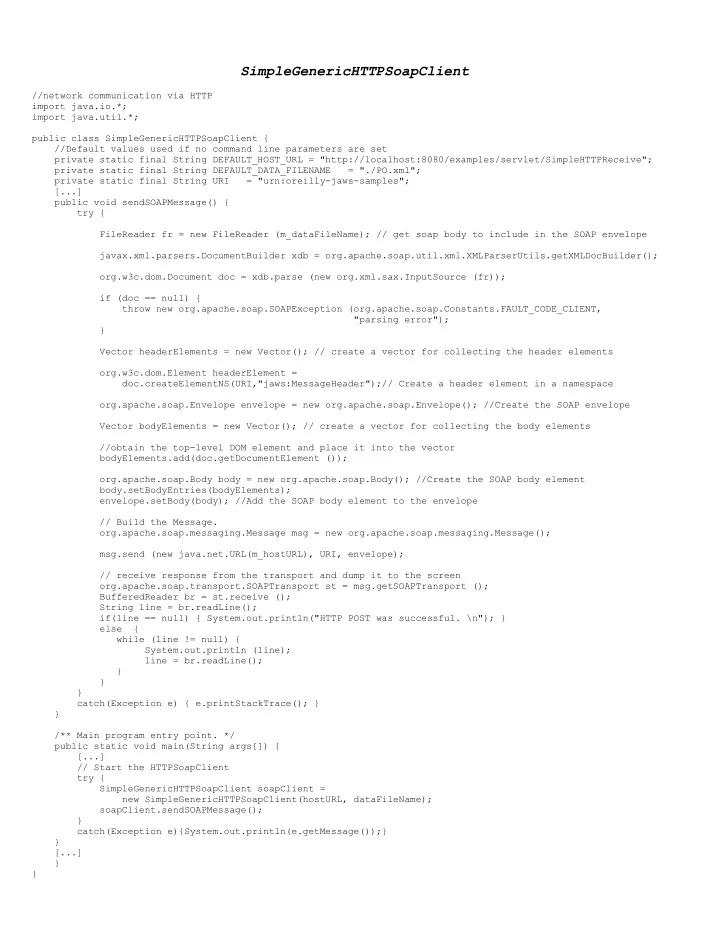
//network communication via HTTP import java.io.*; import java.util.*; public class SimpleGenericHTTPSoapClient { //Default values used if no command line parameters are set private static final String DEFAULT_HOST_URL = "http://localhost:8080/examples/servlet/SimpleHTTPReceive"; private static final String DEFAULT_DATA_FILENAME = "./PO.xml"; private static final String URI = "urn:oreilly-jaws-samples"; [...] public void sendSOAPMessage() { try { FileReader fr = new FileReader (m_dataFileName); // get soap body to include in the SOAP envelope javax.xml.parsers.DocumentBuilder xdb = org.apache.soap.util.xml.XMLParserUtils.getXMLDocBuilder();
- rg.w3c.dom.Document doc = xdb.parse (new org.xml.sax.InputSource (fr));
if (doc == null) { throw new org.apache.soap.SOAPException (org.apache.soap.Constants.FAULT_CODE_CLIENT, "parsing error"); } Vector headerElements = new Vector(); // create a vector for collecting the header elements
- rg.w3c.dom.Element headerElement =
doc.createElementNS(URI,"jaws:MessageHeader");// Create a header element in a namespace
- rg.apache.soap.Envelope envelope = new org.apache.soap.Envelope(); //Create the SOAP envelope
Vector bodyElements = new Vector(); // create a vector for collecting the body elements //obtain the top-level DOM element and place it into the vector bodyElements.add(doc.getDocumentElement ());
- rg.apache.soap.Body body = new org.apache.soap.Body(); //Create the SOAP body element
body.setBodyEntries(bodyElements); envelope.setBody(body); //Add the SOAP body element to the envelope // Build the Message.
- rg.apache.soap.messaging.Message msg = new org.apache.soap.messaging.Message();
msg.send (new java.net.URL(m_hostURL), URI, envelope); // receive response from the transport and dump it to the screen
- rg.apache.soap.transport.SOAPTransport st = msg.getSOAPTransport ();