Schedule UC Santa Barbara Announcements Send me email - - PowerPoint PPT Presentation

schedule
SMART_READER_LITE
LIVE PREVIEW

Schedule UC Santa Barbara Announcements Send me email - - PowerPoint PPT Presentation

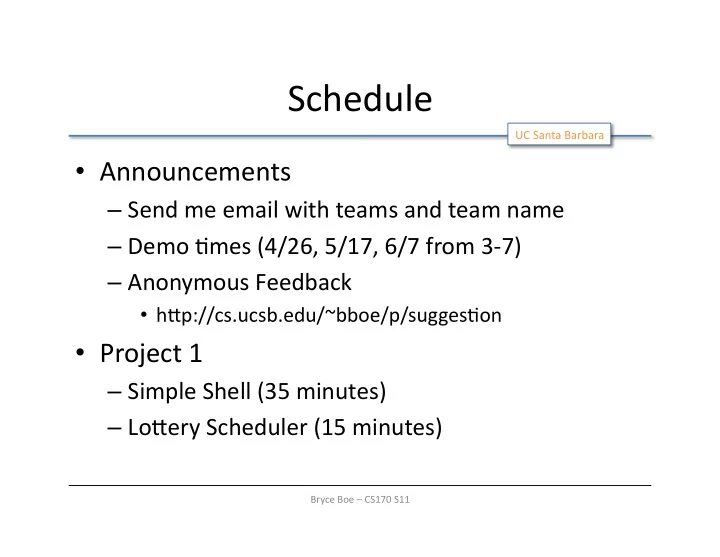
Schedule UC Santa Barbara Announcements Send me email with teams and team name Demo 8mes (4/26, 5/17, 6/7 from 3-7) Anonymous Feedback


slide-1
SLIDE 1

UC ¡Santa ¡Barbara ¡

Schedule ¡

  • Announcements ¡

– Send ¡me ¡email ¡with ¡teams ¡and ¡team ¡name ¡ – Demo ¡8mes ¡(4/26, ¡5/17, ¡6/7 ¡from ¡3-­‑7) ¡ – Anonymous ¡Feedback ¡

  • hIp://cs.ucsb.edu/~bboe/p/sugges8on ¡
  • Project ¡1 ¡

– Simple ¡Shell ¡(35 ¡minutes) ¡ – LoIery ¡Scheduler ¡(15 ¡minutes) ¡

Bryce ¡Boe ¡– ¡CS170 ¡S11 ¡

slide-2
SLIDE 2

UC ¡Santa ¡Barbara ¡

Project ¡1 ¡-­‑ ¡Two ¡Parts ¡

  • Simple ¡Shell ¡

– Read ¡input ¡from ¡standard ¡in ¡ – Handle ¡special ¡cases ¡with ¡>, ¡<, ¡|, ¡& ¡ – All ¡shell ¡output ¡to ¡stdout ¡ – No ¡debugging ¡output ¡

  • Minix ¡LoIery ¡Scheduling ¡

– Piggyback ¡loIery ¡scheduler ¡for ¡user ¡processes ¡on ¡ exis8ng ¡priority ¡scheduler ¡ – Add ¡system ¡call ¡to ¡change ¡number ¡of ¡8ckets ¡for ¡a ¡ process ¡

Bryce ¡Boe ¡– ¡CS170 ¡S11 ¡

slide-3
SLIDE 3

UC ¡Santa ¡Barbara ¡

What ¡is ¡a ¡shell? ¡

  • Control ¡program ¡execu8on ¡
  • Manage ¡program ¡input ¡and ¡output ¡
  • Control ¡working ¡directory ¡
  • Switch ¡between ¡foreground ¡and ¡background ¡

processes ¡

Bryce ¡Boe ¡– ¡CS170 ¡S11 ¡

slide-4
SLIDE 4

UC ¡Santa ¡Barbara ¡

System ¡Calls ¡You ¡Will ¡Need ¡

  • fork ¡– ¡copy ¡current ¡process ¡including ¡all ¡file ¡

descriptors ¡

  • exec ¡– ¡replace ¡running ¡process ¡with ¡code ¡from ¡

program ¡(file ¡descriptors ¡persist) ¡

  • waitpid ¡– ¡current ¡process ¡waits ¡un8l ¡pid ¡

terminates ¡

  • pipe ¡– ¡create ¡memory ¡mapped ¡file ¡
  • dup/dup2 ¡– ¡update ¡process ¡file ¡descriptor ¡

numbers ¡

Bryce ¡Boe ¡– ¡CS170 ¡S11 ¡

slide-5
SLIDE 5

UC ¡Santa ¡Barbara ¡

Great ¡C ¡Resource ¡

  • Opengroup.org ¡
  • Google ¡search ¡to ¡find ¡command: ¡

– fork ¡site:opengroup.org ¡

Bryce ¡Boe ¡– ¡CS170 ¡S11 ¡

slide-6
SLIDE 6

UC ¡Santa ¡Barbara ¡

pid_t ¡fork(void) ¡

int ¡pid; ¡ switch ¡(pid ¡= ¡fork()) ¡{ ¡ ¡ ¡ ¡ ¡case ¡0: ¡ ¡ ¡ ¡ ¡ ¡ ¡ ¡ ¡/* ¡child ¡process ¡*/ ¡break; ¡ ¡ ¡ ¡ ¡case ¡-­‑1: ¡ ¡ ¡ ¡ ¡ ¡ ¡ ¡ ¡/* ¡error ¡*/ ¡break; ¡ ¡ ¡ ¡ ¡default: ¡ ¡ ¡ ¡ ¡ ¡ ¡ ¡ ¡/* ¡parent ¡process ¡when ¡pid ¡> ¡0 ¡*/ ¡ ¡ } ¡

Bryce ¡Boe ¡– ¡CS170 ¡S11 ¡

slide-7
SLIDE 7

UC ¡Santa ¡Barbara ¡

int ¡execvp(const ¡char ¡*file, ¡char ¡*const ¡ argv[]); ¡

char ¡*argv[] ¡= ¡{“ls”, ¡“-­‑la”, ¡“/tmp”, ¡NULL} ¡ if ¡(execvp(argv[0], ¡argv)) ¡ ¡ ¡ ¡ ¡/* ¡exec ¡failed, ¡maybe ¡file ¡not ¡found ¡*/ ¡ else ¡ ¡ ¡ ¡/* ¡guaranteed ¡to ¡never ¡enter ¡here ¡*/ ¡

Bryce ¡Boe ¡– ¡CS170 ¡S11 ¡

slide-8
SLIDE 8

UC ¡Santa ¡Barbara ¡

pid_t ¡waitpid(pid_t ¡pid, ¡int ¡*stat_loc, ¡ int ¡op/ons); ¡

pid_t ¡child_pid; ¡ int ¡status; ¡ if ¡((child_pid ¡= ¡fork() ¡!= ¡0) ¡{ ¡ ¡ ¡ ¡ ¡waitpid(child_pid, ¡&status, ¡0); ¡ ¡ ¡ ¡ ¡prinp("%d\n", ¡status); ¡/* ¡should ¡be ¡1 ¡*/ ¡ } ¡else ¡{ ¡ ¡ ¡ ¡ ¡exit(1); ¡ } ¡

Bryce ¡Boe ¡– ¡CS170 ¡S11 ¡

slide-9
SLIDE 9

UC ¡Santa ¡Barbara ¡

int ¡pipe(int ¡fildes[2]); ¡

int ¡fildes[2]; ¡char ¡buf[BUFSIZ]; ¡ if ¡(pipe(fildes)) ¡{ ¡ ¡ ¡ ¡/* ¡error ¡*/ ¡ ¡ ¡ ¡} ¡ if ¡(fork()) ¡{ ¡ ¡ ¡ ¡ ¡close(fildes[0]); ¡/* ¡close ¡read ¡end ¡*/ ¡ ¡ ¡ ¡ ¡write(fildes[1], ¡“foobar\n”, ¡7); ¡ ¡ } ¡else ¡{ ¡ ¡ ¡ ¡ ¡close(fildes[1]); ¡/* ¡close ¡write ¡end ¡*/ ¡ ¡ ¡ ¡ ¡read(fildes[0], ¡buf, ¡7); ¡/* ¡reads ¡foobar ¡*/ ¡ } ¡

Bryce ¡Boe ¡– ¡CS170 ¡S11 ¡

slide-10
SLIDE 10

UC ¡Santa ¡Barbara ¡

int ¡dup2(int ¡fildes, ¡int ¡fildes2); ¡

/* ¡redirect ¡stdout ¡to ¡a ¡file ¡*/ ¡ int ¡fp; ¡ fp ¡= ¡open("/tmp/somefile", ¡'w'); ¡/* ¡3 ¡*/ ¡ close(STDOUT_FILENO); ¡/* ¡close ¡0 ¡*/ ¡ dup2(fp, ¡STDOUT_FILENO); ¡/* ¡clone ¡3 ¡to ¡0 ¡*/ ¡ close(fp); ¡/* ¡close ¡3 ¡*/ ¡

Bryce ¡Boe ¡– ¡CS170 ¡S11 ¡

slide-11
SLIDE 11

UC ¡Santa ¡Barbara ¡

Parsing ¡Commands ¡

  • Command ¡input ¡represents ¡a ¡grammar ¡

– Begin ¡-­‑> ¡command ¡(‘<‘ ¡file)? ¡(‘>’ ¡file)? ¡‘&’? ¡ – Begin ¡-­‑> ¡command ¡(‘<‘ ¡file)? ¡‘|’ ¡Extended ¡ – Extended ¡-­‑> ¡command ¡(‘>’ ¡file)? ¡‘&’? ¡ – Extended ¡-­‑> ¡command ¡‘|’ ¡Extended ¡

  • Must ¡parse ¡the ¡commands ¡properly ¡and ¡

create ¡the ¡execu8on ¡chain ¡

Bryce ¡Boe ¡– ¡CS170 ¡S11 ¡

slide-12
SLIDE 12

UC ¡Santa ¡Barbara ¡

Process ¡Tree ¡Crea8on ¡Ques8ons ¡

  • How ¡do ¡we ¡launch ¡a ¡single ¡process ¡and ¡have ¡

the ¡shell ¡wait? ¡

– What ¡about ¡I/O ¡redirec8on? ¡

  • How ¡do ¡we ¡launch ¡two ¡processes ¡with ¡a ¡pipe ¡

between ¡them? ¡

– Which ¡process ¡does ¡the ¡shell ¡wait ¡on? ¡ – What ¡file ¡descriptors ¡does ¡each ¡process ¡inherit? ¡ ¡

Bryce ¡Boe ¡– ¡CS170 ¡S11 ¡

slide-13
SLIDE 13

UC ¡Santa ¡Barbara ¡

Current ¡Minix ¡Scheduler ¡

  • Priority ¡scheduler ¡

– 1. ¡Kernel ¡tasks ¡(system ¡task ¡/ ¡clock ¡task) ¡ – 2. ¡Device ¡drivers ¡ – 3. ¡Server ¡processes ¡ – 4. ¡User ¡processes ¡ – Last. ¡Idle ¡process ¡

  • Implemented ¡with ¡16 ¡queues ¡
  • Highest ¡priority ¡process ¡in ¡‘ready’ ¡state ¡is ¡run ¡

Bryce ¡Boe ¡– ¡CS170 ¡S11 ¡

slide-14
SLIDE 14

UC ¡Santa ¡Barbara ¡

Running ¡Processes ¡

  • Each ¡process ¡has ¡a ¡quanta ¡(total ¡8me ¡to ¡run) ¡
  • Higher ¡priority ¡queues ¡may ¡provide ¡more ¡

quanta ¡

  • Processes ¡run ¡un8l ¡either ¡

– They ¡give ¡up ¡the ¡CPU ¡when ¡making ¡a ¡system ¡call ¡ such ¡as ¡IO ¡(return ¡to ¡the ¡head ¡of ¡their ¡queue ¡ when ¡‘ready’ ¡again ¡ – Their ¡quanta ¡is ¡exhausted ¡(return ¡to ¡end ¡of ¡ current ¡queue, ¡higher ¡queue, ¡or ¡lower ¡queue ¡ depending) ¡

Bryce ¡Boe ¡– ¡CS170 ¡S11 ¡

slide-15
SLIDE 15

UC ¡Santa ¡Barbara ¡

Switching ¡Queues ¡

  • If ¡there ¡are ¡no ¡other ¡“ready” ¡processes ¡when ¡

a ¡process ¡exhausts ¡its ¡en8re ¡quanta ¡twice ¡the ¡ process ¡moves ¡up ¡to ¡a ¡higher ¡priority ¡queue ¡

  • If ¡there ¡other ¡other ¡“ready” ¡processes ¡when ¡a ¡

process ¡exhausts ¡its ¡en8re ¡quanta ¡twice ¡the ¡ process ¡moves ¡down ¡to ¡a ¡lower ¡priority ¡queue ¡

  • Processes ¡can ¡request ¡a ¡change ¡via ¡the ¡nice ¡

system ¡call ¡

Bryce ¡Boe ¡– ¡CS170 ¡S11 ¡

slide-16
SLIDE 16

UC ¡Santa ¡Barbara ¡

Priority ¡Scheduler ¡Ques8ons ¡

  • Which ¡is ¡given ¡priority ¡IO ¡bound ¡or ¡CPU ¡

bound? ¡

  • Can ¡high ¡priority ¡processes ¡starve ¡low ¡priority ¡

processes? ¡

  • What ¡happens ¡if ¡a ¡device ¡driver ¡or ¡server ¡

(high ¡priority) ¡enters ¡a ¡CPU ¡bound ¡infinite ¡ loop? ¡

Bryce ¡Boe ¡– ¡CS170 ¡S11 ¡

slide-17
SLIDE 17

UC ¡Santa ¡Barbara ¡

LoIery ¡Scheduler ¡

  • Each ¡(user) ¡process ¡is ¡given ¡5 ¡8ckets ¡to ¡start ¡
  • At ¡each ¡scheduling ¡decision: ¡

– chose ¡a ¡random ¡number ¡between ¡0 ¡and ¡the ¡total ¡ number ¡of ¡assigned ¡8ckets ¡-­‑ ¡1 ¡ – schedule ¡process ¡“holding” ¡that ¡8cket ¡

  • Processes ¡can ¡modify ¡their ¡priority ¡via ¡

setpriority(n8ckets) ¡(max ¡100 ¡8ckets) ¡

Bryce ¡Boe ¡– ¡CS170 ¡S11 ¡

slide-18
SLIDE 18

UC ¡Santa ¡Barbara ¡

Integra8on ¡

  • Keep ¡it ¡simple ¡
  • Only ¡user ¡processes ¡are ¡required ¡to ¡use ¡the ¡

loIery ¡scheduler ¡

  • Do ¡not ¡need ¡to ¡worry ¡about ¡breaking ¡the ¡nice ¡

system ¡call ¡for ¡user ¡processes ¡

  • Do ¡not ¡need ¡to ¡worry ¡about ¡handling ¡the ¡

setpriority ¡system ¡call ¡for ¡kernel/device/server ¡ processes ¡

Bryce ¡Boe ¡– ¡CS170 ¡S11 ¡

slide-19
SLIDE 19

UC ¡Santa ¡Barbara ¡

To ¡consider ¡

  • How ¡do ¡we ¡find ¡the ¡process ¡that ¡is ¡elected? ¡
  • Incrementally ¡test ¡small ¡changes ¡to ¡ensure ¡

you ¡haven’t ¡broke ¡the ¡scheduler ¡

  • Write ¡minix ¡user ¡programs ¡to ¡test ¡func8onality ¡

– Equivalent ¡processes ¡running ¡concurrently ¡should ¡ complete ¡in ¡the ¡same ¡8me ¡ – If ¡process ¡A ¡has ¡twice ¡the ¡priority ¡of ¡process ¡B ¡it ¡ should ¡complete ¡in ¡approximately ¡half ¡the ¡8me ¡

Bryce ¡Boe ¡– ¡CS170 ¡S11 ¡

slide-20
SLIDE 20

UC ¡Santa ¡Barbara ¡

Good ¡luck! ¡

  • Ques8ons? ¡

Bryce ¡Boe ¡– ¡CS170 ¡S11 ¡