
SLIDE 1
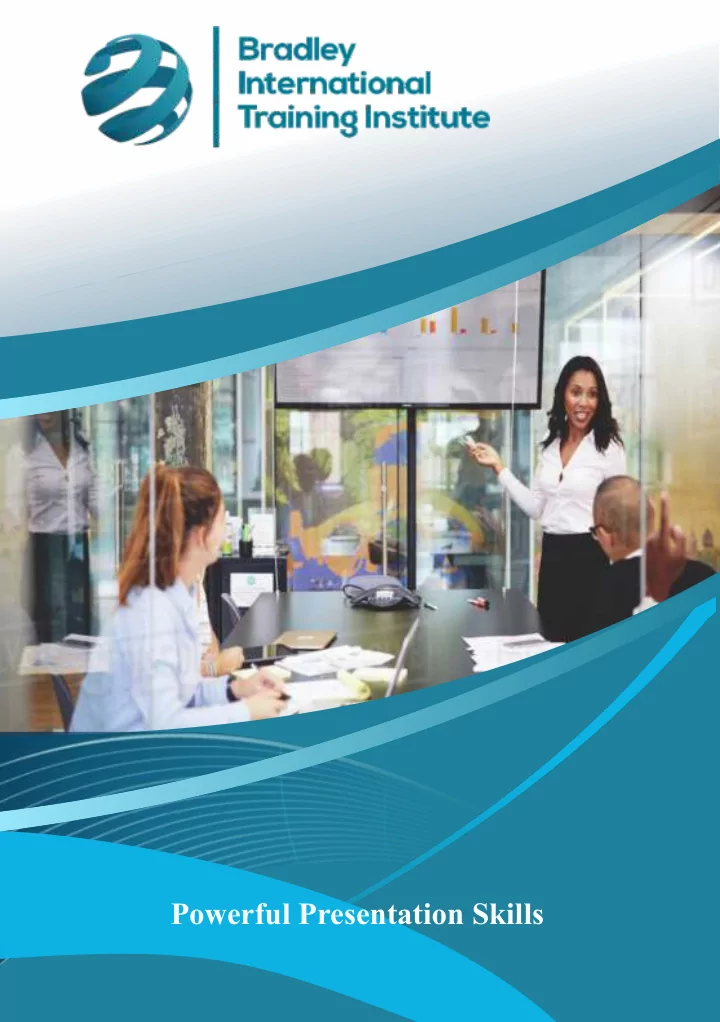
Powerful Presentation Skills Course overview an effective system of - - PDF document
Powerful Presentation Skills Course overview an effective system of feedback, which will enable you to develop your current skills and Save time Reduce preparation time significantly by using visual techniques to messaging. Impact Make
Ÿ
Confidence and delivery – You will learn simple and effective techniques to manage your state of mind and build your confidence when speaking in public.
Ÿ
Structuring your presentation – A good presentation needs to be memorable, impactful and meaningful, learning how to structure your presentation can achieve this. The purpose of this presentations and speaking skills course is to develop your skills as a confident and powerful presenter and enable you to develop and sustain audience rapport by:
Ÿ
Understanding your audience – Develop your ability to sustain audience rapport and use the skills required to communicate in a memorable influential manner. Your audience will be judging you on how competently you deliver your message, not just on the message itself.
Ÿ
Feedback –Becoming a master presenter is an ongoing learning process. The course has an effective system of feedback, which will enable you to develop your current skills and practise your presentation techniques.
Page 1
This workshop is designed for everyone who deals with people and who would effectively like to improve anger management techniques
Confidence – Be yourself and know how to deal with difficult members of your audience and those tricky questions we all dread! Impact – Make a strong impact through clarity of outcomes and powerful messaging. Save time – Reduce preparation time significantly by using visual techniques to plan, communicate and remember the key points you must get across.
Page 2
The trainer uses up-to-date training techniques and a variety of training methods, to give all participants the best opportunities for learning including: Individual Assignments Class Session Group Discussions Templates and Tools Simulations Exercises Case Studies and Problem Solving Exercises
Effective Communication The importance of self-awareness Barriers to effective communication The conventional process model Communication purposes Preparation for a positive first impression Business communication Effective emails, memos Understanding our audience Key communication skills Communication in meetings Non -verbal communication The power of deep listening Presenting Reports and research
Page 3
Presentation skills Presenting your visuals Your look, posture, gesture, eye contact Speaking with energy Using tonal Variety Non-verbal communication also affects a presentation: Non-verbal Communication Gestures Tone of voice Posture Distance Eye contact The look on the presenters face From the presenter’s perspective, body language must not be seen as contrary to the
The voice carries messages that are not defined by the words used. This is called paralanguage: Using the Voice Vocal quality Volume Pitch Rate of speech Enunciation / accent Pauses Most people will respond to a voice that is: Interesting Friendly Pleasant Natural
Page 4
Delivering your presentation Central message Practising and delivering your presentation Feedback and evaluation of your presentation Brainstorming Designing your presentation using power point Using a mind map Facial expressions are an integral part of any presentation as it communicates: The Face Attitude As a presenter, you need to make sure that your face does not detract from your message! Emotion Feelings Develop Relationships with Team Members Develop a Strategy through a Consultative Process Identify and Use Opportunities for Team Member Discussions Inform Team Members about Developments and Change Developing Relationships with Team Members Offer Feedback and Advice to Team Members Exploring differences
Page 5
Course Duration: 1 day
Bradley International Training Institute (BIT) Fax: 011 394 3135 Email: info@bradleyinstitute.co.za Physical Address Tel: +27 11 749 3182 | +27 65 872 4039 Unit C6 Halfway Gardens Office Park, 1 Asparagus Rd corner Fred Versput, Halfway House Midrand Johannesburg 1686, South Africa