
SLIDE 1
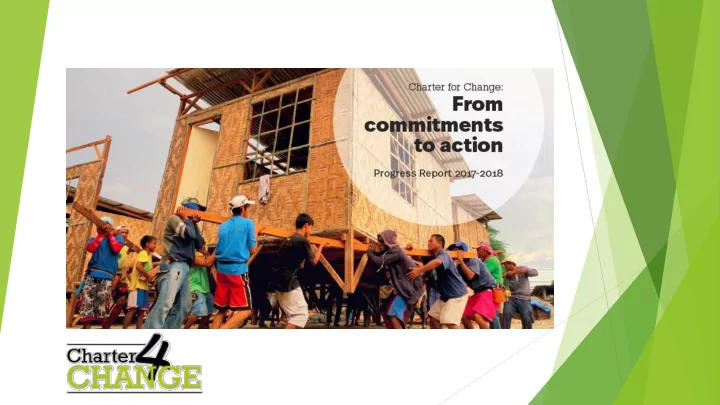
Overall AR17-18 New : self-assessment of progress against - - PowerPoint PPT Presentation
Overall AR17-18 New : self-assessment of progress against commitments, testing C4C against the Rohingya Refugee Response reality C4C: important role as a platform for collaboration and joint advocacy Exercising influence on the global
AR17-18 New: self-assessment of progress against commitments, testing C4C
C4C: important role as a platform for collaboration and joint advocacy
Exercising influence on the global humanitarian policy dialogue In a few countries, C4C emerging as an important platform for local and national
dialogue and advocacy (& coordination?); C4C endorsers’ leadership on advocating for GB and C4C in practice)
This role was reinforced at the 2017 C4C Annual Meeting in The Hague
C4C incorporation in new international strategies, organisational emergency response approaches, communications strategies, new partnership policies, or reporting on C4C commitments to program quality committees and organizations' senior most leadership
Discrepancy between awareness/buy-in of commitments between HQs and country program levels
Differences in implications: Partnership-focused signatories & signatories w mixed direct-implementation/partnership approaches
More socialisation of C4C with local/partner organisations needed?
Partnership / PoP Equality
contextual ways of working with partners
structures/governance under stress)
response
partners’ systems →Formalising and mainsteam PoPs in docs →Raise awareness on PoPs (internally & with partners)
avoid complacency
internal systems and tools to incorporate stronger partnership approaches
humanitarian imperative (e.g. Sth Sudan, Mali, Northern Nigeria, DRC)
specialisation, operational delivery at scale →Internal strategies, improving consistency
→Redress imbalances btw. INGO and local actor capacities
A ‘Partners’ Charter’: expect transparency on budgets, shared learning, fairness, staff behaviour, complaints handling, etc. Conducting structural needs assessments with partners ahead of design stages
diversity in compliance, Least progress made
Not an issue (signatories who work entirely through partnerships) Compensation policies highly challenging Not prioritised
ethical recruitment policy (4 agencies) strengthening country-specific or
raising awareness among country
inclusion in partner contracts
More awareness and interest among donors, joint discussions on how to best
Bilateral meetings (hq & country levels), collective meetings and influencing Increase in funding to pooled funds Institutionalisation of C4C advocacy to donors still needs attention
trend: Major donors preferring fewer partners Donor preference for high volume of funds and no’s of beneficiaries Interest in investing in strong/large national NGOs → less focus on capacity
→ Risk mitigation scenarios, collective provision of practical solutions to donors → More joint planning among humanitarian and development programming