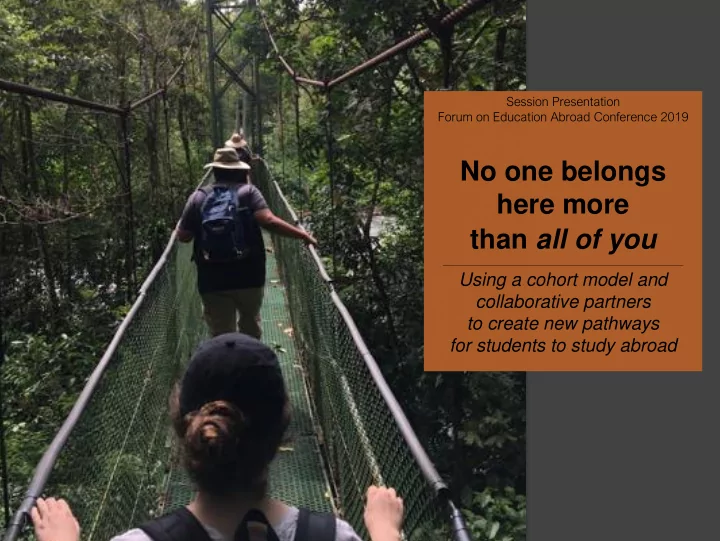
SLIDE 1 No one belongs here more than all of you
______________________________________________________________
Using a cohort model and collaborative partners to create new pathways for students to study abroad
Session Presentation Forum on Education Abroad Conference 2019
SLIDE 2 Introductions
Devin Foxall, M.A.
Director of Institutional Relations
Michael Girsch, MAE
Institutional Relations Manager
Lisa Loberg, Ed.D.
Director of Study Abroad
Lorenzo Ramirez, Ph.D.
Director, ALLIES in STEM
SLIDE 3
Behavioral Economics Choice Architecture Game Theory
Engaging Groups to Improve Diversity
Does it work... in theory?
SLIDE 4
SLIDE 5
SLIDE 6
SLIDE 7
SLIDE 8
SLIDE 9
SLIDE 10
SLIDE 11
SLIDE 12
SLIDE 13
SLIDE 14 ALLIES in STEM: Scholar demographics
1st Generation? Residential Status Low-Income? Student Type Gender Yes: 60% No: 40% Commuter: 40% Residential: 60% Yes: 70% No: 30% Freshmen: 86% Transfer: 14% Female: 68% Male: 32%
SLIDE 15 Cohort 1
- Participants
- Locations
- Programs
SLIDE 16
Reflections
Did the ALLIES students consider studying abroad before the partnership? What are the reasons your ALLIES students cite for not following through, even with access to this opportunity?
SLIDE 17
ALLIES Student: Angelica Pasion ’21 Majors: Biology Program: SFS Costa Rica Research: Bio-acoustics
" I felt my confidence in research increase. "
SLIDE 18
ALLIES Student: Amir Mejia ’21 Majors: Biology and German Program: SFS Costa Rica Research: Bio-acoustics
“ I thought medicine
was the only thing to do with a Biology degree, and I began to worry that I was losing interest in becoming a doctor. My research abroad with SFS allowed me to see the animal behavior side of biology, and it sparked a passion. ”
SLIDE 19
Identifying possible collaborations Unintended consequences and successes
Lessons learned
Student support
SLIDE 20
- > cohorts
- > student groups
- > grant-funded programs
- > ____________________
What opportunities exist for your campus or organization?
Identifying possible collaborations
SLIDE 21
- > potential study abroad program partners
- > program features that address student needs
- > academics that fulfill cohort requirements
- > ____________________
How can you leverage your education abroad network and link potential partners for collaboration?
Identifying possible collaborations
SLIDE 22 Unintended consequences and successes
Greater familiarity with study abroad
- ffice and its available support
Opportunities to highlight study abroad in a new way New campus partners can encourage more students to study abroad More students studying abroad increases retention for the institution
SLIDE 23
Unintended consequences and successes
Unexpected professional development for campus partners: site visit to program location, gain advising expertise in a new area Framework for partnerships = more awareness and more support for students Address myths for campus colleagues and students who think they can’t study abroad ($$$, no time in the major, will delay graduation, lack of programs, etc). Involvement from other academic departments
SLIDE 24 Considerations for student success: avoiding pitfalls
Anticipate ways to provide extra support
- Carefully consider program fit
- Customize pre-departure information
- Guide during the application process
- Normalize the FAQ’s
- Consider possible on-site needs
- Articulate the benefits of study abroad
- Account for family involvement
- Intentionally connect students with past
participants
Students return to campus empowered
- Provide outlets and re-entry support
SLIDE 25
Implications for your campus or organization:
Group discussion
Cohorts to consider Ideas for future programming Feedback / Suggestions
SLIDE 26 Session presenters
Devin Foxall, M.A.
Director of Institutional Relations
Michael Girsch, MAE
Institutional Relations Manager
Lisa Loberg, Ed.D.
Director of Study Abroad
Lorenzo Ramirez, Ph.D.
Director, ALLIES in STEM