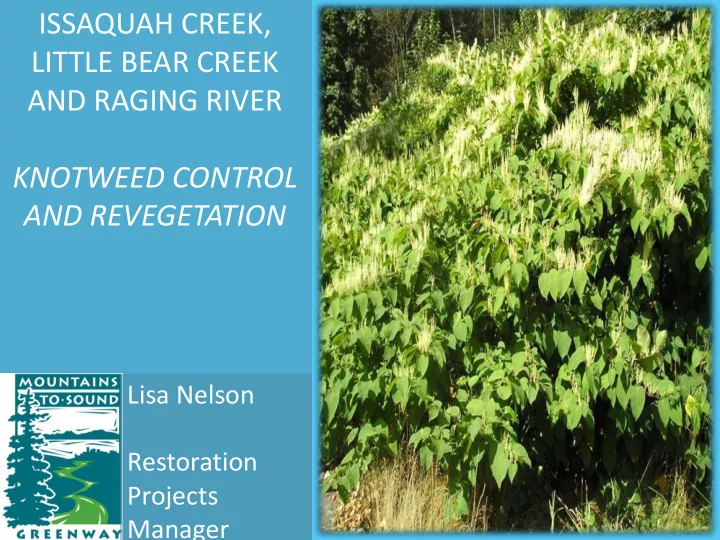
SLIDE 1
ISSAQUAH CREEK, LITTLE BEAR CREEK AND RAGING RIVER KNOTWEED CONTROL AND REVEGETATION
Lisa Nelson Restoration Projects Manager
SLIDE 2
- Quick overview
- f our three
basin-wide knotweed removal projects
each project’s successes and challenges
methods
SLIDE 3 Raging River
Issaquah Creek
Little Bear Creek
SLIDE 4 RAGING RIVER KNOTWEED REMOVAL CAMPAIGN
spawning habitat
received total $230, 000
- King Conservation District
$140,000
- King County Flood Control
District WRIA 7 Cooperative Watershed Management $90,000
SLIDE 5 2016 RAGING RIVER LANDOWNER PERMISSION
along creek
- 116 private landowners
- 12 DNR, King County
Parks
these parcels
SLIDE 6 2016 RAGING RIVER TREATMENT
32 acres infested
plants, yet are only treating 6 acres the past two years
Contractors, doing whole river
SLIDE 7 RAGING RIVER NATIVE PLANT REVEGETATION
- Set deliverables for native plant installation – habitat
improvement
- To date, installed approximately 7,000 native plants
SLIDE 8 RAGING RIVER KNOTWEED CAMPAIGN - SUCCESSES
collaboration with King County Rivers, using G&F
- King County Parks treats own
parcels
permissions
- 20% left of initial infested
acres
SLIDE 9 RAGING RIVER KNOTWEED CAMPAIGN - CHALLENGES
knotweed control, yet these parcels or the most highly infested
receptive to people on property
- One year, crew over-sprayed
- n handful of properties
- Some landowners do not
want native plants installed
SLIDE 10 ISSAQUAH CREEK KNOTWEED REMOVAL CAMPAIGN
Issaquah Creek Tier 1, supports Chinook, Coho and Kokanee salmon as well as steelhead trout
- Since 2008, Grants received total
$412,000
- Initial grant, DOE King County
administered, $50,000
- KCD, $70,000
- NFWF $20,000
- King County WRIA 8 CWM
$100,000
Program (NEP) $172,000
SLIDE 11 2016 ISSAQUAH CREEK LANDOWNER PERMISSION
along creek
- 220 private
- 100 DNR, King
County Parks, City
- f Issaquah
- Permission for 223
- f these parcels –
75%
SLIDE 12 2016 ISSAQUAH CREEK TREATMENT
from 2008 survey = 30
treated 5
SLIDE 13
PLANTING
ISSAQUAH CREEK NATIVE PLANT REVEGETATION 8,400 plants installed on 20 parcels
SLIDE 14 ISSAQUAH CREEK KNOTWEED CAMPAIGN - SUCCESSES
acquisitions
King County Parks
mouth
permissions
SLIDE 15 ISSAQUAH CREEK KNOTWEED CAMPAIGN - CHALLENGES
not interested in plants
- Coordinating with
- ther entities when
staff changes
salmon and bees
SLIDE 16 LITTLE BEAR CREEK KNOTWEED REMOVAL CAMPAIGN Tier 2, Coho and Chinook Spawning habitat
received total $55,000
County WRIA 8 CWM
SLIDE 17 2016 LITTLE BEAR CREEK LANDOWNER PERMISSION
Only treating to King County border
creek
- 10 private
- 3 City of Woodinville,
WSDOT
absentee owners
- Permission for 24 of these
parcels = 75%
SLIDE 18 2016 LITTLE BEAR CREEK TREATMENT
knotweed surveyed
3 acres each year
SLIDE 19 LITTLE BEAR CREEK NATIVE PLANT REVEGETATION
planting
1,000 plants!
SLIDE 20 LITTLE BEAR CREEK KNOTWEED CAMPAIGN - SUCCESSES
the City of Woodinville – Has opened the door to more restoration projects
with reaching absentee landowners
SLIDE 21 LITTLE BEAR CREEK KNOTWEED CAMPAIGN - CHALLENGES
- Absentee property
- wners
- Upstream
properties in Snohomish County aren’t being treated
SLIDE 22
Greenway Staff places mailing label here
SLIDE 23
- Highlight negative effects of knotweed on property
- Explains chemical is safe to spray over water and active ingredient only works on
plant cell growth.
SLIDE 24
SLIDE 25
Pre-placed return address Label with PIN
SLIDE 26
With information from the waiver, create treatment maps that illustrate permission type
SLIDE 27 Planting Brochure
charge and choosing plants
SLIDE 28
ease minds of blocking views while explaining “grade” of each option on habitat enhancement
SLIDE 29
Let’s talk about CONIFERS!
SLIDE 30
Choose your plants by flowers
SLIDE 31
Choose your plants by berries
SLIDE 32
Choose your plants by winter color
SLIDE 33
Questions?
Lisa Nelson Restoration Projects Manager