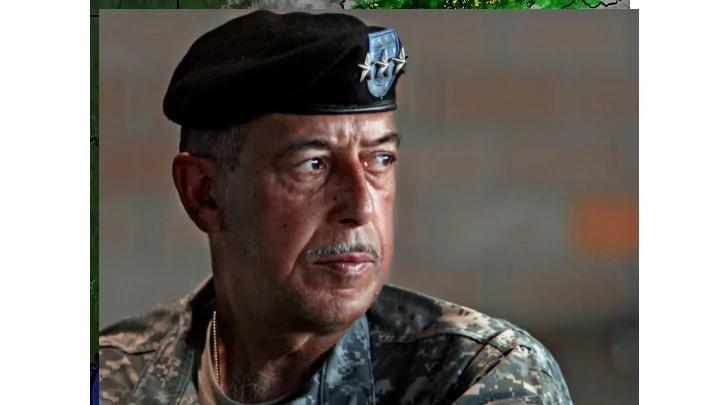
Lessons Learned from Hurricane Katrina LTG. RET. Russel L. Honor - - PowerPoint PPT Presentation

lessons learned
SMART_READER_LITE
LIVE PREVIEW

Lessons Learned from Hurricane Katrina LTG. RET. Russel L. Honor - - PowerPoint PPT Presentation

Lessons Learned from Hurricane Katrina LTG. RET. Russel L. Honor CDR JTF-Katrina Lessons Learned from Hurricane Katrina LTG Ret .Russel L. Honor CDR JTF-Katrina Washington s Crossing of the Delaware - At the Battle of Trenton,


slide-1
SLIDE 1
  • LTG. RET. Russel L. Honoré

CDR JTF-Katrina

Lessons Learned from Hurricane Katrina

slide-2
SLIDE 2
slide-3
SLIDE 3
slide-4
SLIDE 4
slide-5
SLIDE 5

LTG Ret .Russel L. Honoré

CDR JTF-Katrina

Lessons Learned from Hurricane Katrina

slide-6
SLIDE 6

Washington’s Crossing of the Delaware

  • At the Battle of Trenton, during the Christmas of

1776, the Continental Army composed of 2,400 volunteers captured or killed over 900 British and Hessian Soldiers keeping the American Revolution alive

Emanuel Gottlieb Leutze, American, 1816-1868 George Washington Crossing the Delaware, 1851 Oil on Canvas; 12 2/5 x 21 1/4 in

slide-7
SLIDE 7
slide-8
SLIDE 8

42% of US Population Lives within 20 miles of Ocean Coastline, Mississippi River & Great Lakes – a “target rich” environment!

US Population Concentrations

Data based on 2003 US Census Data

60% 54% 42%

russel.honore@gmail.com

slide-9
SLIDE 9

12

See First Understand First Act First

Russel L. Honoré, LTG, U.S. Army

Decision Superiority

russel.honore@gmail.com

slide-10
SLIDE 10
slide-11
SLIDE 11

WHAT IT SHOULD BE National Response Framework

Creating a Culture of Preparedness

National Preparedness Plan? (NPP)

POLITICAL

RIGHT LEFT

WHAT IT IS Money Spent on Preparedness GOVERNANCE

ECONOMY ACT STAFFORD ACT HELMS- BIDEN ACT

Prepared? Recover Respond Mitigate?

DIPLOMATIC GOVERNMENT HEALTH LOCAL STATE FEDERAL

Disaster Strikes

Presidential Declaration

ECONOMIC EDUCATION HOME

russel.honore@gmail.com Russel L. Honoré, LTG, U.S. Army

slide-12
SLIDE 12

Battle Drill: React to MEDIA Contact

  • 1. Don’t lie. Tell the truth.
  • 2. If you don’t want to hear it or read it, don’t say it or do it.
  • 3. Give media access 0500-2400. Set aside at least 20-30 minutes a

day for interviews. Be prepared for unexpected.

  • 4. Purpose: To provide information to the public. The American

people have a right to know.

  • 5. Talk about what you KNOW, not about what you THINK.
  • 6. Don’t answer “How do you feel about…?” questions. Focus on
  • mission. Think about answers.
  • 7. Interject humor with caution. Watch timing based on situation.
  • 8. It’s about “US” not “ME.”
  • 9. The Army is an outdoor sport. Do interviews outside in an
  • perational environment.
  • 10. Have your public affairs officer keep you posted on your boss’s

and your boss’s boss’s quotes.

  • 11. Figure out your daily top 3 priorities of work and talk about them.
  • 12. Get satellite radio and listen to national news a few times a day.
  • 13. Don’t be part of a public investigation. Don’t let reporters act like

prosecutors.

  • 14. Build business relationships with reporters. Drink coffee, eat with

them, let them get to know you.

  • 15. Be yourself.
  • 16. Don’t read any damn prepared remarks.
  • 17. Don’t do politics – focus on your mission. Don’t compliment or

criticize political leaders.

  • 18. Use your staff to see first, understand first, act first
  • 1. Arriving on the scene of a disaster – you must be the calm in the

storm.

  • 2. Work through the chaos and confusion – don’t add to it.
  • 3. Can’t do everything at once – establish a Priority of Work.
  • 4. Look for quick wins.
  • 5. In a disaster, you are the priority – if you ask for it, you’ll get it.
  • 6. Need decision superiority – See first, Understand first, Act first.
  • 7. Collaboration is key – everyone has a boss – unity of effort, not unity
  • f command.
  • 8. Who else needs to know?
  • 9. Public information critical in a disaster situation – poor

communications.

  • 10. Must give the media access – if you’re not speaking, someone else

will speak for you.

  • 11. Stay connected with those responsible – Mayor, Governor,

President, Military Leadership.

  • 12. Track what the key leaders are saying so there are no

contradictions.

  • 13. Deal with the misinformation put out by others.
  • 14. Real art of leadership is getting people to follow you willingly.
  • 15. Your audio and video have to match, do what you say
  • 16. Leaders cannot be observers, you must be a player.
  • 17. Leader takes responsibility for what happens – good, bad, or ugly.
  • 18. Don’t play the blame game.
  • 19. Do not allow the media to interrogate you.

Leadership During Disaster

Russel L. Honore’

LTG, USA (Retired) russel.honore@gmail.com

Russel L. Honore’

LTG, USA (Retired) russel.honore@gmail.com

slide-13
SLIDE 13

The Sunshine Patriot

THESE are the times that try men’s souls. The summer soldier and the sunshine patriot will, in this crisis, shrink from the service of their country; but man and woman. Tyranny, like hell, is not easily conquered; yet we have this consolation with us, that the harder the conflict, the more glorious the triumph. What we obtain too cheap, we esteem too lightly: it is dearness only that gives every thing its value. Heaven knhe that stands it now, deserves the love and thanks of ows how to put a proper price upon its goods; and it would be strange indeed if so celestial an article as FREEDOM should not be highly rated. Thomas Paine December 23, 1776

Prayer of Saint Francis

Lord, make me an instrument of Your peace. Where there is hatred, let me sow love; where there is injury, pardon; where there is doubt, faith; where there is despair, hope; where there is darkness, light; and where there is sadness, joy. O, Divine Master, grant that I may not so much seek to be consoled as to console; to be understood as to understand; to be loved as to love; for it is in giving that we receive; it is in pardoning that we are pardoned; and it is in dying that we are born to eternal life.

Top Five Challenges for 2016

  • 1. Poverty/Hunger in less developed nations
  • 2. Dependence on fossil fuels
  • 3. Protect the environment and preserve our

natural resources

  • 4. Infectious Diseases (HIV/AIDS, Avian Flu, Mad

Cow, etc.)

  • 5. Religious, Political & Ethnic intolerance

throughout the world

Russel L. Honore’

LTG, USA (Retired) @ltgrusselhonore

slide-14
SLIDE 14

Observers of geese say that the lessons they have learned by watching these birds are useful for foster parents and others who work with and rely

  • n others.

Leadership: Lessons from Geese

Leadership: Lessons from Geese

slide-15
SLIDE 15

TEAM

DISCIPLINE

Competence (skill, knowledge, and ability) gives Soldiers confidence to be great Warriors, based on solid individual, leader and unit discipline. Creates high unit morale and Esprit de Corps.

MODEL OF EXCELLENCE

slide-16
SLIDE 16
slide-17
SLIDE 17
slide-18
SLIDE 18
  • LTG. RET. Russel L. Honoré

CDR JTF-Katrina

Lessons Learned from Hurricane Katrina

slide-19
SLIDE 19