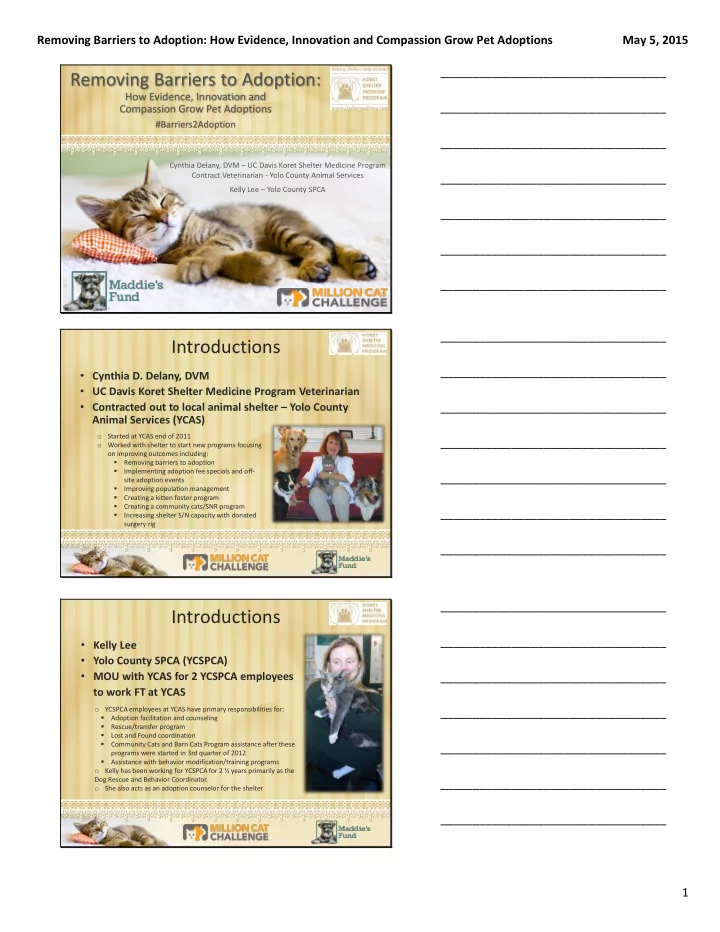
Introductions ___________________________________ Cynthia D. - - PDF document

introductions
SMART_READER_LITE
LIVE PREVIEW

Introductions ___________________________________ Cynthia D. - - PDF document

Removing Barriers to Adoption: How Evidence, Innovation and Compassion Grow Pet Adoptions May 5, 2015 ___________________________________ Removing Barriers to Adoption: How Evidence, Innovation and ___________________________________


slide-1
SLIDE 1

Removing Barriers to Adoption: How Evidence, Innovation and Compassion Grow Pet Adoptions May 5, 2015 1

Removing Barriers to Adoption:

How Evidence, Innovation and Compassion Grow Pet Adoptions

#Barriers2Adoption

Cynthia Delany, DVM – UC Davis Koret Shelter Medicine Program Contract Veterinarian - Yolo County Animal Services Kelly Lee – Yolo County SPCA

___________________________________ ___________________________________ ___________________________________ ___________________________________ ___________________________________ ___________________________________ ___________________________________

Introductions

  • Cynthia D. Delany, DVM
  • UC Davis Koret Shelter Medicine Program Veterinarian
  • Contracted out to local animal shelter – Yolo County

Animal Services (YCAS)

  • Started at YCAS end of 2011
  • Worked with shelter to start new programs focusing
  • n improving outcomes including:
  • Removing barriers to adoption
  • Implementing adoption fee specials and off-

site adoption events

  • Improving population management
  • Creating a kitten foster program
  • Creating a community cats/SNR program
  • Increasing shelter S/N capacity with donated

surgery rig

___________________________________ ___________________________________ ___________________________________ ___________________________________ ___________________________________ ___________________________________ ___________________________________

  • Kelly Lee
  • Yolo County SPCA (YCSPCA)
  • MOU with YCAS for 2 YCSPCA employees

to work FT at YCAS

Introductions

  • YCSPCA employees at YCAS have primary responsibilities for:
  • Adoption facilitation and counseling
  • Rescue/transfer program
  • Lost and Found coordination
  • Community Cats and Barn Cats Program assistance after these

programs were started in 3rd quarter of 2012

  • Assistance with behavior modification/training programs
  • Kelly has been working for YCSPCA for 2 ½ years primarily as the

Dog Rescue and Behavior Coordinator.

  • She also acts as an adoption counselor for the shelter

___________________________________ ___________________________________ ___________________________________ ___________________________________ ___________________________________ ___________________________________ ___________________________________

slide-2
SLIDE 2

Removing Barriers to Adoption: How Evidence, Innovation and Compassion Grow Pet Adoptions May 5, 2015 2 ___________________________________ ___________________________________ ___________________________________ ___________________________________ ___________________________________ ___________________________________ ___________________________________ YCAS Initial Euthanasia Risk Analysis Performed Late 2011 Based on Calendar Year 2010 Data

Cats Euthanized Reason for Euthanasia 2010 FERAL 571 TOO YOUNG 495 FEARFUL 210 MED COND 126 TIMID 104 AGED 51 URI 41 UNPREDICTA 36 ANIM AGGR 34 HUMANE 33 AT VET 26 SHLTR FULL 16 FIV 9 FELV 4 Grand Total 1756 100 200 300 400 500 600 700 800 900 1000 Behavioral Underage Medical Population Management 955 495 290 16 Number of Cats Euthanized Reason for Euthanasia

YCAS Cats Euthanized - Calendar Year 2010 By Reason for Euthanasia

Behavioral Underage Medical Population Management

83% of euthanized cats - Euthanized for Non-Medical Reasons

___________________________________ ___________________________________ ___________________________________ ___________________________________ ___________________________________ ___________________________________ ___________________________________

As a result of these and other programs implemented between 2009 and 2014 Live Release Rate Increases (calendar year basis) have been significant:

All Cats/Kittens – increased from 26% to 88% Kittens Only – increased from 33% to 92%

New Programs at YCAS Primarily Implemented Between 2012 to 2014

Over the past 3 years, YCAS has implemented programs in all 5 areas of the Million Cat Challenge’s Five Key Initiatives to increase cat live release rates:

  • Alternatives to Intake
  • Managed Admission
  • Capacity for Care
  • Removing Barriers to Adoption
  • Return to Field

___________________________________ ___________________________________ ___________________________________ ___________________________________ ___________________________________ ___________________________________ ___________________________________

slide-3
SLIDE 3

Removing Barriers to Adoption: How Evidence, Innovation and Compassion Grow Pet Adoptions May 5, 2015 3

YCAS – Changes in Cat Programming

2010 2011 2012 2013 2014 2015

  • 2. Began adoption

fee reductions.

  • 3. Began more
  • pen adoptions.

70% Cat Euthanasia Rate

  • 1. New role for new

shelter veterinarian (including some shelter management duties).

  • 4. Partnered with rescue

group to start pilot Kitten Foster Program

  • 5. Off-Site Kitten

Adoptions

6. Expanded veterinary role.

  • 7. Phased out field

pickup of cats.

72% Cat Euthanasia Rate

9. YCAS shelter Kitten Foster Program started.

  • 10. Barn Cat program

expanded.

10% Cat Euthanasia Rate

  • 8. SNR

Program Started

___________________________________ ___________________________________ ___________________________________ ___________________________________ ___________________________________ ___________________________________ ___________________________________

Impacts of Programs on Cats

  • Decreased Intakes
  • Decreased Average Daily Population
  • Decreased Euthanasia Rate
  • Decreased Length of Stay (LOS)
  • Increased Adoption Rate
  • Increased Live Release Rate

___________________________________ ___________________________________ ___________________________________ ___________________________________ ___________________________________ ___________________________________ ___________________________________

500 1000 1500 2000 2500 3000 2671 2540 2226 2254 1630 1808 Number of Live At Risk Cats Received Year

YCAS CAT INTAKES CALENDAR YEARS 2009 TO 2014

2009 2010 2011 2012 2013 2014

___________________________________ ___________________________________ ___________________________________ ___________________________________ ___________________________________ ___________________________________ ___________________________________

slide-4
SLIDE 4

Removing Barriers to Adoption: How Evidence, Innovation and Compassion Grow Pet Adoptions May 5, 2015 4

200 400 600 800 1000 1200 1400 1600 1800 2000 1935 1852 1909 1875 1729 1825 Number of Dogs Year

YCAS DOG INTAKES CALENDAR YEARS 2009 TO 2014

2009 2010 2011 2012 2013 2014

___________________________________ ___________________________________ ___________________________________ ___________________________________ ___________________________________ ___________________________________ ___________________________________

10 20 30 40 50 60 70 80 70.63 53.8 44.42 42.07 38.7 Average Daily Cat Population Year

YCAS AVERAGE DAILY CAT POPULATION FISCAL YEARS 2009-2010 TO 2013-2014

2009-2010 2010-2011 2011-2012 2012-2013 2013-2014

___________________________________ ___________________________________ ___________________________________ ___________________________________ ___________________________________ ___________________________________ ___________________________________

0.00% 10.00% 20.00% 30.00% 40.00% 50.00% 60.00% 70.00% 80.00% 72.28% 70.51% 59.95% 43.06% 11.32% 9.98% Euthanasia Rate Year

YCAS CAT EUTHANASIA RATE TREND CALENDAR YEARS 2009 TO 2014

2009 2010 2011 2012 2013 2014

___________________________________ ___________________________________ ___________________________________ ___________________________________ ___________________________________ ___________________________________ ___________________________________

slide-5
SLIDE 5

Removing Barriers to Adoption: How Evidence, Innovation and Compassion Grow Pet Adoptions May 5, 2015 5

200 400 600 800 1000 1200 1400 1600 1800 2000 1849 1726 1256 903 187 169 Number of Cats Euthanized Year

YCAS NUMBER OF CATS EUTHANIZED CALENDAR YEARS 2009 TO 2014

2009 2010 2011 2012 2013 2014

___________________________________ ___________________________________ ___________________________________ ___________________________________ ___________________________________ ___________________________________ ___________________________________

Average Length of Stay (LOS) Before and After New Programs

Average LOS Outcome Type 2009 2010 2011 2012 2013 2014 ADOPTION 52.1 41.8 24.7 23.2 14.6 10.1 DIED 6.4 16.5 4.8 3.9 2.2 0.3 EUTH 6.1 3.8 3.8 3.9 2.7 2.4 RESCUE 14.0 8.0 5.7 7.2 4.6 3.4 RTO 4.3 4.9 4.0 3.9 2.9 3.7 TRANSFER 55.4 20.7 12.7 6.9 7.2 6.9 YCC RELEAS 6.5 2.6 4.2 Grand Total 13.9 9.3 7.5 7.8 6.4 5.7

___________________________________ ___________________________________ ___________________________________ ___________________________________ ___________________________________ ___________________________________ ___________________________________

0% 10% 20% 30% 40% 50% 60% 70% 80% 90% 100% 2009 2010 2011 2012 2013 2014 PERCENT WITH THIS OUTCOME OUTCOME YEAR

YCAS CAT OUTCOMES CALENDAR YEARS 2009 to 2014

ADOPTION YCC RELEAS RTO TRANSFER RESCUE RELOCATE DIED EUTH

___________________________________ ___________________________________ ___________________________________ ___________________________________ ___________________________________ ___________________________________ ___________________________________

slide-6
SLIDE 6

Removing Barriers to Adoption: How Evidence, Innovation and Compassion Grow Pet Adoptions May 5, 2015 6

Summary of Changes - Yolo County Animal Services

Cats – Fiscal Year 2009-2010 vs Fiscal Year 2013-2014

Live Release Rate 30% 88% 193% Increase Live Release Numbers 687 1399 104% Increase Euthanasia Rate 68% 11% 84%

Decrease

Euthanasia Numbers 1720 176 90%

Decrease

Intake 2501 1596 36%

Decrease

DOA 431 303 32%

Decrease

Length of Stay 13.8 days 4.6 days 67%

Decrease

Average Daily Cat Population 70 39 44%

Decrease

2009 to 2010 2013 to 2014 % Change

___________________________________ ___________________________________ ___________________________________ ___________________________________ ___________________________________ ___________________________________ ___________________________________

100 200 300 400 500 600 261 265 236 324 530 542 Number of Cats Adopted Year

CAT ADOPTIONS YCAS CALENDAR YEAR 2009 TO 2014

2009 2010 2011 2012 2013 2014

___________________________________ ___________________________________ ___________________________________ ___________________________________ ___________________________________ ___________________________________ ___________________________________

0.0 10.0 20.0 30.0 40.0 50.0 60.0 52.1 41.8 24.7 23.2 14.6 10.1 Average Length of Stay in Days Year

YCAS AVERAGE LOS FOR CATS TO ADOPTION CALENDAR YEARS 2009 TO 2014

2009 2010 2011 2012 2013 2014

___________________________________ ___________________________________ ___________________________________ ___________________________________ ___________________________________ ___________________________________ ___________________________________

slide-7
SLIDE 7

Removing Barriers to Adoption: How Evidence, Innovation and Compassion Grow Pet Adoptions May 5, 2015 7

Removing Barriers to Adoption

  • The primary change needed for us to remove barriers to

adoption was a philosophy shift.

  • We love animals and want to give them the best lives possible.
  • We often saw and were profoundly impacted by examples of

“bad”/irresponsible animal owners.

  • We wanted to protect our shelter animals from a bad outcome.
  • So, we made it very difficult to adopt to try to “ensure” that the

animals would go to an “ideal” home.

___________________________________ ___________________________________ ___________________________________ ___________________________________ ___________________________________ ___________________________________ ___________________________________

We Need to Remember

  • We see only a very small portion of the owned animal population.

– Estimates are that we see less than 6% of owned animals in our shelters (some of whom are actually being redeemed by a responsible owner). – For cats this is probably even lower when you account for the large numbers of unowned free-roaming cats we see. – Most of the cats we see are brought in as stray and very few are redeemed, so we tend not to interact with a lot of cat owners at our shelters. – As a result, we see only a tiny portion of the cat owning public – maybe 2-3% or less. – Most cat owners are responsible and do the best they can for their pets and we never interact with them at shelters.

  • BUT, our brains have a “Negativity Bias”
  • We remember BAD things much more vividly than GOOD things.
  • Think of your last “Bad” day, you might have had 98 good things happen and

1 or 2 bad things and you remember it as a bad day.

___________________________________ ___________________________________ ___________________________________ ___________________________________ ___________________________________ ___________________________________ ___________________________________

What Wasn’t Working

  • Only 11% of our cats and kittens were being adopted.
  • Almost 70% of our cats and kittens were being euthanized.
  • We were “protecting” our cats and kittens to death.
  • We were “saving” them from a

possible less than ideal home (or life living as a free roaming cat) so that we could walk them into our euthanasia room and put them to sleep.

___________________________________ ___________________________________ ___________________________________ ___________________________________ ___________________________________ ___________________________________ ___________________________________

slide-8
SLIDE 8

Removing Barriers to Adoption: How Evidence, Innovation and Compassion Grow Pet Adoptions May 5, 2015 8

What Wasn’t Working

  • What else was wrong:

– Our Length of Stay to adoption was VERY LONG. – Our average on-site cat population was VERY HIGH.

  • All of this:

– Low adoption rate – High euthanasia rate – Long LOS – High average population

  • Was bad for our cats
  • And, it was bad for us:

– Bad for the shelter and its employees, bad for the public, bad for our department, bad for our community as a whole.

___________________________________ ___________________________________ ___________________________________ ___________________________________ ___________________________________ ___________________________________ ___________________________________

Things we USED To Do

  • Required proof of home ownership (for a cat or kitten adoption too) – often requiring

a paid property tax bill.

  • Landlord check required if not a home owner.
  • Requiring other pets to meet new pets (primarily for dogs) – currently still working
  • n this being more optional than required for dogs.
  • Requiring all family members to meet new pet.
  • Requiring a full adoption application to be filled out with no “wrong” answers on the

application and counseling against adoption if we judged any answers were wrong.

– Possible wrong answers:

  • Ages of people in the home
  • Other pets and other pets’ medical and S/N status
  • Indoor/outdoor question for cats (fenced yard question for dogs)
  • Declawing question
  • Former pets – bad outcomes, lack of medical care, other issues.
  • Owner lifestyle issues – including work hours

___________________________________ ___________________________________ ___________________________________ ___________________________________ ___________________________________ ___________________________________ ___________________________________

Things Others Might Want to Reconsider

  • Things we didn’t require but others might currently

require that might be worth reconsidering:

– Home visits – Veterinary references – Background checks – Waiting periods prior to animal going to new home

___________________________________ ___________________________________ ___________________________________ ___________________________________ ___________________________________ ___________________________________ ___________________________________

slide-9
SLIDE 9

Removing Barriers to Adoption: How Evidence, Innovation and Compassion Grow Pet Adoptions May 5, 2015 9

Let He Who is Without Sin……

  • How many of us on this webinar (arguably some
  • f the most dedicated animal lovers there are)

haven’t fallen into one of these categories:

– Kept a pet a landlord didn’t know about – Had pets who lived together even though they didn’t really get along – Let their pet’s vaccines or other medical care lapse – Worked long hours outside our home – Had young children in your home that might have negative interactions with a pet – Lived in a home without a secure, fenced yard – Allowed a pet cat to live outdoors or go in and out at will – Owned more animals than allowed by city/county

___________________________________ ___________________________________ ___________________________________ ___________________________________ ___________________________________ ___________________________________ ___________________________________

Let’s All Say The Serenity Prayer

No, you don’t have to get a tattoo of it, but it’s not a bad idea. ___________________________________ ___________________________________ ___________________________________ ___________________________________ ___________________________________ ___________________________________ ___________________________________

What Can’t We Control

  • We can’t control whether or not people get pets.
  • We can’t control if people tell us the truth or not.
  • We can’t control what kind of pet owners people are

going to be.

  • We can’t control the universe – bad things can happen

to good people and their pets.

___________________________________ ___________________________________ ___________________________________ ___________________________________ ___________________________________ ___________________________________ ___________________________________

slide-10
SLIDE 10

Removing Barriers to Adoption: How Evidence, Innovation and Compassion Grow Pet Adoptions May 5, 2015 10

What Can We Control

  • We can control whether or not people are allowed

to get pets from us (and save their lives).

  • Remember, we are not the only game in town

– 2012 study showed only 26% of cats were acquired from shelters. – Even fewer pets are acquired by people in low-income and under-served communities, estimates show 3% of pets acquired from shelters in a Pets For Life survey in these communities.

  • Excellent resource – HSUS’s new “Adopters

Welcome” book.

___________________________________ ___________________________________ ___________________________________ ___________________________________ ___________________________________ ___________________________________ ___________________________________ ___________________________________ ___________________________________ ___________________________________ ___________________________________ ___________________________________ ___________________________________ ___________________________________

Low-Income, Underserved Communities From Pets For Life Study

___________________________________ ___________________________________ ___________________________________ ___________________________________ ___________________________________ ___________________________________ ___________________________________

slide-11
SLIDE 11

Removing Barriers to Adoption: How Evidence, Innovation and Compassion Grow Pet Adoptions May 5, 2015 11

What we Can Control if We Help People Get a Cat From Us

  • Whether people get a cat that is already spay/neutered, current on

vaccines, microchipped.

  • Whether people get some guidance and advice on selecting an

appropriate pet.

  • Whether people get education and advice on how to introduce their new

pet to their home and provide it with medical and behavior care/training.

  • Whether people have a resource if they need help, to avoid the pet ending

up back in the shelter in the future.

  • Getting back a healthy, adoption-ready animal if for any reason the

adoption doesn’t work out.

___________________________________ ___________________________________ ___________________________________ ___________________________________ ___________________________________ ___________________________________ ___________________________________

What Did We Do at Yolo? Implemented “Open Adoptions”

  • The goal was to focus on helping people to adopt (rather than

trying to prevent them from adopting).

  • We still use an adoption application but use it as a

conversation starter.

  • The goal is to talk to the adopter, help them make the best

adoption choice and provide them with guidance, resources and advice about their new pet.

  • The goal is to be less judgmental, more helpful and give

adopters a positive adoption experience (and a great, lifelong pet).

___________________________________ ___________________________________ ___________________________________ ___________________________________ ___________________________________ ___________________________________ ___________________________________

Other Steps We Took to Remove Adoption Barriers

  • Increasing accessibility:

– Shelter hours/adoption days, adoption locations. – Increasing friendliness of shelter – staff and volunteers. – Discounted cat adoptions – fee waived, 2 for 1 on kittens, or 1 kitten with a free adult mentor cat (studies, including Weiss 2009 found no increase in return rates for animals adopted at reduced fees) – Allowing volunteers to act as adoption counselors to staff off-site adoption events – Special adoption promotions and advertising of adoptions – social media, on-site, press releases, participating in bigger events – Not declining adoptions for pets as gifts (studies show no difference in retention/attachment -

  • r even greater retention for pets given as gifts)

– No special restrictions associated with holidays

  • Including black cat adoptions around Halloween no longer restricted or discouraged.

___________________________________ ___________________________________ ___________________________________ ___________________________________ ___________________________________ ___________________________________ ___________________________________

slide-12
SLIDE 12

Removing Barriers to Adoption: How Evidence, Innovation and Compassion Grow Pet Adoptions May 5, 2015 12

Once Adoptions Increased

  • We could implement a shelter-based kitten foster program

– Now that we knew we would be able to find homes for the kittens when old enough.

  • We started offering some cats for adoption that were a little more shy or cat reactive.

– Previously they would have had to go to rescue or be euthanized.

  • We have now started to offer for adoption some cats that historically would not have

been made available (and based on very low historical adoption rates they wouldn’t have previously been adopted or at least not without an excessively long LOS)

– Senior cats – Cats with treatable but long-term illnesses like hyperthyroidism – Very special medical needs – like FIV positive cats

  • We are still careful to manage our population and balance fast track and slow

track cats offered for adoption but have more flexibility and alternatives in how we manage our population.

___________________________________ ___________________________________ ___________________________________ ___________________________________ ___________________________________ ___________________________________ ___________________________________

Will Returns Skyrocket?

They didn’t for us.

___________________________________ ___________________________________ ___________________________________ ___________________________________ ___________________________________ ___________________________________ ___________________________________

0.0% 0.5% 1.0% 1.5% 2.0% 2.5% 1.1% 1.9% 1.7% 2.2% 1.9% 2.4% 1.9% RETURNS AS % OF ADOPTIONS YEAR

CAT ADOPTION RETURNS YCAS 2009 to 2014

2009 2010 2011 2012 2013 2014 Grand Total

___________________________________ ___________________________________ ___________________________________ ___________________________________ ___________________________________ ___________________________________ ___________________________________

slide-13
SLIDE 13

Removing Barriers to Adoption: How Evidence, Innovation and Compassion Grow Pet Adoptions May 5, 2015 13

What About Returns?

  • Remember, a return shouldn’t be

considered a “failure”

– If the animal is returned to the shelter it’s an opportunity to learn more about the animal and the adopter and make a better match for each the next time. – If the adopter chooses to rehome the animal themselves this should also be

  • kay with us. They know the animal

and they likely know the new owner so may be able to make a very good match.

___________________________________ ___________________________________ ___________________________________ ___________________________________ ___________________________________ ___________________________________ ___________________________________

Our Goals

2 3

Be a resource for adoption.

1

Not be a barrier to adoption. Remember what we want to accomplish:

  • Save lives
  • Get pets in homes that are spayed/neutered, vaccinated, microchipped
  • Educate people about pet ownership
  • Conserve resources for other areas (like SNR, TNR, foster care

programs, low-cost public spay/neuter, etc.) – by minimizing LOS and population on-site – while still maximizing live release rates.

___________________________________ ___________________________________ ___________________________________ ___________________________________ ___________________________________ ___________________________________ ___________________________________

Analyze Current Outcomes Look for “Low Hanging Fruit” Set Goals Explore Perceived Barriers Overcome Barriers

Circle of (Shelter) Life

___________________________________ ___________________________________ ___________________________________ ___________________________________ ___________________________________ ___________________________________ ___________________________________

slide-14
SLIDE 14

Removing Barriers to Adoption: How Evidence, Innovation and Compassion Grow Pet Adoptions May 5, 2015 14

100 200 300 400 500 600 2009 2010 2011 2012 2013 2014 2015 NUMBER OF CATS EUTHANIZED YEAR

EUTHANASIA RISK ANALYSIS YCAS 2009 to 2015 (2015 YTD as of 3/30/15) Reason for Euthanasia for Cats Euthanized at Shelter

FERAL TOO YOUNG FEARFUL MED COND AGED AT VET TIMID URI ANIM AGGR UNPREDICTA HUMANE FIV SHLTR FULL FELV

___________________________________ ___________________________________ ___________________________________ ___________________________________ ___________________________________ ___________________________________ ___________________________________ YCAS Top 14 Reasons for Euthanasia for Cats

Calendar Years 2009 to 2014 (filtered to top 14 only)

Cats Euthanized Reason for Euthanasia 2009 2010 2011 2012 2013 2014 Total FERAL 414 571 457 277 7 1726 TOO YOUNG 421 495 321 169 9 1 1416 FEARFUL 338 210 150 150 848 MED COND 111 126 86 92 50 89 554 AGED 38 51 80 83 52 28 332 AT VET 45 26 61 64 60 39 295 TIMID 107 104 52 6 269 URI 186 41 8 1 236 ANIM AGGR 38 34 56 20 2 2 152 UNPREDICTA 50 36 23 22 131 HUMANE 50 33 27 17 127 FIV 2 9 10 10 23 16 70 SHLTR FULL 18 16 7 41 FELV 4 4 4 2 6 14 34 Grand Total 1822 1756 1342 913 209 189 6231

Cats Euthanized Reason for Euthanasia 2014 Medical 98.41% MED COND 47.09% AT VET 20.63% AGED 14.81% FIV 8.47% FELV 7.41% Behavioral 1.06% ANIM AGGR 1.06% Underage 0.53% TOO YOUNG 0.53% Grand Total 100.00%

___________________________________ ___________________________________ ___________________________________ ___________________________________ ___________________________________ ___________________________________ ___________________________________ ___________________________________ ___________________________________ ___________________________________ ___________________________________ ___________________________________ ___________________________________ ___________________________________

slide-15
SLIDE 15

Removing Barriers to Adoption: How Evidence, Innovation and Compassion Grow Pet Adoptions May 5, 2015 15

Do you have any questions??

?

?

Cynthia D. Delany, DVM cddelany@ucdavis.edu

___________________________________ ___________________________________ ___________________________________ ___________________________________ ___________________________________ ___________________________________ ___________________________________

References and Resources

  • UC Davis Koret Shelter Medicine Program – www.sheltermedicine.com
  • Million Cat Challenge – www.millioncatchallenge.org
  • Maddie’s Fund – www.maddiesfund.org
  • University of Florida – Maddie’s Shelter Medicine Program - http://sheltermedicine.vetmed.ufl.edu/
  • HSUS “Adopters Welcome.” http://gateway.hsus.org/files/adopters-

welcome/AdoptersWelcome.pdf.

  • HSUS, “Pets for Life: An In-Depth Community Understanding.”

humanesociety.org/assets/pdfs/pets/pets-for-life/pfl-report-0214.pdf.

  • HSUS, “Pets by the Numbers.”

humanesociety.org/issues/pet_overpopulation/facts/pet_ownership_statistics.html

  • AVMA, U.S. Pet Ownership & Demographics Sourcebook 2012 Edition, Schaumberg: American

Veterinary Medical Association.

  • Weiss, E., Gramann, S., Dolan, E., Scotto, J., & Slater, M. (2014). “Do Policy Based Adoptions

Increase the Care a Pet Receives? An Exploration of a Shift to Conversation Based Adoptions at One Shelter.” Open Journal of Animal Sciences, 4, 313-322.

  • Weiss, E., Donal, E., Garrison, L., Hong, J., & Slater, M. (2013) “Should Dogs and Cats be Given as

Gifts?” Animals, 3(4), 995-1001.

  • ASPCA, “If We Only Adopt to “Perfect” Pet Parents, We’re Not Really Making a Difference...”

aspcapro.org/if-we-only-adopt-to-perfect-pet-parents-were-not-really-making-a- difference%25e2%2580%25a6.

  • Weiss, E., & Gramann, S. (2009). “A Comparison of Attachment Levels of Adopters of Cats: Fee-

Based Adoptions Versus Free Adoptions.” Journal of Applied Animal Welfare Science, 12(4), 360- 370.

___________________________________ ___________________________________ ___________________________________ ___________________________________ ___________________________________ ___________________________________ ___________________________________