Hospital Survey on Pa2ent Safety Culture in 5 - - PowerPoint PPT Presentation

hospital survey on pa2ent safety culture in 5 spdc
SMART_READER_LITE
LIVE PREVIEW

Hospital Survey on Pa2ent Safety Culture in 5 - - PowerPoint PPT Presentation

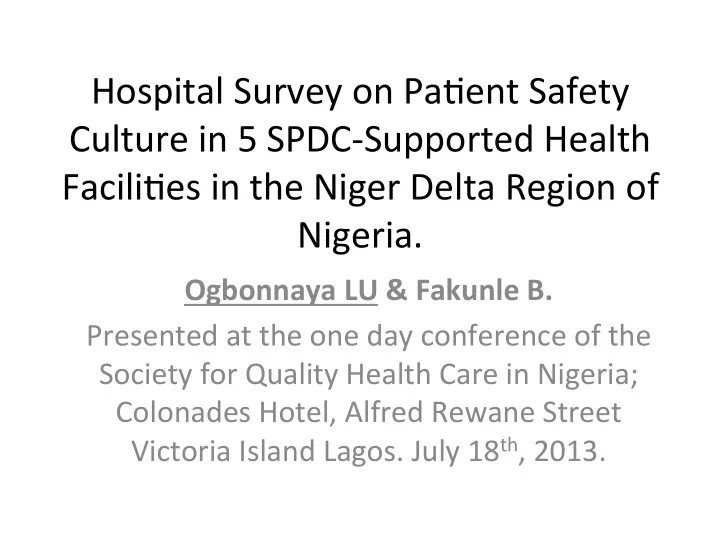
Hospital Survey on Pa2ent Safety Culture in 5 SPDC-Supported Health Facili2es in the Niger Delta Region of Nigeria. Ogbonnaya LU & Fakunle B.


slide-1
SLIDE 1

Hospital ¡Survey ¡on ¡Pa2ent ¡Safety ¡ Culture ¡in ¡5 ¡SPDC-­‑Supported ¡Health ¡ Facili2es ¡in ¡the ¡Niger ¡Delta ¡Region ¡of ¡

  • Nigeria. ¡

Ogbonnaya ¡LU ¡& ¡Fakunle ¡B. ¡ Presented ¡at ¡the ¡one ¡day ¡conference ¡of ¡the ¡ Society ¡for ¡Quality ¡Health ¡Care ¡in ¡Nigeria; ¡ Colonades ¡Hotel, ¡Alfred ¡Rewane ¡Street ¡ Victoria ¡Island ¡Lagos. ¡July ¡18th, ¡2013. ¡

slide-2
SLIDE 2

Defini2ons ¡

  • Safety ¡culture ¡: ¡
  • The ¡beliefs, ¡values ¡and ¡aRtudes ¡

shared ¡by ¡all ¡members ¡of ¡the ¡

  • rganisa2on, ¡and ¡this ¡is ¡reflected ¡in ¡

the ¡day ¡to ¡day ¡opera2ons ¡of ¡the ¡ rganiza2on”13. ¡

slide-3
SLIDE 3

Defini2ons ¡2 ¡

  • Pa2ent ¡Safety: ¡
  • Pa2ent ¡safety ¡is ¡defined ¡as ¡‘the ¡

preven2on ¡of ¡harm ¡caused ¡by ¡ errors ¡of ¡commission ¡and ¡

  • mission’ ¡1. ¡
slide-4
SLIDE 4

Defini2ons ¡3 ¡

  • Pa4ent ¡Safety ¡Culture: ¡
  • ¡‘This ¡is ¡an ¡integrated ¡paYern ¡of ¡

individual ¡and ¡organisa2onal ¡behaviour, ¡ based ¡on ¡a ¡system ¡of ¡shared ¡beliefs ¡and ¡ values, ¡that ¡con2nuously ¡seeks ¡to ¡ minimise ¡pa2ent ¡harm ¡that ¡may ¡result ¡ from ¡the ¡process ¡of ¡care ¡delivery.’13 ¡ ¡ ¡

slide-5
SLIDE 5

Introduc2on ¡cont’d ¡

  • Safety ¡culture ¡key ¡component ¡in ¡improving ¡

pa2ent ¡safety. ¡

  • ¡Pa2ent ¡safety ¡in ¡absence ¡of ¡safety ¡culture ¡not ¡
  • possible. ¡
  • Only ¡when ¡leaders ¡understand ¡importance ¡of ¡

pa2ent ¡safety. ¡

slide-6
SLIDE 6

Introduc2on ¡cont’d ¡

  • Health ¡care ¡o\en ¡aYended ¡by ¡preventable ¡harm. ¡
  • In ¡the ¡US ¡247 ¡die ¡daily ¡from ¡healthcare-­‑

associated ¡infec2ons ¡3 ¡ ¡

  • In ¡the ¡UK, ¡about ¡25,000 ¡die ¡annually ¡from ¡

preventable ¡pa2ent ¡safety ¡incidents ¡8. ¡ ¡

  • No ¡research ¡evidence ¡in ¡Africa, ¡but ¡millions ¡may ¡

be ¡suffering ¡from ¡pa2ent ¡safety ¡incidents ¡10 ¡

slide-7
SLIDE 7

Introduc2on ¡cont’d ¡

  • Avoiding ¡errors ¡part ¡of ¡health ¡care. ¡
  • Medical ¡and ¡nursing ¡students ¡are ¡taught ¡

“First, ¡do ¡no ¡harm” ¡14 ¡ ¡, ¡and ¡to ¡

  • Take ¡personal ¡responsibility ¡for ¡pa2ent ¡safety. ¡
  • Error ¡a ¡failure ¡of ¡individual ¡health ¡care ¡

provider ¡15. ¡

  • Who ¡is ¡assumed ¡to ¡be ¡incompetent, ¡careless, ¡

and ¡deserve ¡punishment ¡16. ¡

slide-8
SLIDE 8

Introduc2on ¡cont’d ¡

  • Blame ¡culture ¡discourages ¡error-­‑repor2ng ¡19 ¡ ¡
  • Does ¡liYle ¡to ¡reduce ¡the ¡chance ¡of ¡future ¡

errors ¡15. ¡

  • Paradigm ¡shi\ ¡views ¡error ¡as ¡a ¡system ¡

problem ¡15. ¡

  • Recognizes ¡that ¡people ¡make ¡mistakes, ¡
  • Personal ¡vigilance ¡cannot ¡prevent ¡errors ¡in ¡

poorly-­‑designed ¡systems. ¡

slide-9
SLIDE 9

Introduc2on ¡cont’d ¡

  • Systems ¡to ¡be ¡resistant ¡to ¡human ¡error. ¡
  • Prevent ¡and ¡manage ¡busy ¡periods ¡and ¡fa2gue ¡
  • Errors ¡and ¡near-­‑errors ¡welcomed ¡as ¡learning ¡
  • pportuni2es ¡16 ¡
  • Vic2ms ¡of ¡error ¡treated ¡with ¡respect ¡

sympathy, ¡and ¡told ¡the ¡truth ¡24. ¡

  • Culture ¡of ¡medicine ¡must ¡change ¡to ¡increase ¡

repor2ng ¡of ¡errors ¡

slide-10
SLIDE 10

Uses ¡of ¡Pa4ent ¡Safety ¡Culture ¡study ¡ ¡

Ø Raises ¡staff ¡awareness ¡about ¡pa2ent ¡safety. ¡ ¡ Ø Assesses ¡current ¡status ¡of ¡pa2ent ¡safety ¡culture. ¡ Ø ¡Iden2fies ¡strengths ¡& ¡areas ¡for ¡improvement. ¡ ¡ Ø Examines ¡trends ¡in ¡pa2ent ¡safety ¡culture ¡over ¡2me. ¡ ¡ Ø Evaluates ¡impact ¡of ¡pa2ent ¡safety ¡ini2a2ves ¡& ¡

  • interven2ons. ¡

Ø ¡Allows ¡hospitals ¡to ¡compare ¡their ¡result ¡

slide-11
SLIDE 11

General ¡Objec4ve ¡ ¡

  • To ¡conduct ¡a ¡baseline ¡assessment ¡of ¡the ¡

culture ¡of ¡safety ¡in ¡SPDC ¡supported ¡facili2es ¡ using ¡the ¡AHRQ ¡Hospital ¡Survey ¡on ¡Pa2ent ¡ Safety ¡Culture ¡(HSPSC) ¡ques2onnaire. ¡

slide-12
SLIDE 12

Specific ¡Objec4ves ¡ ¡

  • To ¡determine ¡the ¡pa2ent ¡safety ¡culture ¡mean ¡

posi2ve ¡response ¡scores ¡in ¡the ¡5 ¡SPDC-­‑ ¡ supported ¡health ¡facili2es ¡

  • To ¡compare ¡the ¡pa2ent ¡safety ¡culture ¡posi2ve ¡

response ¡mean ¡scores ¡with ¡the ¡benchmark ¡ score ¡of ¡US ¡hospitals ¡with ¡6-­‑24 ¡beds. ¡

  • To ¡establish ¡a ¡baseline ¡for ¡assessing ¡future ¡

improvement ¡efforts. ¡

slide-13
SLIDE 13

Methodology ¡

  • Survey ¡instrument ¡
  • The ¡Hospital ¡Survey ¡of ¡Pa2ent ¡Safety ¡Culture ¡

ques2onnaire ¡

  • Measures ¡safety ¡culture ¡on ¡12 ¡dimensions ¡and ¡

42 ¡Items ¡

  • 12 ¡dimensions ¡or ¡composites ¡include ¡10 ¡safety ¡

and ¡2 ¡outcome ¡dimensions ¡

slide-14
SLIDE 14

Methodology ¡Cont’d ¡

  • 7 ¡hospitals ¡randomly ¡selected, ¡5 ¡reported ¡on. ¡
  • Heads ¡of ¡facili2es ¡oriented ¡on ¡purpose ¡of ¡

study, ¡content ¡of ¡ques2onnaire ¡

  • 225 ¡health ¡workers ¡interviewed ¡
  • Ques2onnaire ¡self ¡administered ¡
  • Data ¡collec2on ¡lasted ¡3 ¡weeks ¡
  • Data ¡analysed ¡using ¡SPSS ¡version ¡17 ¡
slide-15
SLIDE 15

Result: ¡characteris4cs ¡of ¡respondents ¡

  • Age ¡and ¡Sex ¡Distribu4on ¡
  • The ¡age ¡range ¡of ¡respondents ¡was ¡36 ¡(21 ¡to ¡

57 ¡years). ¡

  • Mean ¡age ¡was ¡37.5 ¡± ¡8.6 ¡years. ¡
  • 66 ¡(54.5%) ¡respondents ¡were ¡females ¡
  • 42 ¡(34.7%) ¡were ¡males; ¡
  • ¡13 ¡(10.8%) ¡respondents ¡did ¡not ¡disclose ¡their ¡
  • sex. ¡
slide-16
SLIDE 16

A ¡2: ¡Respondents’ ¡Work ¡area/unit ¡

Work ¡area/unit ¡ Number ¡ Percentage ¡

Many different hospital units/no specific unit ¡ Pharmacy ¡ Laboratory ¡ Immunisation ¡ Labour Ward/Delivery services ¡ Adult outpatient / Family Planning clinic ¡ Theatre/Surgery ¡ Post Natal Ward ¡ Other ¡ Under 5 Out-Patient Clinic ¡ Ante Natal Clinic ¡ Intensive Care Unit ¡ No response ¡ 31 ¡ 14 ¡ 10 ¡ 5 ¡ 5 ¡ 4 ¡ 4 ¡ 4 ¡ 4 ¡ 3 ¡ 3 ¡ 2 ¡ 32 ¡ 25.5 ¡ 11.6 ¡ 8.3 ¡ 4.1 ¡ 4.1 ¡ 3.3 ¡ 3.3 ¡ 3.3 ¡ 3.3 ¡ 2.5 ¡ 2.5 ¡ 1.7 ¡ 26.4 ¡

slide-17
SLIDE 17

A ¡3: ¡Professional ¡group ¡of ¡respondents ¡

Staff ¡ ¡Posi4on ¡ Frequency ¡ Percentage ¡

Registered Nurse/Midwife ¡ Medical Doctor ¡ Pharmacist ¡ Laboratory Scientist ¡ Pharmacy technician ¡

  • Comm. Health Extension Worker ¡

Community Health Officer ¡ Laboratory technician ¡ No Response ¡ 58 ¡ 13 ¡ 6 ¡ 6 ¡ 6 ¡ 6 ¡ 5 ¡ 4 ¡ 17 ¡ 47.9 ¡ 10.7 ¡ 5.0 ¡ 5.0 ¡ 5.0 ¡ 5.0 ¡ 4.1 ¡ 3.3 ¡ 14.0 ¡

TOTAL ¡ 121 ¡ 100 ¡

slide-18
SLIDE 18

A ¡4: ¡Respondents’ ¡Hours ¡of ¡work ¡per ¡week ¡

Number ¡of ¡Hours ¡of ¡work/ ¡week ¡ Frequency ¡ Percentage ¡

<20 ¡hours ¡ ¡ 20 ¡-­‑39 ¡hours ¡ ¡ 40 ¡-­‑59 ¡hours ¡ ¡ 60 ¡-­‑ ¡79 ¡hours ¡ ¡ 80 ¡– ¡99Hours ¡ ¡ 100 ¡hours ¡or ¡more ¡ ¡ No ¡Response ¡

¡

9 ¡ ¡ 21 ¡ ¡ 45 ¡ ¡ 10 ¡ ¡ 9 ¡ ¡ 18 ¡ ¡ 9 ¡ 7.4 ¡ ¡ 17.4 ¡ ¡ 37.2 ¡ ¡ 8.3 ¡ ¡ 7.4 ¡ ¡ 14.9 ¡ ¡ 7.4 ¡ ¡

Total ¡ 121 ¡ 100 ¡

slide-19
SLIDE 19

¡ A ¡5. ¡Respondents’ ¡work ¡experience ¡1 ¡(How ¡ long ¡have ¡you ¡worked ¡in ¡your ¡current ¡ specialty?): ¡ ¡

Name ¡

  • f ¡

Facility ¡ Lsss ¡ than ¡1 ¡ year ¡ 1 ¡to ¡5 ¡ years ¡ 6 ¡to ¡10 ¡ years ¡ 11 ¡to ¡ ¡ 15 ¡ years ¡ 16 ¡to ¡ 20 ¡ years ¡ > ¡20 ¡ years ¡ No ¡ Respon se ¡ Total ¡ Otuase ga ¡ Obio ¡ Owaza ¡ ¡ Umueb ulu ¡ ¡ ¡ Nembe ¡ 4 ¡ ¡ 3 ¡ 5 ¡ ¡ 2 ¡ ¡ ¡ ¡ 2 ¡ 19 ¡ ¡ 11 ¡ 10 ¡ ¡ 1 ¡ ¡ ¡ ¡ 4 ¡ 5 ¡ ¡ 5 ¡ 2 ¡ ¡ 2 ¡ ¡ ¡ ¡ 2 ¡ 4 ¡ ¡ 0 ¡ 2 ¡ ¡ 2 ¡ ¡ ¡ ¡ 2 ¡ 4 ¡ ¡ 3 ¡ 2 ¡ ¡ 0 ¡ ¡ ¡ ¡ 1 ¡ 3 ¡ ¡ 3 ¡ 3 ¡ ¡ 3 ¡ ¡ ¡ ¡ 2 ¡ 7 ¡ ¡ 1 ¡ 1 ¡ ¡ 1 ¡ ¡ ¡ ¡ 0 ¡ 46 ¡ ¡ 26 ¡ 25 ¡ ¡ 11 ¡ ¡ ¡ ¡ 13 ¡ Total ¡ 16 ¡ 45 ¡ 16 ¡ 10 ¡ 10 ¡ 14 ¡ 10 ¡ 121 ¡

slide-20
SLIDE 20

A 6. Respondents’ Work Experience 2 (How long have you worked in this hospital?):

Name ¡

  • f ¡

Hospita l ¡ < ¡1 ¡yr ¡ 1-­‑5 ¡yrs ¡ 6-­‑10 ¡ yrs ¡ 11-­‑15 ¡ yrs ¡ 16-­‑20 ¡ yrs ¡ >21 ¡yrs ¡ No ¡ Respon se ¡ Total ¡ Otuase ga ¡ Obio ¡ ¡ Owaza ¡ ¡ Umueb ulu ¡ ¡ Nembe ¡ 6 ¡ ¡ 9 ¡ ¡ 5 ¡ ¡ 3 ¡ ¡ ¡ 1 ¡ 31 ¡ ¡ 17 ¡ ¡ 15 ¡ ¡ 5 ¡ ¡ ¡ 11 ¡ 1 ¡ ¡ 0 ¡ ¡ 2 ¡ ¡ 2 ¡ ¡ ¡ 1 ¡ 4 ¡ ¡ 0 ¡ ¡ 3 ¡ ¡ 0 ¡ ¡ ¡ 0 ¡ 0 ¡ ¡ 0 ¡ ¡ 0 ¡ ¡ 0 ¡ ¡ ¡ 0 ¡ 1 ¡ ¡ 0 ¡ ¡ 0 ¡ ¡ 0 ¡ ¡ ¡ 0 ¡ 3 ¡ ¡ 0 ¡ ¡ 0 ¡ ¡ 1 ¡ ¡ ¡ 0 ¡ 46 ¡ ¡ 26 ¡ ¡ 25 ¡ ¡ 11 ¡ ¡ ¡ 13 ¡ Total ¡ 24 ¡ (19.8) ¡ 79 ¡ (65.3) ¡ 6 ¡(4.9) ¡ 7 ¡(5.8) ¡ 0 ¡(0) ¡ 1 ¡(0.8) ¡ 4 ¡(3.3) ¡ 121 ¡

slide-21
SLIDE 21

A ¡7. ¡Respondents’ ¡Work ¡Experience ¡3 ¡(How ¡ long ¡have ¡you ¡worked ¡in ¡your ¡work ¡area/ unit?): ¡

Name ¡of ¡ Hosp ¡ < ¡1 ¡yr ¡ 1-­‑5 ¡yrs ¡ 6-­‑10 ¡yrs ¡ 11-­‑15 ¡ yrs ¡ 16-­‑20 ¡ yrs ¡ >21 ¡yrs ¡ No ¡ Respo nse ¡ Total ¡ Otuasega ¡ ¡ Obio ¡ ¡ Owaza ¡ ¡ Umuebulu ¡ ¡ Nembe ¡ 9 ¡ ¡ 12 ¡ ¡ 7 ¡ ¡ 3 ¡ ¡ 1 ¡ 29 ¡ ¡ 14 ¡ ¡ 13 ¡ ¡ 5 ¡ ¡ 8 ¡ 2 ¡ ¡ 0 ¡ ¡ 3 ¡ ¡ 2 ¡ ¡ 2 ¡ 2 ¡ ¡ 0 ¡ ¡ 1 ¡ ¡ 0 ¡ ¡ 0 ¡ 0 ¡ ¡ 0 ¡ ¡ 0 ¡ ¡ 0 ¡ ¡ 0 ¡ 1 ¡ ¡ 0 ¡ ¡ 1 ¡ ¡ 0 ¡ ¡ 1 ¡ 3 ¡ ¡ 0 ¡ ¡ 0 ¡ ¡ 1 ¡ ¡ 1 ¡ 46 ¡ ¡ 26 ¡ ¡ 25 ¡ ¡ 11 ¡ ¡ 13 ¡ Total ¡ 32 ¡ 26.5) ¡ 69 ¡ (57.0) ¡ 9 ¡(7.4) ¡ 3 ¡(2.5) ¡ 0 ¡(0) ¡ 3 ¡(2.5) ¡ 5 ¡(4.1) ¡ 121 ¡

slide-22
SLIDE 22

A ¡8. ¡Distribu4on ¡of ¡respondents ¡who ¡ make ¡direct ¡contact ¡with ¡pa4ents ¡

Do ¡you ¡typically ¡make ¡contact ¡with ¡ pa4ents ¡in ¡your ¡current ¡work ¡ situa4on? ¡ Freq ¡ % ¡ Yes, ¡ ¡typically ¡make ¡direct ¡contact ¡ with ¡pa2ents ¡ ¡ No, ¡typically ¡do ¡not ¡make ¡contact ¡ with ¡pa2ents ¡ ¡ No ¡Response ¡ 109 ¡ ¡ ¡ ¡ 2 ¡ ¡ 10 ¡ 90.1 ¡ ¡ ¡ ¡ 1.7 ¡ ¡ 8.2 ¡

slide-23
SLIDE 23
  • B. ¡Characteris4cs ¡of ¡par4cipa4ng ¡

hospitals ¡

B ¡1. ¡Loca)on, ¡Ownership/Control ¡and ¡number ¡

  • f ¡beds ¡in ¡par)cipa)ng ¡hospitals ¡

¡ B ¡2. ¡Distribu)on ¡of ¡respondents ¡in ¡the ¡hospitals ¡

slide-24
SLIDE 24

B ¡1: ¡Loca4on, ¡ownership/Control ¡and ¡Number ¡

  • f ¡beds ¡in ¡par4cipa4ng ¡hospitals ¡

Name ¡of ¡ ¡Hospital ¡ Zone ¡of ¡ loca4on ¡ State ¡ Loca4on ¡ Ownership/ Control ¡ Number ¡of ¡ Beds ¡ Otuasega ¡CoY ¡Hosp ¡ ¡ Obio ¡CoY ¡Hosp ¡ ¡ Owaza ¡CoY ¡Hosp ¡ ¡ Umuebulu ¡CoY ¡Hosp ¡ ¡ Nembe ¡Gen. ¡Hosp ¡ South-­‑south ¡ ¡ South-­‑south ¡ ¡ South-­‑east ¡ ¡ South-­‑south ¡ ¡ South-­‑south ¡ Bayelsa ¡ ¡ Rivers ¡ ¡ Abia ¡ ¡ Rivers ¡ ¡ Bayelsa ¡ State ¡PHCDB ¡ ¡ State ¡PHCDB ¡ ¡ State ¡PHCDB ¡ ¡ State ¡PHCDB ¡ ¡ State ¡HM ¡Board ¡ 25 ¡ ¡ 40 ¡ ¡ 26 ¡ ¡ 8 ¡ ¡ 30 ¡

slide-25
SLIDE 25

B ¡2: ¡Distribu4on ¡of ¡respondents ¡in ¡the ¡par4cipa4ng ¡ hospitals ¡

Name ¡

  • f ¡ ¡

Hosp ¡ CHEW ¡ CHO ¡ Nurse / Midw ife ¡ Lab ¡ Techn ician ¡ Phar

  • m. ¡

Tech ¡

  • Lab. ¡

Scien 4st ¡ Phar macis t ¡

  • Med. ¡

Docto r ¡ Not ¡ Speci fied ¡ Total ¡ (%) ¡ Otuase ga ¡ Obio ¡ Owaza ¡ Umue bulu ¡ Nemb e ¡ 0 ¡ 1 ¡ 5 ¡ 0 ¡ 0 ¡ 2 ¡ 0 ¡ 3 ¡ 0 ¡ 0 ¡ 28 ¡ 14 ¡ 3 ¡ 7 ¡ 6 ¡ 0 ¡ 0 ¡ 2 ¡ 0 ¡ 2 ¡ 2 ¡ 0 ¡ 3 ¡ 0 ¡ 1 ¡ 0 ¡ 1 ¡ 3 ¡ 2 ¡ 0 ¡ 1 ¡ 3 ¡ 1 ¡ 0 ¡ 1 ¡ 2 ¡ 5 ¡ 3 ¡ 1 ¡ 2 ¡ 11 ¡ 2 ¡ 2 ¡ 1 ¡ 1 ¡ 4 6 (38) ¡ 26 ¡ (21.5) ¡ 2 5 (20.7) ¡ 1 1 (9.1) ¡ 1 3 (10.7) ¡

slide-26
SLIDE 26

C ¡1: ¡Respondents’ ¡Overall ¡Grade ¡of ¡ Safety ¡of ¡work ¡area/unit ¡

16.50% ¡ 34.70% ¡ 22.30% ¡ 2.50% ¡ 23.90% ¡ 0.00% ¡ 5.00% ¡ 10.00% ¡ 15.00% ¡ 20.00% ¡ 25.00% ¡ 30.00% ¡ 35.00% ¡ 40.00% ¡ Excellent ¡ Very ¡Good ¡Acceptable ¡ Poor ¡ No ¡Response ¡

slide-27
SLIDE 27

C ¡2: ¡Number ¡of ¡events ¡reported ¡in ¡the ¡past ¡12 ¡Months ¡

49.50% ¡ 14.90% ¡ 4.90% ¡ 4.10% ¡ 0.00% ¡ 3.30% ¡ 0.00% ¡ 10.00% ¡ 20.00% ¡ 30.00% ¡ 40.00% ¡ 50.00% ¡ 60.00% ¡ No ¡even ¡ reported ¡ 1 ¡to ¡2 ¡ events ¡ reported ¡ 3 ¡to ¡5 ¡ events ¡ reported ¡ 6 ¡to ¡10 ¡ events ¡ reported ¡ 11 ¡to ¡20 ¡ events ¡ reported ¡ ≥ ¡21 ¡ events ¡ reported ¡

slide-28
SLIDE 28
  • D. ¡Main ¡Findings ¡
  • D ¡1 ¡Composite ¡and ¡Item ¡level ¡Average ¡

percentage ¡posi2ve ¡score ¡charts ¡

  • D ¡2 ¡Composite ¡and ¡Item ¡level ¡areas ¡of ¡

strength ¡(≥ ¡75%) ¡

  • D ¡3 ¡Composite ¡and ¡Item ¡level ¡areas ¡with ¡

greatest ¡poten2al ¡for ¡improvement ¡ (50-­‑74.9%) ¡

  • D ¡4 ¡Composite ¡and ¡Item ¡level ¡areas ¡of ¡

weakness ¡(< ¡50%) ¡

slide-29
SLIDE 29

Composite ¡and ¡Item ¡level ¡measure ¡ areas ¡of ¡strength ¡

  • Composite ¡and ¡Item ¡measures ¡≥ ¡75% ¡are ¡

regarded ¡as ¡areas ¡of ¡strength. ¡

  • Those ¡< ¡75% ¡are ¡regarded ¡as ¡areas ¡of ¡greatest ¡

poten2al ¡for ¡improvement ¡

  • ¡For ¡composite ¡measures, ¡4 ¡areas ¡of ¡strength ¡

emerged ¡

  • For ¡Item ¡measures, ¡12 ¡areas ¡of ¡strength ¡
  • emerged. ¡
slide-30
SLIDE 30

Dimension ¡average ¡posi2ve ¡response ¡ scores ¡

36.6 ¡ 41.1 ¡ 44.8 ¡ 50.8 ¡ 55.9 ¡ 59.1 ¡ 65.4 ¡ 74.7 ¡ 76.5 ¡ 79.4 ¡ 80 ¡ 85.1 ¡ 0 ¡ 10 ¡ 20 ¡ 30 ¡ 40 ¡ 50 ¡ 60 ¡ 70 ¡ 80 ¡ 90 ¡ Composite ¡level ¡result ¡ Frequency ¡of ¡ ¡of ¡event ¡repor2ng ¡ Staffing ¡ Nonpuni2ve ¡response ¡to ¡error ¡ Communica2on ¡Openness ¡ Feedback ¡communica2on ¡about ¡error ¡ Overall ¡percep2on ¡of ¡pa2ent ¡safety ¡ Handoffs ¡and ¡Transi2ons ¡ Organiza2onal ¡learning-­‑Con2nuous ¡Improvement ¡ Management ¡support ¡for ¡pa2ent ¡safety ¡ Supervisor/Manager ¡expecta2ons ¡and ¡ac2ons ¡promo2ng ¡safety ¡ Teamwork ¡across ¡units ¡ Teamwork ¡within ¡units ¡

slide-31
SLIDE 31

Item ¡measures ¡average ¡posi2ve ¡ response ¡scores ¡

0 ¡ 10 ¡ 20 ¡ 30 ¡ 40 ¡ 50 ¡ 60 ¡ 70 ¡ 80 ¡ 90 ¡ Teamwork ¡within ¡units ¡ Supervisor/Manager ¡expecta2ons ¡& ¡ac2ons ¡ promo2ng ¡safety ¡ Management ¡support ¡for ¡pa2ent ¡safety ¡ Organiza2onal ¡learning-­‑Con2nuous ¡Improvement ¡ Overall ¡percep2on ¡of ¡pa2ent ¡safety ¡ Communica2on ¡openness ¡ Teamwork ¡across ¡units ¡ Feedback ¡and ¡Communica2on ¡about ¡error ¡ Frequency ¡of ¡event ¡repor2ng ¡ Staffing ¡ Handoffs ¡and ¡Transi2ons ¡ Nonpuni2ve ¡response ¡to ¡error ¡ 85.1 ¡ 79.4 ¡ 76.5 ¡ 74.7 ¡ 59.1 ¡ 50.8 ¡ 80 ¡ 55.9 ¡ 36.6 ¡ 41.1 ¡ 65.4 ¡ 44.8 ¡ 83 ¡ 76 ¡ 75 ¡ 71 ¡ 69 ¡ 66 ¡ 66 ¡ 65 ¡ 64 ¡ 63 ¡ 56 ¡ 48 ¡ Benchmark ¡score ¡ Study ¡score ¡

slide-32
SLIDE 32

Item ¡level ¡measures ¡of ¡strength ¡

75.1 ¡ 76.3 ¡ 79.2 ¡ 82.9 ¡ 83.1 ¡ 83.4 ¡ 86.3 ¡ 86.3 ¡ 89.9 ¡ 91.3 ¡ 93.2 ¡ 95.5 ¡ 0 ¡ 20 ¡ 40 ¡ 60 ¡ 80 ¡ 100 ¡ 120 ¡ Item ¡level ¡areas ¡of ¡strength ¡across ¡the ¡5 ¡hospitals ¡ Item ¡Measures ¡ Hospital ¡units ¡do ¡not ¡coordinate ¡well ¡with ¡each ¡other ¡ Hospital ¡management ¡seems ¡interested ¡in ¡pa2ent ¡safety ¡only ¡a\er ¡an ¡ There ¡is ¡good ¡coopera2on ¡among ¡hospital ¡units ¡that ¡need ¡to ¡work ¡ In ¡this ¡unit, ¡people ¡treat ¡each ¡other ¡with ¡respect ¡ The ¡ac2ons ¡of ¡hospital ¡management ¡show ¡that ¡pa2ent ¡safety ¡is ¡a ¡top ¡ My ¡supervisor/Manager ¡seriously ¡considers ¡staff ¡sugges2on ¡for ¡ My ¡supervisor ¡/ ¡Manager ¡says ¡a ¡good ¡word ¡when ¡he/she ¡sees ¡a ¡job ¡ My ¡supervisor/Manager ¡overlooks ¡pa2ent ¡safety ¡problems ¡that ¡happen ¡ We ¡are ¡ac2vely ¡doing ¡things ¡to ¡improve ¡pa2ent ¡safety ¡ People ¡support ¡one ¡another ¡in ¡this ¡unit ¡ Hospital ¡units ¡work ¡well ¡together ¡to ¡provide ¡the ¡best ¡care ¡for ¡pa2ents ¡ When ¡a ¡lot ¡of ¡work ¡needs ¡to ¡be ¡done ¡quickly, ¡we ¡work ¡together ¡as ¡a ¡team ¡

slide-33
SLIDE 33

Item ¡level ¡measures ¡of ¡weakness ¡

  • Out ¡of ¡the ¡42 ¡Item ¡measures, ¡30 ¡areas ¡of ¡

weakness ¡emerged. ¡

  • These ¡are ¡shown ¡in ¡the ¡charts ¡below ¡
slide-34
SLIDE 34

Item ¡level ¡measures ¡of ¡weakness ¡1 ¡

18.8 ¡ 23 ¡ 24.1 ¡ 32.2 ¡ 34.6 ¡ 38.7 ¡ 43 ¡ 43.1 ¡ 46.5 ¡ 50.8 ¡ 52.7 ¡ 53.9 ¡ 53.9 ¡ 55.3 ¡ 55.8 ¡ 0 ¡ 10 ¡ 20 ¡ 30 ¡ 40 ¡ 50 ¡ 60 ¡ Item ¡level ¡areas ¡with ¡greatest ¡poten2al ¡for ¡improvement ¡ Staff ¡feel ¡free ¡to ¡ques2on ¡the ¡decisions ¡or ¡ac2ons ¡of ¡those ¡with ¡more ¡authority ¡ Staff ¡in ¡this ¡unit ¡work ¡longer ¡hours ¡than ¡is ¡best ¡for ¡pa2ent ¡care ¡ We ¡have ¡enough ¡staff ¡to ¡handle ¡the ¡workload ¡ When ¡a ¡mistake ¡is ¡made ¡but ¡has ¡no ¡poten2al ¡to ¡harm ¡the ¡pa2ent, ¡how ¡o\en ¡is ¡this ¡reported ¡ When ¡a ¡mistake ¡is ¡made ¡but ¡is ¡caught ¡and ¡corrected ¡before ¡affec2ng ¡the ¡pa2ent, ¡how ¡o\en ¡is ¡this ¡ reported ¡ Staff ¡worry ¡that ¡mistakes ¡they ¡make ¡are ¡kept ¡in ¡their ¡personnel ¡file ¡ Staff ¡feel ¡like ¡their ¡mistakes ¡are ¡held ¡against ¡them ¡ When ¡a ¡mistake ¡is ¡made ¡that ¡couldl ¡harm ¡the ¡pa2ent ¡but ¡does ¡not, ¡how ¡o\en ¡is ¡this ¡reported? ¡ We ¡are ¡given ¡feedback ¡about ¡changes ¡put ¡into ¡place ¡based ¡on ¡event ¡reports ¡ Staff ¡are ¡afraid ¡to ¡ask ¡ques2on ¡when ¡something ¡does ¡not ¡seem ¡right ¡ When ¡an ¡event ¡is ¡reported, ¡it ¡feels ¡like ¡the ¡person ¡is ¡being ¡wriYen ¡up, ¡not ¡the ¡problem ¡ We ¡work ¡in ¡'crisis ¡mode' ¡trying ¡to ¡do ¡too ¡much ¡too ¡quickly ¡ It ¡is ¡just ¡by ¡chance ¡that ¡more ¡serious ¡mistakes ¡don't ¡happen ¡around ¡here ¡ We ¡have ¡pa2ent ¡safety ¡problems ¡in ¡this ¡unit ¡ We ¡are ¡informed ¡about ¡errors ¡that ¡happen ¡in ¡this ¡unit ¡

slide-35
SLIDE 35

Item ¡measures ¡areas ¡of ¡weakness ¡ 2 ¡

61.1 ¡ 61.2 ¡ 61.4 ¡ 61.4 ¡ 62.6 ¡ 63.5 ¡ 63.6 ¡ 65.3 ¡ 66.1 ¡ 70 ¡ 71.1 ¡ 71.6 ¡ 72.5 ¡ 73.1 ¡ 73.9 ¡ 0 ¡ 10 ¡ 20 ¡ 30 ¡ 40 ¡ 50 ¡ 60 ¡ 70 ¡ 80 ¡ Item ¡level ¡measures ¡with ¡greatest ¡poten2al ¡for ¡improvement ¡ Mistakes ¡have ¡led ¡to ¡posi2ve ¡changes ¡here ¡ Pa2ent ¡safety ¡is ¡never ¡sacrifieced ¡to ¡get ¡more ¡work ¡done ¡ Things ¡'fall ¡between ¡the ¡cracks' ¡when ¡transferring ¡pa2ents ¡from ¡one ¡unit ¡ Whenever ¡pressure ¡builds ¡up, ¡my ¡supervisor/manager ¡wants ¡us ¡to ¡work ¡ Problems ¡o\en ¡occur ¡in ¡the ¡exchange ¡of ¡informa2on ¡across ¡hospital ¡units ¡ We ¡use ¡more ¡agency/temporary ¡staff ¡than ¡is ¡best ¡for ¡pa2ent ¡care ¡ Important ¡pa2ent ¡care ¡informa2on ¡is ¡o\en ¡lost ¡during ¡shi\ ¡changes ¡ In ¡this ¡unit, ¡we ¡discuss ¡ways ¡to ¡prevent ¡errors ¡from ¡happening ¡again ¡ Our ¡procedures ¡and ¡systems ¡are ¡good ¡at ¡preven2ng ¡errors ¡from ¡ Hospital ¡management ¡provides ¡a ¡work ¡climate ¡that ¡promotes ¡pa2ent ¡ When ¡one ¡area ¡in ¡this ¡unit ¡gets ¡really ¡busy, ¡others ¡help ¡out ¡ ¡ Staff ¡will ¡freely ¡speak ¡up ¡if ¡they ¡something ¡that ¡may ¡nega2vely ¡affect ¡ It ¡is ¡o\en ¡unpleasant ¡to ¡work ¡with ¡staff ¡from ¡other ¡hospital ¡units ¡ A\er ¡we ¡make ¡changes ¡to ¡improve ¡pa2ent ¡safety, ¡we ¡evaluate ¡their ¡ Shi\ ¡changes ¡are ¡problema2c ¡for ¡pa2ents ¡in ¡this ¡hospital ¡

slide-36
SLIDE 36

Distribu2on ¡of ¡respondents’ ¡overall ¡ grade ¡of ¡safety ¡

21.70% ¡ 45.70% ¡ 29.30% ¡ 3.30% ¡ 0.00% ¡ 5.00% ¡ 10.00% ¡ 15.00% ¡ 20.00% ¡ 25.00% ¡ 30.00% ¡ 35.00% ¡ 40.00% ¡ 45.00% ¡ 50.00% ¡ Excellent ¡ Very ¡Good ¡ Acceptable ¡ Poor ¡

slide-37
SLIDE 37

Distribu2on ¡of ¡number ¡of ¡events ¡ reported ¡over ¡the ¡past ¡12 ¡months. ¡

49.6 ¡ 14.9 ¡ 5 ¡ 4.1 ¡ 3.3 ¡ 23.1 ¡ 0 ¡ 10 ¡ 20 ¡ 30 ¡ 40 ¡ 50 ¡ 60 ¡ No ¡event ¡reported ¡ 1 ¡to ¡2 ¡events ¡ reported ¡ 3 ¡to ¡5 ¡events ¡ reported ¡ 6 ¡to ¡10 ¡events ¡ reported ¡ 21 ¡or ¡more ¡events ¡ reported ¡ No ¡response ¡

slide-38
SLIDE 38

Summary ¡of ¡staff ¡comments ¡

2.2 ¡ 2.2 ¡ 2.2 ¡ 4.4 ¡ 4.4 ¡ 4.4 ¡ 6.7 ¡ 6.7 ¡ 11.1 ¡ 13.3 ¡ 17.8 ¡ 24.4 ¡ 0 ¡ 5 ¡ 10 ¡ 15 ¡ 20 ¡ 25 ¡ 30 ¡ Absence ¡of ¡Infec2on ¡Control ¡Plan ¡ SPDC ¡need ¡to ¡treat ¡staff ¡with ¡respect ¡ Medical ¡errors ¡occur ¡but ¡are ¡carefully ¡treated ¡ Management ¡supports ¡pa2ent ¡safety ¡ There ¡is ¡room ¡for ¡improvement ¡ Need ¡to ¡sponsor ¡staff ¡for ¡workshops ¡and ¡seminars ¡to ¡enhance ¡skill ¡ Event ¡repor2ng ¡is ¡lacking ¡ Need ¡financial ¡incen2ve ¡and ¡regular ¡salary ¡ Medical ¡errors ¡do ¡not ¡occur ¡as ¡no ¡serious ¡cases ¡are ¡handled ¡ Need ¡more ¡professional ¡staff ¡(Doctors ¡and ¡Nurses) ¡ Hospital ¡management ¡and ¡staff ¡take ¡pa2ent ¡safety ¡seriously ¡ Facility ¡should ¡be ¡beYer ¡equipped ¡

slide-39
SLIDE 39

Discussion ¡

  • All ¡facili2es ¡in ¡this ¡study, ¡Apart ¡from ¡Nembe ¡

General ¡Hospital, ¡were ¡originally ¡PHCs ¡laYer ¡ refiYed ¡to ¡CoYage ¡Hospitals ¡by ¡SPDC ¡

  • They ¡handle ¡minor ¡to ¡moderate ¡cases ¡ ¡
  • As ¡far ¡as ¡we ¡know, ¡this ¡study ¡is ¡the ¡first ¡one ¡

that ¡inves2gated ¡pa2ent ¡safety ¡culture ¡in ¡ coYage ¡hospitals ¡in ¡Nigeria. ¡

slide-40
SLIDE 40

Discussion ¡2 ¡

  • The ¡instrument ¡used ¡(Hospital ¡Survey ¡on ¡

Pa2ent ¡Safety ¡Culture) ¡was ¡developed ¡by ¡the ¡ AHRQ ¡for ¡assessment ¡of ¡big ¡hospitals ¡where ¡ complicated ¡cases ¡are ¡handled ¡38. ¡

  • Using ¡this ¡instrument ¡in ¡CoYage ¡Hospitals ¡

where ¡serious ¡and ¡uncomplicated ¡cases ¡are ¡ handled ¡had ¡its ¡challenges, ¡and ¡limita2ons. ¡ ¡

slide-41
SLIDE 41

Discussion ¡3 ¡

  • As ¡has ¡been ¡recommended ¡by ¡other ¡studies ¡31, ¡

32 ¡, ¡It ¡would ¡be ¡necessary ¡to ¡develop ¡an ¡

instrument ¡aimed ¡specifically ¡at ¡primary ¡ health ¡care ¡centres ¡and ¡smaller ¡hospitals ¡and ¡ the ¡range ¡of ¡services ¡they ¡offer. ¡

slide-42
SLIDE 42

Discussion ¡4 ¡

  • The ¡overall ¡percep2on ¡of ¡pa2ent ¡safety ¡

culture ¡in ¡this ¡study ¡is ¡59.1%. ¡This ¡is ¡similar ¡to ¡ the ¡57% ¡in ¡the ¡study ¡in ¡Iran ¡31 ¡and ¡the ¡59% ¡

  • btained ¡in ¡Turkey ¡32. ¡It ¡is ¡however ¡lower ¡than ¡

the ¡69% ¡in ¡the ¡AHRQ ¡benchmark ¡database ¡ hospitals ¡in ¡the ¡USA ¡38. ¡This ¡might ¡be ¡ explained ¡by ¡the ¡fact ¡that ¡the ¡coYage ¡ hospitals ¡we ¡studied ¡have ¡a ¡lower ¡poten2al ¡ for ¡life-­‑threatening ¡medical ¡errors ¡and ¡

  • procedures. ¡
slide-43
SLIDE 43

Discussion ¡5 ¡

  • The ¡composites ¡that ¡received ¡high ¡posi2ve ¡

Percent ¡scores ¡(“teamwork ¡within ¡ units” ¡[85.1%], ¡“teamwork ¡across ¡ units” ¡[80%], ¡“supervisor/manager ¡ expecta2ons ¡and ¡ac2ons ¡promo2ng ¡ safety” ¡[79.4%], ¡“management ¡support ¡for ¡ pa2ent ¡safety” ¡[76.5%] ¡and ¡“organisa2onal ¡ learning-­‑con2nuous ¡improvement” ¡[74.7%]) ¡ should ¡be ¡built ¡upon ¡to ¡sustain ¡pa2ent ¡safety ¡ culture ¡

slide-44
SLIDE 44

Discussion ¡6 ¡

  • Teamwork ¡across ¡units ¡obtained ¡in ¡this ¡study ¡

is ¡higher ¡than ¡the ¡benchmark ¡database ¡ hospitals ¡score ¡of ¡66%. ¡

  • Staffs ¡in ¡health ¡centres ¡and ¡smaller ¡hospitals ¡

seem ¡to ¡have ¡beYer ¡coopera2on ¡and ¡ coordina2on ¡within ¡and ¡across ¡different ¡units ¡ than ¡bigger ¡and ¡more ¡complex ¡hospitals ¡and ¡is ¡ in ¡keeping ¡with ¡findings ¡from ¡similar ¡studies ¡

  • 32. ¡
slide-45
SLIDE 45

Discussion ¡6 ¡

  • Unlike ¡in ¡other ¡similar ¡studies ¡31-­‑32, ¡39, ¡41-­‑42 ¡

where ¡the ¡lowest ¡score ¡was ¡in ¡the ¡pa2ent ¡ safety ¡culture ¡composite ¡of ¡“non-­‑puni2ve ¡ response ¡to ¡error”, ¡the ¡present ¡study’s ¡lowest ¡ score ¡was ¡in ¡the ¡composite ¡"Frequency ¡of ¡ events ¡repor2ng" ¡with ¡average ¡score ¡of ¡ 36.6%. ¡

slide-46
SLIDE 46

Discussion ¡6 ¡

  • This ¡is ¡reflected ¡in ¡the ¡high ¡propor2on ¡(49.6%) ¡
  • f ¡respondents ¡who ¡“reported ¡no ¡events ¡” ¡in ¡

the ¡past ¡12 ¡months ¡in ¡this ¡study. ¡

  • As ¡result ¡of ¡this ¡study ¡show, ¡non-­‑puni2ve ¡

response ¡to ¡errors ¡is ¡one ¡of ¡the ¡weak ¡ composites ¡with ¡great ¡poten2al ¡for ¡

  • improvement. ¡Perhaps, ¡this ¡explains ¡the ¡low ¡

repor2ng ¡of ¡events ¡

slide-47
SLIDE 47

Discussion ¡7 ¡

  • Staffing ¡was ¡another ¡pa2ent ¡safety ¡composite ¡

with ¡a ¡very ¡low ¡average ¡percent ¡posi2ve ¡score ¡ in ¡this ¡study. ¡ ¡

  • This ¡is ¡an ¡area ¡that ¡need ¡to ¡be ¡looked ¡into ¡
  • seriously. ¡
  • There ¡is ¡research ¡evidence ¡that ¡produc2on ¡

pressure ¡increases ¡medical ¡errors ¡12. ¡

slide-48
SLIDE 48

Discussion ¡8 ¡

  • Majority ¡of ¡the ¡respondents ¡in ¡this ¡study ¡

selected ¡as ¡their ¡work ¡area/unit ¡‘many ¡ different ¡work ¡areas/no ¡specific ¡units. ¡This ¡ could ¡be ¡explained ¡by ¡the ¡fact ¡that ¡these ¡ coYage ¡hospitals ¡studied ¡being ¡small ¡hospitals ¡ are ¡not ¡departmentalized ¡and ¡so ¡many ¡ workers ¡are ¡distributed ¡to ¡units ¡or ¡work ¡areas ¡ according ¡to ¡need ¡or ¡work ¡pressure ¡daily. ¡All ¡ the ¡medical ¡doctors ¡working ¡in ¡these ¡hospitals ¡ are ¡non-­‑specialist ¡doctors. ¡

slide-49
SLIDE 49

Conclusion ¡and ¡recommenda2on ¡1 ¡

  • The ¡Hospital ¡Survey ¡of ¡Pa2ent ¡Safety ¡Culture ¡

(HSPSC) ¡instrument ¡was ¡successfully ¡applied ¡ to ¡assess ¡the ¡pa2ent ¡safety ¡culture ¡in ¡5 ¡ CoYage ¡hospitals ¡in ¡the ¡Niger ¡Delta ¡region ¡of ¡

  • Nigeria. ¡
slide-50
SLIDE 50

Conclusion ¡2 ¡

  • Teamwork ¡across ¡units, ¡teamwork ¡within ¡

units, ¡supervisor/manager ¡expecta2ons ¡and ¡ ac2ons ¡promo2ng ¡safety ¡and ¡management ¡ support ¡for ¡pa2ent ¡safety ¡were ¡areas ¡of ¡ strength ¡across ¡the ¡hospitals ¡studied. ¡

slide-51
SLIDE 51

Conclusion ¡3 ¡

  • Frequency ¡of ¡event ¡repor2ng, ¡staffing ¡and ¡

non-­‑puni2ve ¡response ¡to ¡error ¡emerged ¡as ¡ areas ¡with ¡greatest ¡poten2al ¡for ¡

  • improvement. ¡
slide-52
SLIDE 52

Recommenda2ons ¡1 ¡

  • That ¡both ¡the ¡SPDC ¡and ¡the ¡government ¡

should ¡con2nue ¡to ¡collaborate ¡to ¡develop ¡a ¡ system ¡that ¡will ¡enhance ¡voluntary ¡error ¡ repor2ng ¡by ¡elimina2ng ¡puni2ve ¡response ¡to ¡ errors ¡thereby ¡crea2ng ¡a ¡climate ¡that ¡will ¡ make ¡it ¡possible ¡for ¡the ¡system ¡to ¡learn ¡from ¡ errors ¡and ¡prevent ¡secondary ¡occurrence. ¡

slide-53
SLIDE 53

Recommenda2on ¡2 ¡

  • Staffing ¡should ¡par2cularly ¡be ¡addressed ¡to ¡

ensure ¡that ¡facili2es ¡will ¡have ¡enough ¡ manpower ¡to ¡carry ¡out ¡the ¡job ¡at ¡hand ¡ ¡

  • Deliberate ¡efforts ¡should ¡also ¡be ¡made ¡to ¡

sustain ¡those ¡areas ¡of ¡strength ¡already ¡in ¡ existence ¡so ¡that ¡the ¡standard ¡will ¡not ¡fall. ¡

slide-54
SLIDE 54

Recommenda2on ¡3 ¡

  • The ¡areas ¡of ¡weakness ¡iden2fied ¡should ¡be ¡

targeted ¡with ¡safety ¡improvement ¡ interven2ons ¡to ¡strengthen ¡them. ¡

  • Finally, ¡this ¡assessment ¡should ¡be ¡repeated ¡on ¡

a ¡con2nuous ¡basis ¡to ¡monitor ¡the ¡effects ¡of ¡ pa2ent ¡safety ¡interven2ons ¡that ¡are ¡put ¡in ¡ place ¡as ¡part ¡of ¡the ¡quality ¡project ¡on-­‑going ¡in ¡ the ¡facili2es. ¡

slide-55
SLIDE 55

Acknowledgement ¡

  • This ¡study ¡was ¡funded ¡by ¡the ¡Community ¡

Health ¡Department ¡SPDC ¡Nig ¡Ltd. ¡

  • I ¡thank ¡my ¡Manager, ¡Dr ¡Babatunde ¡Fakunle ¡

for ¡his ¡immense ¡assistance ¡towards ¡the ¡ successful ¡comple2on ¡of ¡this ¡study, ¡and ¡his ¡

  • verall ¡commitment ¡to ¡pa2ent ¡safety ¡and ¡

health ¡care ¡quality. ¡ ¡

slide-56
SLIDE 56
  • Thank ¡you ¡for ¡your ¡aYen2on ¡