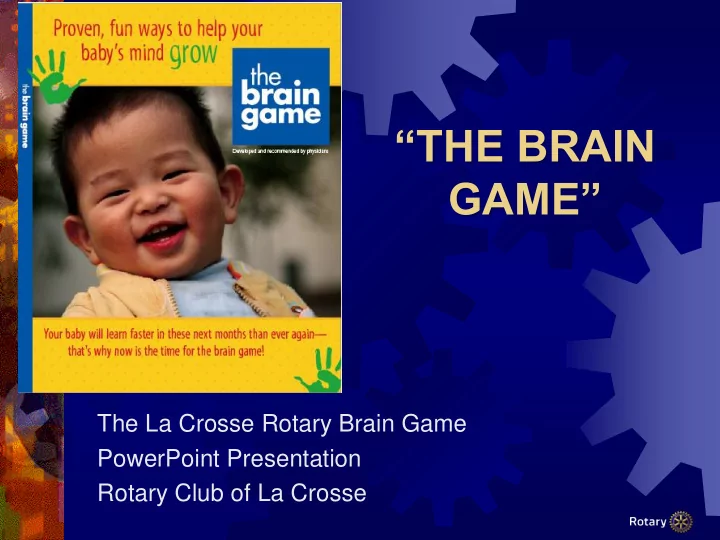
GAME The La Crosse Rotary Brain Game PowerPoint Presentation - - PowerPoint PPT Presentation

game
SMART_READER_LITE
LIVE PREVIEW

GAME The La Crosse Rotary Brain Game PowerPoint Presentation - - PowerPoint PPT Presentation

THE BRAIN GAME The La Crosse Rotary Brain Game PowerPoint Presentation Rotary Club of La Crosse Introduction to Presentation Science of Early Child Development Cinderella story of The Brain Game Opportunity for Rotary Clubs


slide-1
SLIDE 1

“THE BRAIN GAME”

The La Crosse Rotary Brain Game PowerPoint Presentation Rotary Club of La Crosse

slide-2
SLIDE 2

Introduction to Presentation

Science of Early Child Development Cinderella story of The Brain Game Opportunity for Rotary Clubs

slide-3
SLIDE 3
slide-4
SLIDE 4
slide-5
SLIDE 5
slide-6
SLIDE 6

Brains are built over time

slide-7
SLIDE 7

Serve and Return

slide-8
SLIDE 8

“From the moment of birth, young children’s brains develop within the context of reciprocal, responsive relationships with their primary caregivers.”

slide-9
SLIDE 9

From the Bottom Up

slide-10
SLIDE 10
slide-11
SLIDE 11

Investment Advice

slide-12
SLIDE 12
slide-13
SLIDE 13
slide-14
SLIDE 14
slide-15
SLIDE 15

Why a Book??

  • Manageable Amount of Information
  • Easy to read
  • Credible Information
  • We can ensure every new parent gets a free copy
slide-16
SLIDE 16

Evaluation Research Findings:

 Survey of parents receiving “The Brain

Game” books was conducted in Winter of 2002.

 731 surveys mailed to parents, 254 returned

(36%)

 Key Findings:

 84% of parents felt the Brain Game provided

them new information.

 90% stated they referred to the Brain Game

Book.

slide-17
SLIDE 17

 Key Findings Continued:

 48% stated the Brain Game encouraged them

to ask questions of their healthcare provider.

 90% said the book encouraged them to do

more activities with their baby.

 About half said they would consider buying the

Brain Game book, and nearly all said they would recommend to others.

 New parents valued the book more than

experienced.

 Parents with less education rated the book

higher than those with more education.

slide-18
SLIDE 18
slide-19
SLIDE 19
slide-20
SLIDE 20
slide-21
SLIDE 21
slide-22
SLIDE 22

38 percent of babies under age 2 use tablets

  • r smartphones (up 10% from 2011)
slide-23
SLIDE 23
slide-24
SLIDE 24
slide-25
SLIDE 25
slide-26
SLIDE 26
slide-27
SLIDE 27
slide-28
SLIDE 28
slide-29
SLIDE 29
slide-30
SLIDE 30
slide-31
SLIDE 31
slide-32
SLIDE 32
slide-33
SLIDE 33
slide-34
SLIDE 34
slide-35
SLIDE 35