SLIDE 1
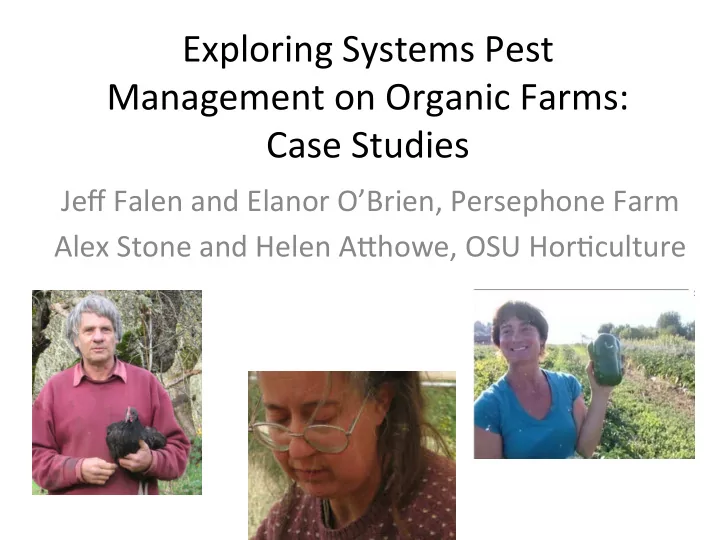
Exploring ¡Systems ¡Pest ¡ Management ¡on ¡Organic ¡Farms: ¡ Case ¡Studies ¡
Jeff ¡Falen ¡and ¡Elanor ¡O’Brien, ¡Persephone ¡Farm ¡ Alex ¡Stone ¡and ¡Helen ¡AChowe, ¡OSU ¡HorFculture ¡
SLIDE 2 Organic ¡Systems ¡Management ¡
- Pest ¡Management ¡in ¡Organic ¡Systems ¡
The ¡term ¡“organic” ¡describes ¡producFon ¡systems ¡ that ¡opFmize ¡natural ¡processes…..In ¡organic ¡ systems, ¡the ¡goal ¡is ¡to ¡alter ¡the ¡producFon ¡system ¡ so ¡that ¡pests ¡do ¡not ¡find ¡plants, ¡are ¡controlled ¡by ¡ natural ¡enemies ¡(biological ¡control), ¡or ¡their ¡ damage ¡is ¡kept ¡to ¡a ¡minimum. ¡ ¡Vigorous, ¡healthy ¡ plants ¡are ¡more ¡able ¡to ¡withstand ¡damage ¡caused ¡ by ¡arthropods ¡and ¡disease. ¡Therefore, ¡healthy ¡soil ¡ and ¡plants ¡are ¡the ¡foundaFon ¡of ¡organic ¡
hCp://extension.psu.edu/agronomy-‑guide/cm/sec11/sec112 ¡
SLIDE 3 Systems ¡Management ¡Project ¡
¡
- 1. Develop ¡farm ¡systems ¡analyses ¡of ¡long ¡term, ¡ecologically-‑
managed, ¡organic ¡vegetable ¡farms ¡
- 2. Explore ¡how ¡expert, ¡long-‑term ¡organic ¡vegetable ¡farmers ¡
think ¡about ¡and ¡develop ¡systems ¡soil/pest ¡management ¡ strategies ¡and ¡plans ¡
- 3. Aggregate ¡research-‑ ¡and ¡pracFce-‑based ¡informaFon ¡on ¡
systems ¡soil/pest ¡(weeds, ¡diseases, ¡insects) ¡management ¡
- n ¡organic ¡vegetable ¡farms ¡
- 4. Publish ¡farm ¡system ¡analyses ¡and ¡other ¡informaFon ¡
through ¡eOrganic ¡ ¡
- 5. Engage ¡others ¡with ¡these ¡resources ¡so ¡we ¡can ¡all ¡beCer ¡
learn ¡how ¡to ¡manage ¡organic ¡farms ¡
SLIDE 4 Systems ¡Management ¡Project ¡
- Develop ¡case ¡studies ¡(farm ¡systems ¡analyses) ¡of ¡
long ¡term ¡organic ¡farms ¡in ¡the ¡west, ¡describing ¡ how ¡they ¡funcFon. ¡ ¡ Farms ¡in ¡the ¡project ¡ ¡
– are ¡pushing ¡the ¡edge ¡of ¡‘biological ¡management’ ¡
- habitat/insectary ¡planFngs, ¡conFnuous ¡cover, ¡living ¡mulch/
reduced ¡Fllage, ¡cover ¡cropping/compost ¡for ¡nutriFon ¡
– have ¡kept ¡records ¡over ¡Fme ¡(soils, ¡rotaFons, ¡pest ¡ management ¡and ¡damage, ¡yield, ¡economics, ¡etc) ¡ – have ¡parFcipated ¡in ¡on-‑farm ¡research ¡ ¡
SLIDE 5 Farm ¡Systems ¡Analyses ¡
- Describe ¡how ¡farm ¡funcFons: ¡
– Land ¡base, ¡other ¡resources ¡ – Soil ¡and ¡nutrient ¡management ¡ – Disease ¡management ¡ – Insect ¡management ¡ – Weed ¡management ¡ – Other ¡factors ¡ ¡-‑ ¡goals, ¡labor, ¡profitability, ¡ sustainability, ¡etc ¡ – InteracFons ¡ – Problems ¡ ¡
SLIDE 6 Farm ¡Systems ¡Analyses ¡
- Describe ¡systems ¡trends ¡
– Problems ¡that ¡decrease ¡over ¡Fme ¡(and ¡why?) ¡ – Problems ¡that ¡remain ¡the ¡same ¡over ¡Fme ¡ – Problems ¡that ¡increase ¡over ¡Fme ¡ – On ¡individual ¡farms ¡and ¡across ¡all ¡farms ¡
- Systems ¡problem-‑solving ¡
– Propose ¡(diverse) ¡soluFons ¡to ¡problems ¡that ¡ remain ¡the ¡same ¡or ¡increase ¡over ¡Fme ¡
SLIDE 7 Farms ¡
- Persephone ¡Farm, ¡Lebanon, ¡OR ¡(vegetables, ¡
eggs). ¡ ¡Jeff ¡Falen ¡and ¡Elanor ¡O’Brien ¡
- Winter ¡Green ¡Farm, ¡NoF, ¡OR ¡(vegetables, ¡herbs, ¡
beef) ¡Via/Gray/Wade/Overbaugh ¡
- BioDesign ¡Farm, ¡Montana ¡(vegetables, ¡primarily ¡
tomatoes/peppers) ¡Helen ¡AChowe ¡
- WoodLeaf ¡Farm, ¡Oroville, ¡CA ¡(tree ¡fruits, ¡vegs) ¡
Carl ¡Rosato ¡
- Pinnacle ¡Farm, ¡San ¡Juan ¡BauFsta ¡and ¡Hollister, ¡
CA ¡(vegetables) ¡Phil ¡Foster ¡and ¡Doug ¡O’Brien ¡
SLIDE 8 Helen ¡AChowe, ¡BioDesign ¡Farm ¡ Carl ¡Rosato, ¡WoodLeaf ¡Farm ¡ Doug ¡O’Brien, ¡Pinnacle ¡Farm ¡IPM ¡ Winter ¡Green ¡Farm ¡ Phil ¡Foster, ¡Pinnacle ¡Farm ¡
SLIDE 9
SLIDE 10 Persephone ¡Farm ¡
- Persephone ¡Farm ¡has ¡grown ¡a ¡wide ¡variety ¡of ¡crops ¡for ¡
farmer’s ¡markets ¡on ¡21 ¡acres ¡since ¡1985. ¡
- They ¡describe ¡their ¡farming ¡philosophy ¡as ¡“striving ¡to ¡
create ¡a ¡balanced ¡farm ¡ecosystem ¡through ¡enhancing ¡ biodiversity”. ¡ ¡
- The ¡farm ¡is ¡surrounded ¡by ¡naFve ¡oak/conifer ¡forest ¡
and ¡riparian ¡areas, ¡with ¡trees, ¡snags, ¡flowering ¡shrubs, ¡ and ¡a ¡wild ¡Himalayan ¡blackberry ¡hedge ¡that ¡offer ¡food, ¡ nesFng ¡sites, ¡and ¡shelter ¡for ¡birds, ¡naFve ¡pollinators, ¡ and ¡beneficial ¡insects. ¡ ¡
- Persephone ¡farm ¡pracFces ¡farmscaping ¡(landscaping ¡
with ¡a ¡wide ¡array ¡of ¡plant ¡species ¡and ¡types ¡to ¡aCract ¡ beneficial, ¡biological ¡control ¡organisms) ¡as ¡an ¡ important ¡part ¡of ¡its ¡philosophy. ¡ ¡
SLIDE 11 Beetle ¡ ¡ Banks ¡
Since ¡the ¡fall ¡of ¡2004, ¡we ¡have ¡established ¡several ¡“beetle ¡banks” ¡
- n ¡the ¡farm. ¡ ¡The ¡idea ¡is ¡to ¡create ¡a ¡habitat ¡loved ¡by ¡predacious ¡
ground ¡beetles, ¡who ¡prefer ¡ground ¡that ¡is ¡slightly ¡raised ¡(and ¡ therefore ¡warmer ¡and ¡drier), ¡and ¡covered ¡by ¡tussock ¡forming, ¡or ¡ bunch ¡grasses. ¡ ¡Ground ¡beetles ¡do ¡not ¡fly ¡and ¡oEen ¡don’t ¡travel ¡far ¡ from ¡field ¡margins, ¡so ¡we ¡hope ¡to ¡enHce ¡them ¡into ¡crop ¡fields ¡ where ¡they ¡can ¡prey ¡on ¡pest ¡insects. ¡ ¡To ¡do ¡this, ¡we ¡raise ¡the ¡bed ¡ through ¡the ¡field ¡with ¡a ¡plow, ¡and ¡seed ¡naHve ¡grasses.” ¡ ¡
www.ipmnet.org/BeetleBank/ ¡
SLIDE 12 Michael ¡Russell ¡Beetle ¡Data ¡
- Thirty ¡two ¡species ¡of ¡Carabid ¡ground ¡beetles ¡were ¡
idenFfied ¡at ¡Persephone ¡in ¡2008-‑2011. ¡ ¡Persephone ¡ Farm ¡had ¡parFcularly ¡high ¡populaFons ¡of ¡beetles ¡in ¡ late ¡spring. ¡The ¡late ¡spring ¡acFvity ¡coincides ¡with ¡the ¡ first ¡cabbageworm ¡larvae ¡peak. ¡ ¡
- PopulaFons ¡of ¡one ¡species ¡of ¡carabid ¡beetle, ¡
PterosHchus ¡melanarius, ¡are ¡higher ¡than ¡at ¡3 ¡other ¡less ¡ diversified ¡area ¡farms ¡that ¡forgo ¡reduced ¡Fllage ¡ (Russell, ¡unpublished ¡data). ¡Carabid ¡beetles ¡prey ¡on ¡ lepidopteran ¡larvae ¡(Frank ¡197l, ¡Hagley ¡and ¡Allen ¡ 1988). ¡ ¡
- Food ¡items ¡reported ¡specifically ¡for ¡P. ¡melanarius ¡
include ¡wireworms, ¡Lepidopteran ¡larvae ¡and ¡adults ¡ (Sunderland ¡1975) ¡and ¡aphids ¡(Chiverton ¡1984). ¡ ¡
SLIDE 13 cover ¡crop ¡ field ¡margin ¡ BB ¡
N
¡N ¡ ¡N ¡
BB ¡
SLIDE 14 insectaries ¡planted ¡with ¡crops ¡
- Persephone ¡Farm ¡seeds ¡and ¡transplants ¡a ¡variety ¡
- f ¡insectary ¡species ¡along ¡with ¡each ¡mechanical ¡
transplanFng ¡of ¡cash ¡crops ¡(ten ¡transplanFngs, ¡ each ¡2 ¡weeks ¡apart ¡throughout ¡the ¡season). ¡The ¡ insectary ¡plants ¡they ¡currently ¡use ¡for ¡this ¡are: ¡ alyssum, ¡agastache, ¡fennel ¡mix, ¡calendula, ¡ marigolds, ¡dwarf ¡sunflowers, ¡and ¡orach. ¡ ¡
- In ¡an ¡effort ¡to ¡aCract ¡minute ¡pirate ¡bugs ¡and ¡
insect-‑eaFng ¡birds ¡for ¡control ¡of ¡cucumber ¡beetle ¡ larvae, ¡Jeff ¡and ¡Elanor ¡have ¡direct-‑seeded ¡ sunflowers ¡in ¡rows ¡bordering ¡crop ¡fields. ¡ ¡
- They ¡transplant ¡dwarf ¡sunflowers ¡and ¡marigolds ¡
among ¡onion ¡plants ¡in ¡hopes ¡of ¡controlling ¡onion ¡
SLIDE 15
W ¡ I ¡ ¡N ¡
SLIDE 16 Weeds ¡at ¡Persephone ¡
- They ¡have ¡started ¡to ¡tolerate ¡higher ¡in-‑field ¡weed ¡
populaFons, ¡parFcularly ¡during ¡the ¡winter, ¡in ¡order ¡to ¡ provide ¡habitat ¡for ¡beneficial ¡insect ¡predators ¡and ¡
- parasites. ¡ ¡
- Jeff ¡says, ¡“We ¡have ¡always ¡had ¡high ¡in-‑field ¡weed ¡
pressure, ¡largely ¡because ¡of ¡the ¡expense ¡of ¡a ¡zero ¡ tolerance ¡weed ¡policy. ¡Using ¡weeds ¡as ¡habitat ¡for ¡ beneficials ¡someFmes ¡feels ¡like ¡an ¡excuse ¡for ¡lax ¡weed ¡
- control. ¡I ¡frequently ¡deal ¡with ¡an ¡internal ¡tension ¡
between ¡a ¡deeply ¡ingrained ¡wish ¡for ¡total ¡control ¡and ¡ a ¡belief ¡that ¡a ¡balanced ¡system ¡requires ¡me ¡to ¡ manipulate ¡the ¡system ¡as ¡liCle ¡as ¡possible ¡and ¡let ¡ nature ¡do ¡the ¡work.” ¡
SLIDE 17 Lamium ¡purpureum ¡ ¡germinaHng ¡in ¡strawberries ¡11-‑3-‑12 ¡and ¡ ¡ providing ¡winter ¡cover ¡and ¡bloom ¡for ¡parasites ¡and ¡predators ¡ ¡ 4-‑24-‑12, ¡along ¡with ¡dandelion ¡and ¡crop ¡residue. ¡
¡
SLIDE 18 Insect ¡trends ¡at ¡Persephone ¡Farm ¡
- Insect ¡problems ¡are ¡changing ¡and ¡have ¡
generally ¡diminished ¡over ¡Fme. ¡
- Aphid ¡and ¡cabbageworm ¡populaFon ¡levels ¡
have ¡decreased ¡over ¡Fme. ¡SpoCed ¡cucumber ¡ beetle ¡populaFons ¡have ¡declined ¡over ¡the ¡ long ¡term ¡while ¡striped ¡populaFons ¡conFnue ¡ to ¡fluctuate ¡wildly. ¡ ¡
- There ¡are ¡two ¡persistent ¡insect ¡pests ¡that ¡are ¡
sFll ¡treated ¡regularly ¡on ¡Persephone ¡Farm: ¡ Brassica ¡flea ¡beetles ¡and ¡onion ¡thrips. ¡
SLIDE 19 Cabbage ¡White ¡BuCerfly, ¡aka ¡Imported ¡Cabbage ¡Worm ¡(ICW) ¡
SLIDE 20
VegNet ¡(at ¡oregonvegetables.com) ¡
SLIDE 21 Persephone ¡ICW ¡trend ¡
- Jeff ¡and ¡Elanor ¡report ¡that ¡there ¡were ¡occasional ¡“flare-‑
ups” ¡(high ¡pest ¡densiFes) ¡of ¡cabbage ¡worms ¡in ¡the ¡early ¡ years ¡between ¡1985 ¡through ¡1996 ¡that ¡were ¡treated ¡with ¡
- Bt. ¡However, ¡the ¡farmers ¡have ¡not ¡seen ¡the ¡need ¡to ¡treat ¡
cabbage ¡worms ¡since ¡1997. ¡ ¡
- On ¡June ¡27 ¡and ¡September ¡26, ¡2012 ¡Helen ¡AChowe ¡
monitored ¡ICW ¡ ¡populaFons ¡on ¡cabbage ¡family ¡crops ¡at ¡
- Persephone. ¡ ¡In ¡June, ¡there ¡were ¡no ¡worms ¡found ¡in ¡
broccoli ¡samples ¡and ¡0.1 ¡per ¡plant ¡found ¡on ¡cabbage. ¡In ¡ September, ¡there ¡were ¡no ¡worms ¡found ¡in ¡most ¡broccoli ¡ field ¡samples, ¡O.1 ¡worms ¡per ¡plant ¡found ¡in ¡one ¡broccoli ¡ field, ¡and ¡0.5 ¡per ¡plant ¡found ¡on ¡late ¡cabbage. ¡ICW ¡adults ¡ were ¡observed ¡flying ¡above ¡brassica ¡plants ¡on ¡both ¡
SLIDE 22 ICW ¡predators ¡and ¡parasites ¡
Cabbage ¡worm ¡predators ¡and ¡parasites, ¡ including ¡paper ¡wasps, ¡parasiFc ¡wasps, ¡spiders, ¡ ground ¡beetles, ¡and ¡insect-‑feeding ¡birds ¡were ¡all ¡
- bserved ¡in ¡the ¡insectary ¡planFngs, ¡perennial ¡
grass ¡beetle ¡banks, ¡hedgerows, ¡weedy ¡areas, ¡ and ¡crops ¡at ¡Persephone ¡in ¡June ¡and ¡September ¡ 2012 ¡ ¡(Helen ¡AChowe). ¡ ¡
SLIDE 23 Michael ¡Russell ¡Beetle ¡Data ¡
- Thirty ¡two ¡species ¡of ¡Carabid ¡ground ¡beetles ¡were ¡
idenFfied ¡at ¡Persephone ¡in ¡2008-‑2011. ¡ ¡Persephone ¡ Farm ¡had ¡parFcularly ¡high ¡populaFons ¡of ¡beetles ¡in ¡ late ¡spring. ¡The ¡late ¡spring ¡acFvity ¡coincides ¡with ¡the ¡ first ¡cabbageworm ¡larvae ¡peak. ¡ ¡
- PopulaFons ¡of ¡one ¡species ¡of ¡carabid ¡beetle, ¡
PterosHchus ¡melanarius, ¡are ¡higher ¡than ¡at ¡3 ¡other ¡less ¡ diversified ¡area ¡farms ¡that ¡forgo ¡reduced ¡Fllage ¡ (Russell, ¡unpublished ¡data). ¡Carabid ¡beetles ¡prey ¡on ¡ lepidopteran ¡larvae ¡(Frank ¡197l, ¡Hagley ¡and ¡Allen ¡ 1988). ¡ ¡
- Food ¡items ¡reported ¡specifically ¡for ¡P. ¡melanarius ¡
include ¡wireworms, ¡Lepidopteran ¡larvae ¡and ¡adults ¡ (Sunderland ¡1975) ¡and ¡aphids ¡(Chiverton ¡1984). ¡ ¡
SLIDE 24 Lepidopterans: ¡Pinnacle ¡Farm ¡experience ¡ ¡ (Doug ¡O’Brien) ¡
- There ¡were ¡crop ¡losses ¡from ¡worm ¡feeding ¡in ¡the ¡early ¡
- years. ¡ ¡
- This ¡is ¡the ¡chronological ¡progress: ¡ ¡
– in ¡the ¡early ¡years ¡we ¡relied ¡on ¡IPM ¡field ¡monitoring ¡and ¡sprays ¡ with ¡Bt ¡when ¡ANY ¡worms ¡were ¡found. ¡ ¡ – in ¡the ¡past ¡10-‑15 ¡years, ¡we ¡began ¡to ¡reduce ¡Fllage, ¡plant ¡in-‑field ¡ insectaries ¡and ¡hedgerows ¡on ¡field ¡margins ¡(to ¡enhance ¡ beneficial ¡insects ¡and ¡bird ¡predators), ¡and ¡develop ¡our ¡own ¡pest ¡
– the ¡INCIDENCE ¡of ¡Lepidopterans ¡has ¡remained ¡constant ¡and ¡ common, ¡but ¡economically ¡important ¡numbers ¡have ¡declined ¡
– Lepidopteran ¡pest ¡thresholds ¡have ¡gone ¡up. ¡Now ¡thresholds ¡ are: ¡ ¡ ¡ ¡ ¡ ¡ ¡
- for ¡cabbage, ¡5 ¡worms ¡per ¡20 ¡plants. ¡
- for ¡other ¡crops, ¡2 ¡worms ¡per ¡20 ¡plants. ¡
- The ¡primary ¡factor ¡seems ¡to ¡be ¡the ¡hedgerows ¡that ¡
encourage ¡birds ¡who ¡feed ¡on ¡Lepidopteran ¡larvae. ¡ ¡
SLIDE 25
Across ¡Farms ¡Trend: ¡Stopped ¡spraying ¡ for ¡Lepidopterans ¡over ¡Fme ¡
Data ¡and ¡farmer ¡reports ¡from ¡4 ¡other ¡case ¡farms ¡in ¡our ¡ project ¡have ¡reported ¡a ¡similar ¡decrease ¡in ¡Lepidopteran ¡ insect ¡pests ¡over ¡Fme ¡as ¡they ¡have ¡reduced ¡Fllage, ¡ maintained ¡winter ¡cover, ¡and ¡increased ¡in-‑field ¡and ¡field ¡ margin ¡plant ¡diversity. ¡ ¡
– BioDesign ¡Farm: ¡researcher ¡data ¡sets ¡from ¡1995/1996 ¡and ¡ 2006/2007 ¡and ¡farm ¡spray ¡records ¡for ¡17 ¡years ¡ – Pinnacle ¡Farm: ¡IPM ¡field ¡monitoring ¡and ¡spray ¡records ¡for ¡ 20 ¡years ¡ – Winter ¡Green ¡Farm: ¡researcher ¡data ¡sets ¡from ¡2006/2007 ¡ ¡ – WoodLeaf ¡Farm: ¡researcher ¡data ¡sets ¡from ¡1992-‑1995, ¡ IPM ¡field ¡monitoring ¡in ¡2012, ¡and ¡farm ¡spray ¡records ¡for ¡ 30 ¡years. ¡ ¡
SLIDE 26 Carabid ¡ground ¡beetles, ¡paper ¡wasps, ¡spiders, ¡and ¡parasiFc ¡wasps ¡such ¡ ¡ as ¡Apateles ¡glomeratus ¡have ¡been ¡reported ¡to ¡be ¡predators ¡of ¡Imported ¡ ¡ Cabbage ¡Worm ¡(ICW; ¡Cranshaw ¡1998). ¡ ¡ ¡
SLIDE 27 ‘living ¡mulch’ ¡effect ¡ ¡
- PopulaFons ¡of ¡the ¡carabid ¡beetle ¡PterosHchus ¡
melanarius ¡and ¡other ¡generalist ¡predators ¡were ¡ increased ¡by ¡sowing ¡clover ¡into ¡standing ¡Brussels ¡ sprouts ¡compared ¡to ¡clean-‑hoed ¡plots. ¡Survival ¡of ¡ICW ¡ larva ¡was ¡reduced ¡by ¡nearly ¡50% ¡in ¡plots ¡under ¡sown ¡ with ¡clover ¡(Dempster ¡and ¡Coaker ¡1974). ¡ ¡
- This ¡same ¡correlaFon ¡was ¡observed ¡in ¡Brassica ¡crops ¡
growing ¡in ¡weed ¡soil ¡cover. ¡Dempster ¡(1969) ¡reported ¡ catching ¡higher ¡numbers ¡of ¡H. ¡rufipes ¡and ¡P. ¡ melanarius ¡carabid ¡beetles ¡in ¡weedy ¡vegetable ¡plots ¡ than ¡in ¡clean ¡culFvated ¡plots ¡and ¡found ¡that ¡ICW ¡ mortality ¡was ¡higher ¡in ¡those ¡weedy ¡plots. ¡ ¡ ¡ ¡
SLIDE 28
Weed ¡Effect ¡
Flowering ¡weeds, ¡such ¡as ¡purple ¡dead ¡neCle ¡(in ¡ the ¡mint ¡family), ¡chickweed, ¡and ¡wild ¡mustard ¡ provide ¡nectar ¡and ¡pollen ¡for ¡syrphid ¡flies ¡and ¡ parasiFc ¡wasps ¡that ¡are ¡predators ¡of ¡aphids ¡and ¡ Lepidopteran ¡pests ¡of ¡cabbage ¡family ¡crops ¡ (Xerces ¡Society ¡Guide, ¡2011; ¡Bob ¡Bugg, ¡2008). ¡ ¡ ¡
SLIDE 29 Other ¡insect ¡pests ¡on ¡brassicas ¡
- Economically ¡damaging ¡aphid ¡populaFons ¡
have ¡declined ¡at ¡Persephone ¡over ¡Fme. ¡ Persephone ¡has ¡been ¡reducing ¡N ¡supply ¡in ¡an ¡ effort ¡to ¡reduce ¡aphid ¡populaFons. ¡
- Flea ¡beetle ¡populaFons ¡have ¡also ¡declined ¡
- ver ¡Fme, ¡but ¡someFmes ¡are ¡economically ¡
- damaging. ¡ ¡
SLIDE 30
(Thrips ¡tabaci) ¡
hCp://vegetable.ent.msu.edu/extension/bulleFns/onions/ ¡
SLIDE 31 0.0 ¡ 0.5 ¡ 1.0 ¡ 1.5 ¡ 2.0 ¡ 2.5 ¡ 3.0 ¡ 3.5 ¡ 4.0 ¡ 4.5 ¡ 5.0 ¡
PERS ¡ SIO ¡ 47th ¡ GTF ¡ OSU ¡ MSF ¡ Mean ¡Thrips ¡Damage ¡ ¡(1=least ¡damage; ¡5=most ¡damage) ¡
Average ¡ thrips ¡damage ¡
¡Persephone ¡ ¡ ¡ ¡ ¡ ¡ ¡ ¡ ¡ ¡ ¡5 ¡other ¡farms, ¡including ¡OSU ¡ ¡
Organic ¡Broccoli ¡and ¡Onion ¡Trials ¡ ¡ (OBOT) ¡2009 ¡
SLIDE 32
- The ¡check ¡did ¡not ¡receive ¡any ¡
treatments ¡for ¡thrips ¡control. ¡ ¡
- The ¡grower ¡standard ¡pracFce ¡
included ¡Warrior ¡and ¡Lannate. ¡
- The ¡alternaFve ¡treatment ¡
included ¡straw ¡mulch ¡applied ¡ to ¡the ¡center ¡of ¡the ¡bed ¡plus ¡ Success ¡(spinosad), ¡Ecozin ¡or ¡ Aza ¡Direct ¡(azadirachFn ¡neem ¡ extract) ¡and ¡Messenger ¡ (harpin ¡protein). ¡
Jensen ¡and ¡Simko, ¡2001. ¡OSU ¡Malheur ¡County ¡Extension ¡ ¡
SLIDE 33 Disease ¡trends ¡at ¡Persephone ¡Farm ¡
- In ¡general, ¡disease ¡problems ¡have ¡decreased. ¡
- Major ¡excepFons: ¡cucumber ¡wilt, ¡downy ¡
mildew ¡of ¡onion, ¡and ¡late ¡blight ¡of ¡potato ¡ have ¡increased ¡over ¡Fme. ¡
SLIDE 34
Pinnacle ¡Farm ¡observaFons ¡
Doug ¡O’Brien ¡speculates ¡that ¡ ¡ 1) ¡insects ¡are ¡(mostly) ¡controlled ¡by ¡ecology/ farm ¡design, ¡while ¡diseases ¡are ¡(mostly) ¡ controlled ¡by ¡prevenFon; ¡ ¡ 2) ¡pesFcide ¡use ¡analysis ¡would ¡show ¡a ¡decrease ¡ in ¡insecFcide ¡use ¡and ¡an ¡increase ¡in ¡protectant ¡ fungicide ¡use ¡
SLIDE 35 Onion ¡Downy ¡Mildew ¡ ¡ ¡ Peronospora ¡destructor ¡
Howard ¡Schwartz, ¡CSU ¡
SLIDE 36 DM ¡Management ¡
- Plant ¡disease ¡free ¡stock ¡
- PracFce ¡a ¡4 ¡year ¡rotaFon ¡(3 ¡years ¡out ¡of ¡onion ¡
family) ¡
- Manage ¡overwintering ¡or ¡surviving ¡onions ¡or ¡
- nion ¡residues ¡
- Don’t ¡over-‑ferFlize ¡with ¡N ¡
- Keep ¡foliage ¡dry ¡
– IrrigaFon ¡management ¡ – Maintain ¡weed ¡free ¡crop ¡
- Plant ¡resistant ¡varieFes ¡
SLIDE 37 Persephone ¡RotaFon ¡
- Year ¡one: ¡Brassicas ¡and ¡onions. ¡
- Year ¡two: ¡Cucurbits ¡and ¡potatoes. ¡
- Year ¡three: ¡LeCuce, ¡spinach, ¡beets, ¡herbs, ¡beans, ¡
and ¡other ¡miscellaneous ¡‘greens’. ¡
- Year ¡four: ¡the ¡field ¡is ¡planted ¡to ¡a ¡perennial ¡mix ¡
- f ¡red ¡clover, ¡ryegrass, ¡and ¡oats ¡at ¡1:1:1.6 ¡raFos, ¡
seeded ¡at ¡60-‑80 ¡lbs/acre. ¡The ¡perennial ¡mix ¡is ¡ seeded ¡in ¡the ¡fall ¡of ¡the ¡third ¡vegetable ¡ producFon ¡year, ¡mowed ¡and ¡pastured ¡with ¡ chickens ¡during ¡the ¡next ¡full ¡year ¡(spring, ¡ summer, ¡fall, ¡and ¡winter), ¡and ¡plowed ¡in ¡the ¡next ¡
SLIDE 38 How ¡DM ¡overwinters ¡
- The ¡DM ¡fungus ¡overwinters ¡primarily ¡as ¡
mycelium ¡in ¡infected ¡onions ¡that ¡remain ¡in ¡
- nion ¡fields ¡or ¡in ¡nearby ¡cull ¡piles. ¡The ¡
pathogen ¡may ¡also ¡overwinter ¡as ¡resFng ¡ spores ¡that ¡can ¡survive ¡for ¡several ¡years. ¡
- The ¡pathogen ¡also ¡can ¡overwinter ¡in ¡living ¡
- nions ¡and ¡shallots ¡– ¡and ¡weeds! ¡ ¡
hCp://vegetablemdonline.ppath.cornell.edu/factsheets/Onions_Downy.htm ¡
SLIDE 39
Wild ¡Garlic ¡ ¡ Allium ¡vineale ¡ ¡
SLIDE 40
SLIDE 41 DM ¡Management ¡
- Plant ¡disease ¡free ¡stock ¡
- PracFce ¡a ¡4 ¡year ¡rotaFon ¡(3 ¡years ¡out ¡of ¡onion ¡
family) ¡
- Manage ¡overwintering ¡or ¡surviving ¡onions ¡or ¡
- nion ¡residues ¡
- Don’t ¡over-‑ferFlize ¡with ¡N ¡
- Keep ¡foliage ¡dry ¡
– IrrigaFon ¡management ¡ – Maintain ¡weed ¡free ¡crop ¡
- When ¡all ¡else ¡fails, ¡plant ¡resistant ¡varieFes! ¡
SLIDE 42 Resistant ¡CulFvars ¡
- Yellow ¡storage ¡onion, ¡Yankee ¡(new ¡variety ¡from ¡
Bejo ¡Seed) ¡– ¡available ¡from ¡Champion ¡Seed ¡(as ¡
- rganic ¡seed) ¡
- “Bejo ¡Seeds’ ¡Yankee ¡completely ¡resists ¡downy ¡
- mildew. ¡This ¡super ¡hard ¡storage ¡onion ¡sports ¡a ¡
healthy ¡top. ¡It ¡performs ¡well ¡from ¡either ¡direct ¡ seed ¡or ¡transplants. ¡A ¡Copra-‑type, ¡but ¡larger, ¡and ¡ at ¡108 ¡days, ¡it ¡matures ¡later ¡(Copra ¡is ¡104 ¡days). ¡ Bejo ¡reports ¡it ¡suitable ¡for ¡cold ¡and ¡wet ¡climates, ¡ as ¡well ¡as ¡organic ¡producFon.” ¡ ¡
hCp://www.growingmagazine.com/arFcle-‑1098.aspx ¡
SLIDE 43 McDonald, ¡Univ. ¡of ¡Guelph ¡
SLIDE 44
google ¡‘AChowe ¡eOrganic ¡webinar’ ¡
SLIDE 45
SLIDE 46 Future ¡Workshops ¡
- Just ¡received ¡funding ¡from ¡Oregon ¡SARE ¡pdp ¡
program ¡for ¡the ¡project ¡“Engaging ¡Oregon ¡ agricultural ¡professionals ¡in ¡organic ¡farm ¡ systems ¡soil ¡and ¡pest ¡management ¡learning” ¡
- Winter ¡and ¡summer ¡workshops ¡-‑-‑ ¡starFng ¡
next ¡winter. ¡ ¡
- Workshops ¡for ¡farmers ¡too! ¡
- Hope ¡to ¡see ¡you ¡there! ¡
SLIDE 47
Thanks ¡to ¡our ¡funder….. ¡